
The eternal question of real estate investing — to sell or not to sell? — has perhaps never been harder to answer for owners of empty U.S. warehouses.
The federal government plans to spend $38.3B to acquire industrial buildings and convert them into detention centers to house thousands of immigrants set for deportation. The Department of Homeland Security has already paid more than $700M combined for eight properties in six states, according to a Bisnow analysis of deed records and public reports.
Selling a warehouse to DHS so that U.S. Immigration and Customs Enforcement can turn it into a detention center has been a lucrative endeavor for those who have closed the deal: The owner of a Pennsylvania warehouse sold it to DHS this month for 33% more than it paid in 2024.

The names behind these deals are some of the nation's largest real estate investors: Trammell Crow, Rockefeller Group, Blue Owl Capital and PCCP have all sold or are negotiating to sell industrial properties to the government. ICE plans to house more than 90,000 immigrants combined at the buildings, which were designed with packages — not people — in mind.
But as ICE's aggressive tactics and the conditions of its detention facilities have drawn bipartisan pushback, so has its real estate expansion push.
At least eight properties that DHS was either reportedly negotiating for or under contract to purchase have fallen through, according to Bisnow's analysis. In most of those cases, local, state and federal officials, both Republican and Democrat, have forcefully objected to the opening of detention centers in the areas they represent.
“While immigration policy is set at the federal level, its impacts are felt most acutely at the local level,” Rep. Paul Gosar, an Arizona Republican and staunch ally of President Donald Trump, wrote in a letter to DHS Secretary Kristi Noem about its purchase of a facility in his district, expected to hold 1,500 immigrants. “A detention facility of the reported size raises legitimate and reasonable questions for nearby residents, schools, first responders, and local governments.”
ICE plans to complete the expansion of its detention capacity to 92,600 beds by Nov. 30. There are just over 70,000 people in ICE detention, according to the agency.
“These are not warehouses — they are detention facilities,” a DHS spokesperson said in a statement. “Every day, DHS is conducting law enforcement activities across the country to keep Americans safe. It should not come as news that ICE will be making arrests in states across the U.S. and is actively working to expand detention space.”
ICE says it is targeting unauthorized immigrants with serious criminal records. But less than 14% of the nearly 400,000 immigrants arrested by ICE in the first year of the Trump administration were charged with or convicted of a violent criminal offense, according to a DHS document reported by CBS News. More than 33,000 immigrants being held in detention centers this month haven't been charged with or convicted of a crime, according to ICE data.
Conditions inside facilities have also been the subject of intense scrutiny. There have been reports of sexual abuse and inhumane conditions, and at least 35 people have died in ICE detention since the start of the Trump administration, according to ICE. That is more than in the previous four years combined, according to The New York Times.
Some local officials have vowed to do everything in their power to stop these warehouses from opening, but there are doubts as to their ability to restrict the government's activities on newly acquired federal land.
Political pressure on warehouse owners that are negotiating with ICE, therefore, has been the most effective leverage municipalities have been able to exert.
“If you’re a local developer and you have a reputation in the community and you're trying to build other projects, you don't want to alienate public authorities,” said Glenn Williamson, a professor at Georgetown University and director of its master's in real estate program. “You’ve got to think about the next project you are going to build.”
Developers Cashing In
PNK Group has been speculatively developing logistics and manufacturing since its owner, Andrey Sharkov, shifted its business to the U.S. in 2023 after founding it in Russia. It is most active in Georgia and Pennsylvania, where it has factories to construct its modular warehouses to save on manpower costs.
It developed the 1M SF PNK Loggins 100 warehouse a five-minute drive from the 5,000-person city of Social Circle, Georgia, after buying a 235-acre site at 1365 E. Hightower Trail in 2023 for $29.4M, according to local property records.
The building is more than two football fields deep and three-tenths of a mile wide. It has an 8-inch reinforced concrete slab floor, 40-foot ceilings, 140 fully equipped dock doors and a roof that can hold an 8-ton crane, according to a marketing brochure.
But it has been a challenging time for spec industrial developers — there is more available space on the market than ever, and vacancy has doubled since 2023 as the types of companies that fill giant warehouses have pulled back. PNK Loggins 100 never signed a tenant.
That made it a perfect candidate for ICE's new strategy to overhaul its network of detention centers by purchasing vacant warehouses.
On Feb. 3, the Department of Homeland Security paid PNK Group $128.6M for the property. In the next few months, ICE plans to move up to 10,000 detained immigrants into the building.
PNK Group said in a statement to Bisnow that any future use of the property is up to the buyer and “subject to the required local review and approval processes.”
“PNK will not have any role in operational decisions once the property is sold,” it said in the statement.
Social Circle officials were blindsided. At full capacity, the “mega-center,” as ICE is calling its large-scale detention facilities, would triple the population of the city and risks overwhelming its infrastructure.
“The city has repeatedly communicated that it does not have the capacity or resources to accommodate this demand,” Social Circle’s government said Wednesday in a public statement.
An ICE spokesperson told Bisnow the facility and its construction would create 9,800 jobs and bring in more than $221M in tax revenue. But the federal government doesn't pay property taxes. ICE didn’t respond to a follow-up asking where the tax collections would come from.
PNK Group paid $300K in taxes last year, The Atlanta Journal-Constitution reported.
Social Circle is one of 10 facilities DHS has purchased across the country as part of the ICE Detention Reengineering Initiative. It plans to operate eight megacenters and 16 processing centers, aiming to reduce its reliance on contracted facilities and “streamlining its removal operations,” according to a DHS memo shared by Social Circle. It also plans to buy 10 detention centers already in operation.
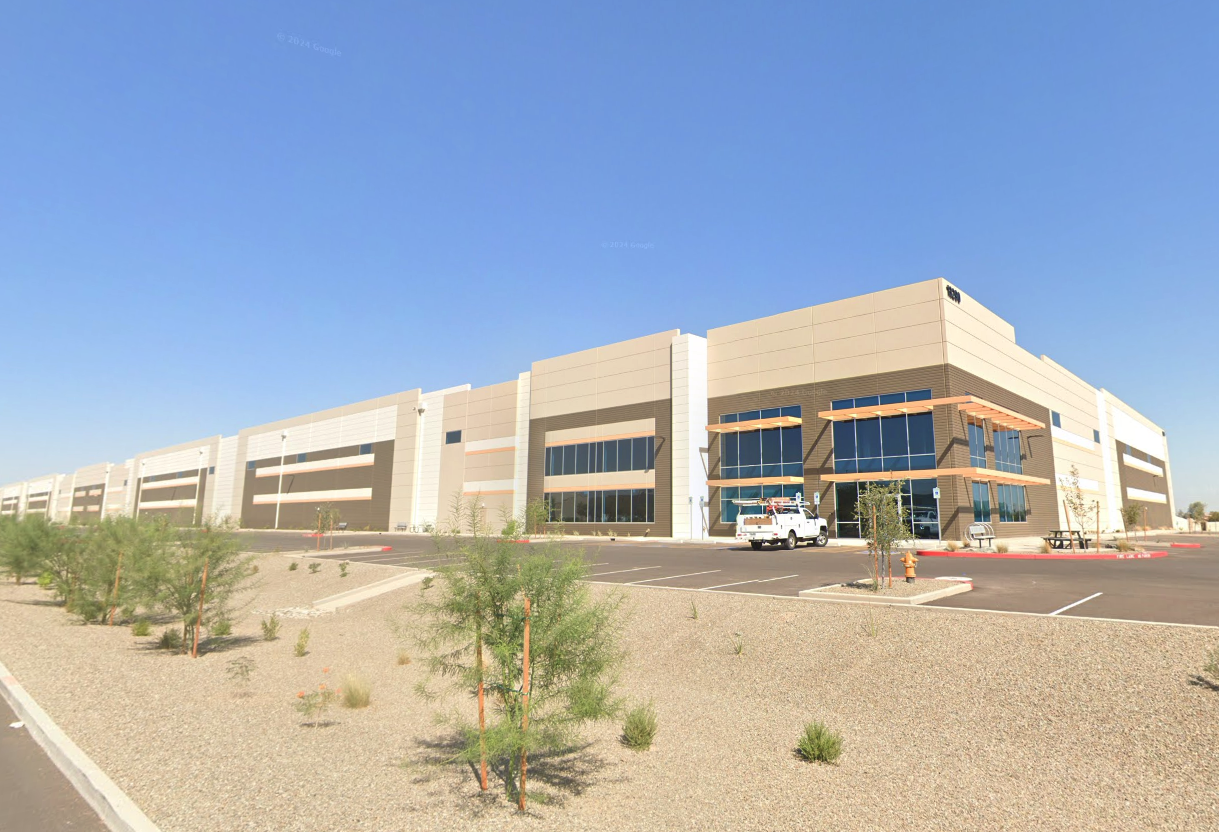
With plans to stand up the whole network within the next 42 weeks, ICE has been willing to pay handsomely for the necessary real estate.
“The government doesn't really come in with a real estate mindset when they come and purchase a property,” CoStar National Director of U.S. Industrial Analytics Juan Arias told Bisnow. “They're not really underwriting it at the current market prices.”
Rockefeller Group, a subsidiary of Japanese real estate giant Mitsubishi Estate Group, sold a 418K SF warehouse it developed in Surprise, Arizona, to DHS for $70M. Rockefeller paid $12M for the site in 2023, AZ Big Media reported.
DHS paid St. Louis-based Flint Development almost $123M last month for an 888K SF warehouse in Socorro, Texas, El Paso Matters reported. Flint spent $79.3M to build the facility, which is now slated to become an 8,500-person detention center.
Local officials in each city said they weren't notified that ICE planned to build a detention center in their jurisdiction until after the sale went through.
“At this time, the City of Socorro, Texas wants to be clear that the City has not had any communications with the U.S. Department of Homeland Security (DHS), Immigration and Customs Enforcement (ICE), or any federal agency regarding the purchase of these properties,” a spokesperson for Socorro told Bisnow in a statement last week.
DHS paid an affiliate of Fundrise $102.4M for an 825K SF warehouse just outside of Hagerstown, Maryland. The Washington, D.C.-based real estate investment firm acquired the vacant property for $104.8M in December 2024 and planned to lease it up and hold it for 10 years, according to a Securities and Exchange Commission filing.
In Berks County, Pennsylvania, federal officials paid PCCP LLC $87.4M for a 519K SF warehouse at 3501 Mountain Road on Feb. 2, Spotlight PA reported. The price was 33% more than the $57.5M PCCP paid in 2024.
A 640K SF San Antonio warehouse that Oakmont Industrial Group sold to DHS was last appraised for $37.8M by the Bexar Central Appraisal District, the San Antonio Express-News reported. DHS paid $66.1M for the building, a Feb. 3 deed shows.
Most recently, DHS bought a 261K SF warehouse in Romulus, Michigan, from Detroit-based Crestlight Capital. Crestlight founder John Coury told Crain's Detroit Business the deal is done but declined to comment further. The sale hasn't yet appeared in property records.
Representatives for Blue Owl, Rockefeller Group, PCCP, Fundrise, Flint Development, Oakmont Industrial Group and Crestlight Capital didn’t respond to requests for comment.
Rage Kills Some Deals
Jackson County Legislator Manny Abarca arrived at a 920K SF warehouse at 14901 Botts Road in Kansas City, Missouri, on Jan. 15 to find ICE and DHS officials outside touring the empty warehouse.
Hours later, city council members approved an emergency moratorium on city approvals for nonmunicipal detention facilities in a 12-1 vote. The moratorium applies to any permits, zoning applications, project plans or development plans that would need city approval.
Kansas City-based Platform Ventures confirmed the following day that it received an “unsolicited offer” in October to buy its facility, and “all negotiations are complete,” KMBC News reported.
But less than a month later, Platform Ventures changed its mind. It said in a Feb. 12 statement that it had chosen “not to move forward” with the deal and that it is “not actively engaged with the U.S. Government or any other prospective purchaser involving a sale of its property.”
Hundreds of residents had protested the facility. Even a day after the developer said the deal was off, a local woman was seen attempting to set fire to the warehouse. The same happened over the weekend to ICE's newly purchased building in Arizona.
Platform Ventures is one of a handful of landlords around the country to enter sale talks with ICE, only to backtrack after the negotiations became public and the backlash reached a critical mass.
Majestic Realty Co., one of the most prolific industrial developers in the country, was close to a deal to sell a 1M SF e-commerce warehouse it built for Amazon in Hutchins, Texas, between 2022 and 2023 for an estimated $42M, according to the Texas Department of Licensing and Regulation.
ICE reportedly planned to turn the building 12 miles south of Dallas into a detention center that could house up to 9,500 people. Hutchins' mayor and city council voiced concerns that they weren't contacted by federal officials to discuss the plans or their potential impact on the city, which has a population of 8,000.
“If you think anybody up here is on board with it, you're in the wrong building,” Mayor Mario Vasquez said during a council meeting this month.
Last week, Majestic backed out of the deal. It said in a statement that while it had been approached about selling the building, it would “not enter into any agreement for the purchase or lease of any building to the Department of Homeland Security for use as a detention facility.”
“God answered our prayers,” Vasquez said after learning of Majestic's decision, The Dallas Morning News reported.
Flint Development, which sold ICE the planned Socorro megacenter, was also in talks to sell DHS a 416K SF warehouse that it built in 2023 as part of a speculative 1.7M SF industrial park in Oklahoma City.
ICE planned to retrofit the building to house up to 1,500 people, The Oklahoman reported.
Mayor David Holt, a Republican, wrote to Congress on Jan. 23, asking the government to apply for a permit required to operate the facility in city limits. But a week later, Flint dropped out of the deal.
ICE had plans for an 8,500-person facility at a 798K SF warehouse in Byhalia, Mississippi, when Republican Sen. Roger Wicker wrote to Noem on Feb. 3 opposing the sale, saying the county needs to preserve the economic opportunities the planned warehouse was meant to provide.
A detention facility would challenge local infrastructure, including “transportation access, water, sewer and energy costs, staffing, medical care, and emergency services,” he wrote.
A day later, Wicker announced that a deal for the facility was off.
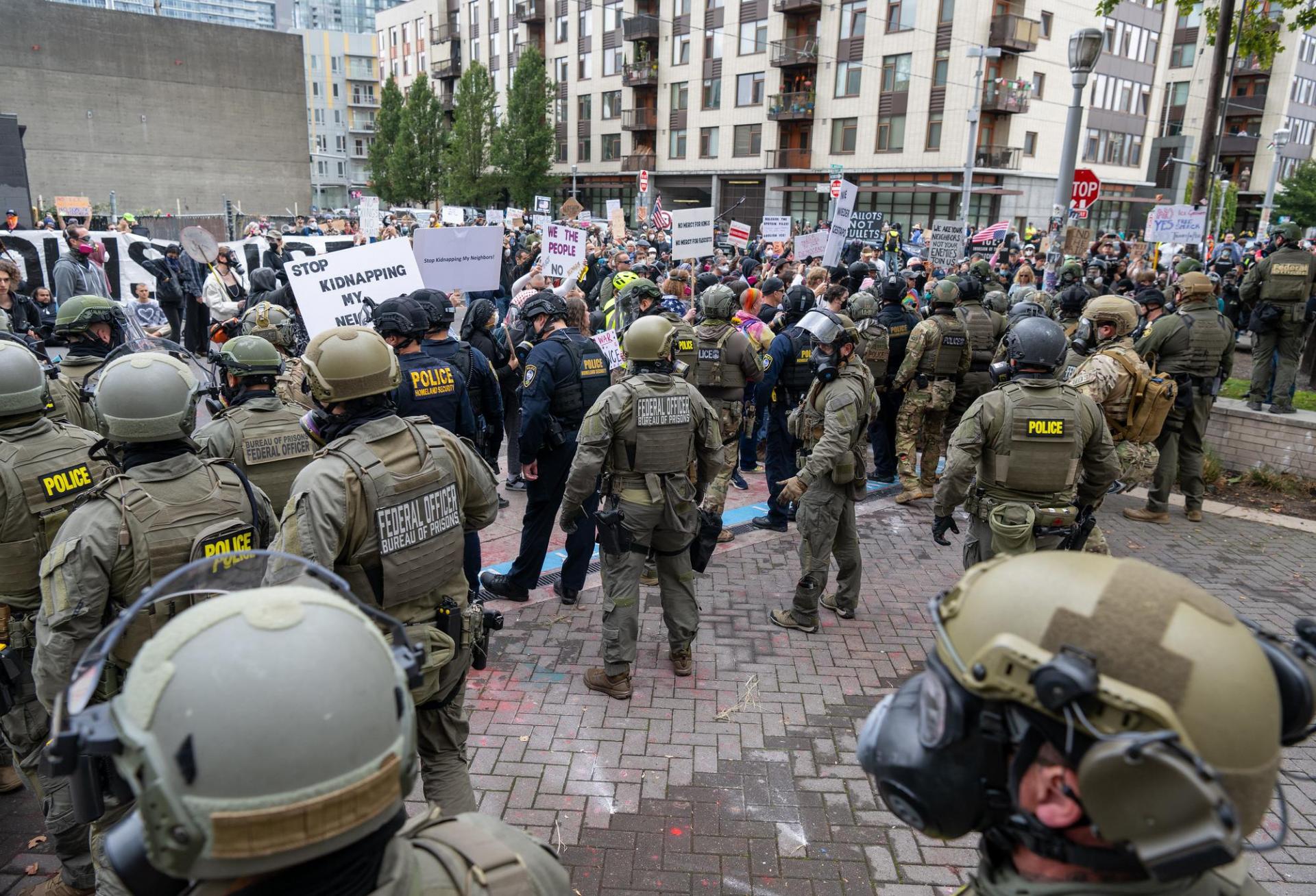
Similar stories played out in Merrillville, Indiana, and Shakopee, Minnesota, where ICE was scoping out warehouses owned by Opus Group; in Salt Lake City, where it aimed to purchase a 1.2M SF warehouse from Ritchie Group and turn it into a 7,500-bed megacenter; and in Hanover County, Virginia, where Canadian billionaire Jim Pattison Developments nixed plans to sell its 553K SF logistics center to ICE.
“The transaction to sell our industrial building in Ashland, Virginia will not be proceeding,” Jim Pattison Developments said in a since-removed statement on its website.
Take The Money Or Run?
There are still several landlords that appear to be deciding whether to sell their warehouses to ICE. The decision likely isn't easy.
The industrial sector has wrestled with the remnants of a historic wave of construction — topping out at 610M SF in 2023, according to Cushman & Wakefield. Now, landlords are contending with a record 1.5B SF on the market.
ICE has been targeting vacant warehouses, which are typically more heavily discounted in a market with elevated vacancy, CoStar's Arias said.
“That's enticing for some sellers to be able to get out of this uncertain environment right now and actually sell at an interesting price point,” Arias said.
Trump's tariff and immigration policies have added to uncertainty around trade and population growth, creating extra hesitation from investors, he said.
“It is just funny that now we're hanging our hat on this administration buying the property as well,” Arias said.
Trammell Crow broke ground on a 324K SF warehouse in Merrimack, New Hampshire, three years ago in partnership with Diamond Realty Investments. The CBRE-owned company was the most active developer in the country by far between 2022 and 2024, according to Commercial Property Executive, and it has $29B of projects under construction.
But Trammell Crow hasn't been able to fill 50 Robert Milligan Parkway, and ICE has targeted it for a processing site. Like the vast majority of ICE's planned detention centers, it has drawn loud rebukes from locals.
“Merrimack remains thrilled and enthusiastic to have Trammell Crow doing business here,” Bill Boyd, a Republican representing the town in the General Court of New Hampshire, wrote to the developer in a letter on Feb. 7. “The potential sale of your facility would rewrite Merrimack’s future in an undesirable way for the families and businesses that call Merrimack home.”
It is unclear if the sale has been shelved. Spokespeople for Trammell Crow didn't respond to a request for comment, and Merrimack isn't among the 10 cities and towns where ICE has purchased buildings, according to a spokesperson for the agency.
In addition to the eight closed deals Bisnow has been able to confirm, ICE said in a statement Friday that it has bought facilities in Flowery Branch, Georgia, and Roxbury, New Jersey. But officials in Roxbury said last week that the deal isn't going through, Gothamist reported, and the deed to the Georgia warehouse, which is within Oakwood city limits, hasn't yet been transferred, according to local records.
Houston-based Alliance Industrial, which owns the Oakwood building, didn't respond to a request for comment. ICE didn't respond to a follow-up question about whether those deals have closed.
Logistics facilities in Orlando, Florida, and Chester, New York — owned by affiliates of TPA Group and Icahn Enterprises, respectively — have also reportedly been in sale discussions with DHS, but no deals have been finalized. ICE reportedly backed away from the Chester facility last week.
ICE claims that its 10 confirmed detention centers so far will generate more than 38,000 jobs, $902M in tax revenue and $4.1B in local gross domestic product combined. It didn't share how it came up with those figures or address the impact of the loss of property tax revenue.
“These economic benefits don’t even take into account that removing criminals from the streets makes communities safer for business owners and customers,” an ICE spokesperson said in a statement.
But officials on both sides of the aisle, from town council members to U.S. senators, have expressed grave concerns about the impact ICE will have on local infrastructure, water quality and emergency services, not to mention the psychological impact of having massive jails in their communities.
“Are they going to put a 16-foot barbed wire fence up that the kids have to see every day?” Social Circle real estate agent Rhiannon Townley told NPR. “A detention center next to my child's school was not on my ballot.”
Whether there will be repercussions for the companies that did business with ICE isn’t yet clear. Kansas-based KPB Services received a $29.9M contract in November for “due diligence services and concept design for processing centers and mega centers” throughout the U.S., according to federal contracting data. A month later, its owner, the Prairie Band Potawatomi Nation, divested its stake because it didn’t want to be affiliated with ICE, The Associated Press reported.
Several of the world's largest brokerages, including teams from JLL, Cushman & Wakefield, Newmark and CBRE, were named as listing agents for the warehouses that have sold and stand to make millions in commissions from the deals. None of those firms responded to requests for comment.
“I think you can only look at the administration's record already on detention — it's the deadliest year for ICE detention ever — and acknowledge that there is just no world in which you can sort of wash your hands and say, ‘Well, it's just business,’” American Immigration Council senior fellow and attorney Aaron Reichlin-Melnick said.
Patrick Sisson, Jarred Schenke, Maddy McCarty and Billy Wadsack contributed to this story.
)
)
)
)
)
)
)
)
)
)
)
)