
Bisnow’s First Draft Live is a regular series featuring live conversations about the critical stories impacting CRE right now. It is a companion to The First Draft, Bisnow’s daily, flagship CRE newsletter. Register here to get The First Draft in your inbox. Subscribe to First Draft Live on Apple and Spotify, or scroll down to view in your browser.
Only a few years ago, data centers were viewed as a small, niche part of commercial real estate. Now they are one of the hottest asset classes, with the U.S. market alone valued at $270B and expected to grow to $700B by 2034.
This boom has been hyperaccelerated by the rise of artificial intelligence and the ever-increasing demand for the cloud and digital infrastructure. As a result, data center construction has branched out beyond hubs in Northern Virginia and Silicon Valley and into smaller communities across the country while power grids struggle to keep up with demand. This has led to controversy, debates and a rise of NIMBYism from residents who want to keep these massive facilities away from their homes.
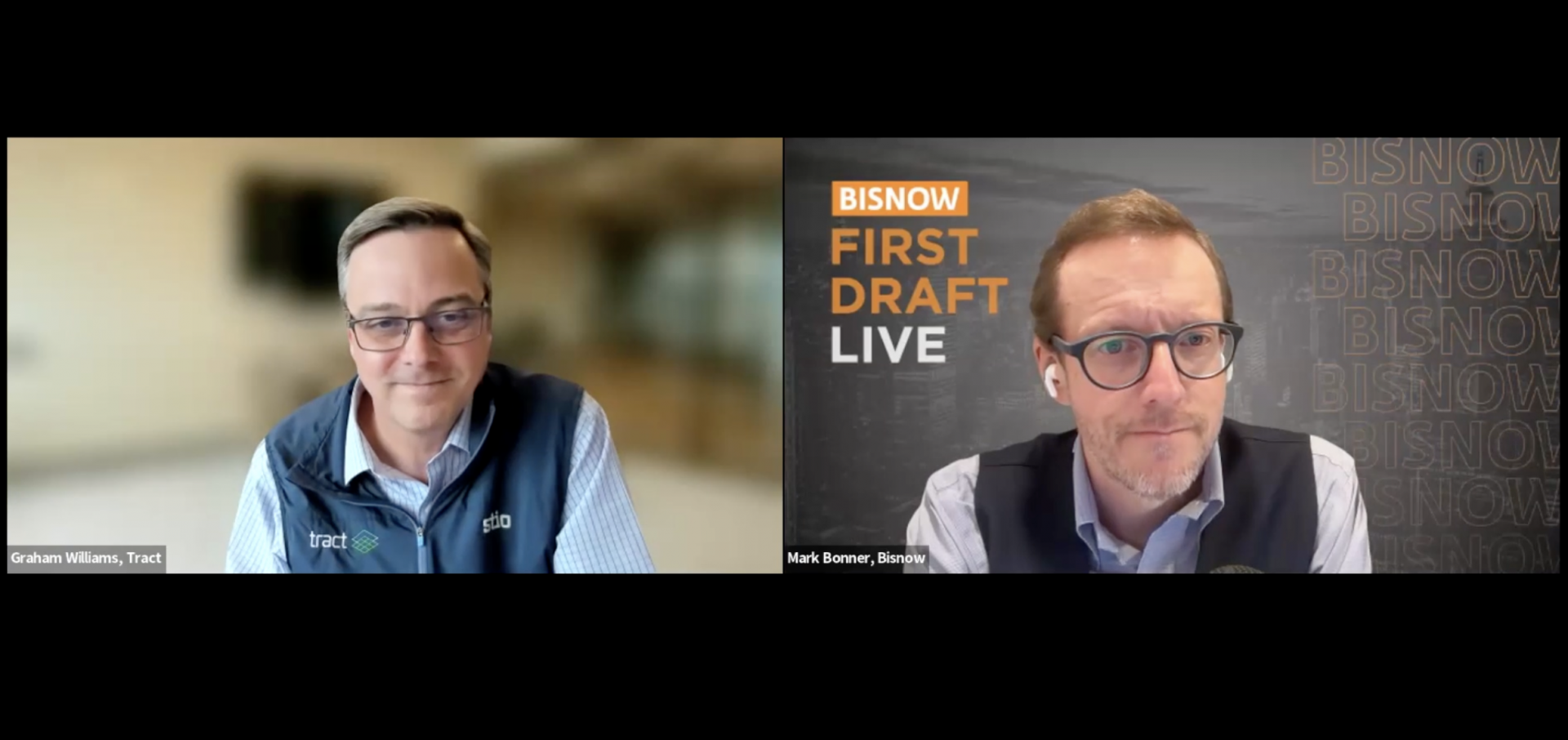
How will these conflicting forces reshape the data center map? To find out, Bisnow Editor-in-Chief Mark F. Bonner sat down with Graham Williams, president of Tract and managing director at Tract Capital, which is behind some of the largest data center developments in the country today. This discussion is part of Bisnow’s ongoing coverage of the shifts in the data center market, including Data Center Nation: How All Of America Became Big Tech's Boomtown, which highlights how these developments transform communities.
Tract has discovered that only 0.5% of land in the U.S. is viable for large-scale data center development when you factor in proximity to power, water and, increasingly, a workforce, Williams said.
“These are large campuses that require lots of skilled men and women to build them,” he said. “And when we’re 300,000 electricians short in this country, it’s hard to get someone to drive two and a half hours to a jobsite, no matter what it is. All of these things mean there are not as many locations for data centers as people may think.”
View the full conversation here:
)
)
)
)
)
)
)
)
)
)
)