
Disarray at the small federal agency charged with overseeing the appraisal industry is raising alarm among lawmakers about the effectiveness of a critical safeguard of the infrastructure of the nation's real estate market.
The Appraisal Subcommittee has been without a permanent director for more than six months, has seen its staff dwindle by 30% and has clawed back grant funding meant to grow a profession undergoing a demographic crisis.
Those issues have caught the attention of two senators, who sent a letter on Wednesday to the chair of the Federal Financial Institutions Examination Council — which oversees the ASC — expressing concerns about the appraisal industry’s top monitor.
The letter was signed by Sen. Catherine Cortez Masto, a Democrat from Nevada, and Sen. Mike Rounds, a Republican from South Dakota. They cited previous reporting by Bisnow on the ASC's staffing cuts and failure to hold required public meetings and litigation alleging fraud in the state appraisal certification process.
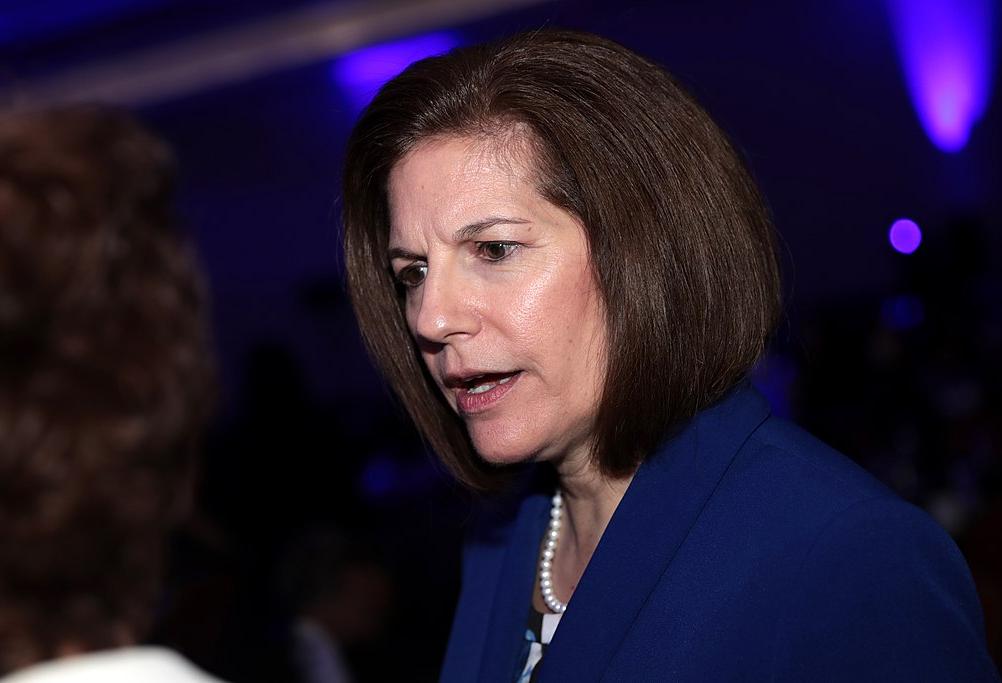
The senators asked FFIEC Chair Michelle Bowman, who is also vice chair of the Federal Reserve Board, to exercise the council's oversight authority over the ASC and determine why the subcommittee has no permanent chair or director and whether it had made changes to its supervision process.
“Given current trends in the commercial real estate sector, high borrowing rates and increasing recovery costs from natural disasters, it is important that the appraisal system remain stable and well-managed,” the senators wrote in the letter, which was obtained by Bisnow. “However, we are monitoring concerns related to staffing shortages and oversight of state appraisal offices, which may be impacting appraisal quality.”
The six sitting members of the ASC board were copied on the letter. The board includes representatives from the Department of Housing and Urban Development, the Office of the Comptroller of the Currency and the Federal Housing Finance Agency.
“The long-term stability of the ASC is critical to the residential and commercial real estate markets,” Cortez Masto said in a statement to Bisnow. “I hope to hear very soon from FFIEC Chair Bowman outlining a plan to curb the chaos at this vital agency.”
Appraisal Subcommittee acting Chair Luke Brown and acting Executive Director Matt Ponzar declined to comment for this story or answer a list of written questions.
The letter reflects fears that the governing body — which is funded by appraiser fees, not taxes — will no longer be able to regulate and uphold a system intended to keep the nation’s 80,000 certified and licensed real estate appraisers accurate and impartial.
Letter from Sens. Catherine Cortez Masto and Mike Rounds by Ethan Rothstein
In the weeks leading up to Cortez Masto and Rounds’ message to the board, Bisnow obtained and reviewed hundreds of pages of public and private documents related to the ASC's work and spoke with three current and three former employees, who were granted anonymity to avoid retaliation.
The reporting found that, as the industry is grappling with a demographic cliff and a trillion-dollar wall of maturing loans, the agency has pulled back essential grants, scaled back compliance reviews and failed to maintain consistent access to the national appraiser registry — three of its core, statutory obligations.
Those efforts could not only impact adherence to federal guidelines but also undermine efforts to bring younger, more diverse talent into a rapidly aging industry, where the median professional is 60 years old.
'It's Going To Fail'
Established by Title XI of the Financial Institutions Reform, Recovery and Enforcement Act of 1989, the ASC reviews state regulators, who license appraisers, and The Appraisal Foundation, which creates testing and certification materials for the industry.
It also runs a national registry of individuals and organizations authorized to perform appraisals. As part of maintaining their credentials, professionals pay fees to be listed on the database. Those funds make up the ASC's budget, including staff salaries, and support the grants they provide to TAF and the states.
As of the end of 2024, the ASC had 22 full-time positions, five of which were vacant, according to its annual report. The ASC confirmed that it currently has 16 full-time employees.
Since its founding, the ASC has been given additional authority over appraisers through the 2010 Dodd-Frank Wall Street Reform and Consumer Protection Act, amendments to Title XI, and special projects, such as the recently disbanded Property Appraisal and Valuation Equity Task Force, a Biden-era initiative aimed at eliminating racial bias in appraisals.
In 2017, the subcommittee also began overseeing appraisal management companies, which have arisen as middlemen between lenders and appraisers. The creation of the AMC registry boosted the ASC's gross revenue by more than 200%, according to a February 2023 staffing and reorganization proposal created by consulting firm KL Scott & Associates.
PDFs of the KL Scott proposal were archived on the ASC website and obtained by Bisnow via the Wayback Machine.
KL Scott was tapped by former ASC Executive Director James Park to evaluate the subcommittee’s staffing and organizational needs. The findings led to the subcommittee requesting nine additional staff members, costing a projected $1.7M annually.
In a February 2023 memo to the board, Park said those hires would be “more than covered” by the subcommittee's revenue, which grew from $3.6M to $11.6M between 2018 and 2023. The board approved two of the nine requests for positions in 2023, according to the ASC’s annual report that year.
“The current workload is unsustainable for staff and the agency,” Park wrote in his memo. “Multiple staff members regularly work evenings, weekends, and holidays to manage their workloads. Several staff members gave up leave in 2022 due to the workload, as well.”
In his memo, Park further noted a need for the ASC to upgrade its technology, including the website, and that the organization was in a “good financial position” to absorb the costs. The cash reserve, totaling $18.8M at the time, could support any large capital outlays, he added.
The KL Scott report projected the unrestricted cash reserve balance to increase to $24.5M by fiscal year 2027.
“Excessive cash reserves could lead to criticism of the agency,” the report said.
The ASC's reserve fund grew faster than projected, ballooning to $29M last year after an annual gain of $1M, according to its annual report. It can't spend that money without board approval.
But instead of increasing its staff count or overhauling the website, the ASC has lost and not replaced crucial employees. It has been handcuffed by the federal hiring freeze, which has been in effect since President Donald Trump took office and was extended earlier this month to October.
Park left the agency at the beginning of this year and was replaced by Ponzar, who has led the ASC as acting executive director since January. Also let go and not replaced was Financial Manager Girard Hull. Hull declined to comment.
In their letter to the FFIEC, Cortez Masto and Rounds inquired about when the staffing vacancies will be filled. They also asked what the time frame is for recruiting and hiring a permanent executive director and whether that director will “have housing and finance expertise.”
Prior to joining the ASC as general counsel last year, Ponzar was a lawyer in the Department of Defense for more than two decades, according to his LinkedIn profile. Park, who served as executive director for 15 years, had a career as an appraiser before his appointment.
Ponzar has implemented new policies that employees claim are tedious, further adding to their workload. That includes forcing staff to document their actions in 10-minute increments, such as logging Uber rides, hotel check-ins and time spent reviewing records, according to spreadsheets shared with Bisnow.
The number of examiners conducting state compliance reviews has also been cut back. Current and former employees told Bisnow that the cuts mean that examiners don't have assistance and witnesses to ensure a review is fair for both the state and the agency, a concern raised by the senators.
“I am pleased the Senate is exercising oversight of the Appraisal Subcommittee, which plays a vital role in maintaining the integrity of the appraisal regulatory framework and, by extension, the safety and soundness of the broader financial services industry,” Park said in a statement to Bisnow, adding that he has no comment on “current leadership or policy decisions under the existing ASC leadership."
In their letter, the senators also highlighted disruptions to the website. Several times throughout the course of this reporting, the ASC website crashed, limiting access to the registry. The ASC board hasn't approved budget requests going back years to overhaul the agency's information technology system, current and past employees said.
“We’re holding it together as best we can, but this stuff is old and it's going to fail,” a current ASC employee told Bisnow. “It’s not a matter of if — it’s when.”
Pulling Money Back
Last month, Ponzar told the ASC’s board that the group was “operating with nearly 30% fewer staff” and that he anticipated “more savings” by the end of the fiscal year in September.
“The subcommittee is focused on the president's directives to evaluate and cut costs, reduce unnecessary travel and consolidate approval and oversight of agency expenses,” Ponzar said at the June 18 meeting.
Those cuts are coming as $960B of outstanding commercial mortgages are scheduled to mature this year, sparking a critical need for updated appraisals.
The profession is also growing fragile. A crippling labor shortage is looming as a convoluted certification system has deterred fresh talent. The median appraiser is 60 years old, according to the National Association of Realtors, and 80% of certified or licensed appraisers are over 50.
In some areas of the country, there’s already a scarcity. In 2019, more than half of the 53 counties in North Dakota didn't have a single appraiser. In some, there were licensed appraisers but not certified appraisers, meaning there was no one qualified to appraise commercial properties. That forced the ASC to temporarily waive certain requirements for appraisers in the state.
In May, senators from North Dakota and Arizona introduced bipartisan legislation that would add trainees to the ASC’s registry and decrease fees that are barriers in areas with workforce shortages.
The ASC has also identified recruitment as a core focus area. In November 2023, its board approved a five-year strategic plan with three goals it hopes to achieve between fiscal years 2024 and 2028.
The plan included supporting its grant programs with dedicated staff and training, providing transparency and accountability to stakeholders, and awarding grants to 40% of states and territories.
“This strategic plan will guide us as we modernize our technology and operations, strengthen collaboration within the industry, continue to support the States’ compliance, and continue to recruit a talented and inclusive workforce that represents the demographics of the American public,” the document says.
In its first calendar year under the plan, the ASC provided funding to 12 states, including three states that had never before received grants, according to its 2024 annual report. Current and former employees told Bisnow that this was due to increased education and outreach efforts by the ASC, with staff making presentations during compliance reviews and industry conferences.
In a Jan. 17 blog post, Consumer Financial Protection Bureau Deputy Director Zixta Martinez, who was chair of the ASC board at the time, boasted about the increase in grant distributions, further highlighting “unique” state regulatory programs created to train new appraisers.
Three days later, the second Trump administration began with the president signing executive orders ending diversity, equity and inclusion programs.
On Jan. 30, the ASC notified several states that activities related to the grant priority of “reducing barriers to entry into the real estate appraiser profession to assure the availability of State certified and licensed appraisers for the performance of appraisals in federally related transactions” would no longer be funded, according to a letter sent to the Texas Appraiser Licensing & Certification Board and obtained by Bisnow.
In total, seven states received letters notifying them that the grants that they had already received would now not be funded, Ponzar confirmed. They were given the option to rescope their applications to no longer focus on the previous grant priority. South Carolina and Pennsylvania withdrew their applications entirely.
Texas chose to rescope part of its application and had $47,500 revoked, with the ASC allowing it to keep $72,500, according to an internal document obtained by Bisnow and confirmed by Ponzar. Utah received less than $81K of the $107K it was awarded.
In Minnesota, the ASC decreased the grant amount related to stipends for the Practical Applications of Real Estate Appraisal program, a representative for the state Department of Commerce told Bisnow. The other states didn't respond to requests for comment.
The virtual course, known as PAREA, was recently established to connect trainees with mentors, a requirement for licensing that has been identified as a major hurdle for those looking to enter the profession. As part of a federal settlement to resolve an investigation into alleged discriminatory barriers, The Appraisal Foundation agreed to establish a scholarship fund and increase marketing of the program.
“The reason we have not met our goals in getting those grants out is not because we have not been trying,” an ASC employee told Bisnow. “It does not help matters when we have an executive director who is pulling money back.”
An Industry In Turmoil
Cortez Masto and Rounds’ questioning of the ASC coincides with controversy in other branches of the U.S.’ convoluted appraisal regulatory tree, which has resulted in lost trust from not just the general public but also from professionals in the industry.
This year, two lawsuits have been filed against the Appraisal Institute, a membership organization that provides education, upholds ethical standards and advocates on behalf of the industry.
In March, Alissa Akins, the nonprofit’s former director of education and publications, sued the Appraisal Institute, alleging that it ignored state-level requirements and knowingly misrepresented test results to state regulators. As a result, some students passed when they should have failed, while others failed when they should have passed, according to the lawsuit, first reported by Bisnow.
The senators' letter references Bisnow's coverage of the lawsuit and asks Bowen to determine if changes have been made to the exam process and whether the board has investigated the allegations Akins raised.
The institute has also been sued by former CEO Cindy Chance, who claimed that senior leadership failed to take action over reports of inappropriate behavior and a sexually charged work environment.
Appraisers have for years raised concerns about the financial motivations of The Appraisal Foundation, the quasi-governmental entity that creates guidelines and standards for the industry. TAF has been distancing itself from the ASC, its federal monitor, Bisnow previously reported.
The senators gave the ASC board until Aug. 29 to respond to their questions. In the meantime, ASC insiders have continued to worry over how the hiring freeze could impact the subcommittee’s ability to execute its duties — more of its employees are expected to retire in the coming months.
“The Appraisal Subcommittee never had much fat to cut in the first place,” one former employee told Bisnow. “It does not serve the appraisers or the appraisal community at all.”
)
)
)
)
)
)
)
)
)
)
)
)