
The slumping U.S. housing market has led to slower rent growth in the country’s self-storage industry, but investment activity is beginning to pick back up as the sector shows signs it has bottomed out.
The sector is nearing a turning point as a pullback in new development and steady demand begin to rebalance the market.
“What investors are betting is that the low rent growth we've had and the low supply we've had is going to create an opportunity for average or above-average rental growth over the next five to seven years,” said Drew Dolan, principal and capital fund manager at DXD Capital, a New Mexico-based private equity firm that focuses on the sector.
Self-storage transaction volume rose nearly 40% year-over-year to almost $5B in 2025, according to the latest report from StorageCafe. Independent storage companies and smaller investors made up 82% of those transactions despite recent decreases in rent growth.
Institutional confidence is also high, as Public Storage bought National Storage Affiliates in a $10.5B all-stock deal in March.
Revenue growth for self-storage REITs stabilized in 2025 as rising operating expenses became the industry's biggest headwind, overtaking weak demand, according to the end-of-2025 report from DXD Capital.
Occupancy levels fell to around 92%, as self-storage is closely tied to the nation’s gridlocked housing market. With fewer planned developments in the pipeline, Dolan said investors are beginning to take notice of the sector again now that it has bottomed out.
Since its founding in 2020, DXD Capital has raised $240M and developed $448M in self-storage projects. The company’s first two investment funds collected $63M and $33.5M, respectively, but the capital raising environment has been slow with its third and current fund.
Over the last six months, the fund has spent around $35M in investments, Dolan said.
While the pandemic pushed self-storage occupancy to record levels, the sector has remained resilient and recorded positive rent growth even as the housing market has declined in the years since. Self-storage is always an attractive option for families experiencing major life changes, and the high price of housing has prompted younger generations to use the sector at a higher propensity than their parents and grandparents, according to Dolan.
Plus, the lack of new construction on the horizon will increase demand in currently oversupplied markets and bring the sector back to equilibrium, he said.
The sector's new construction pipeline fell nearly 25% from 2020 to 2022 before rising again in 2023 and 2024. DXD Capital's report shows deliveries declined again last year and are expected to drop to around 51M SF in 2026.
A decade ago, occupancy in the self-storage sector was in the high 80% range, but then it boomed during the pandemic as people relocated. The sector reached more than 96% occupancy in 2021 before leveling off at around 93% from 2023 through 2025, according to the report.
"There's a lot of other asset classes that would love to have that kind of consistent high occupancy," Dolan said.
Increased occupancy was accompanied by spikes in rent growth.
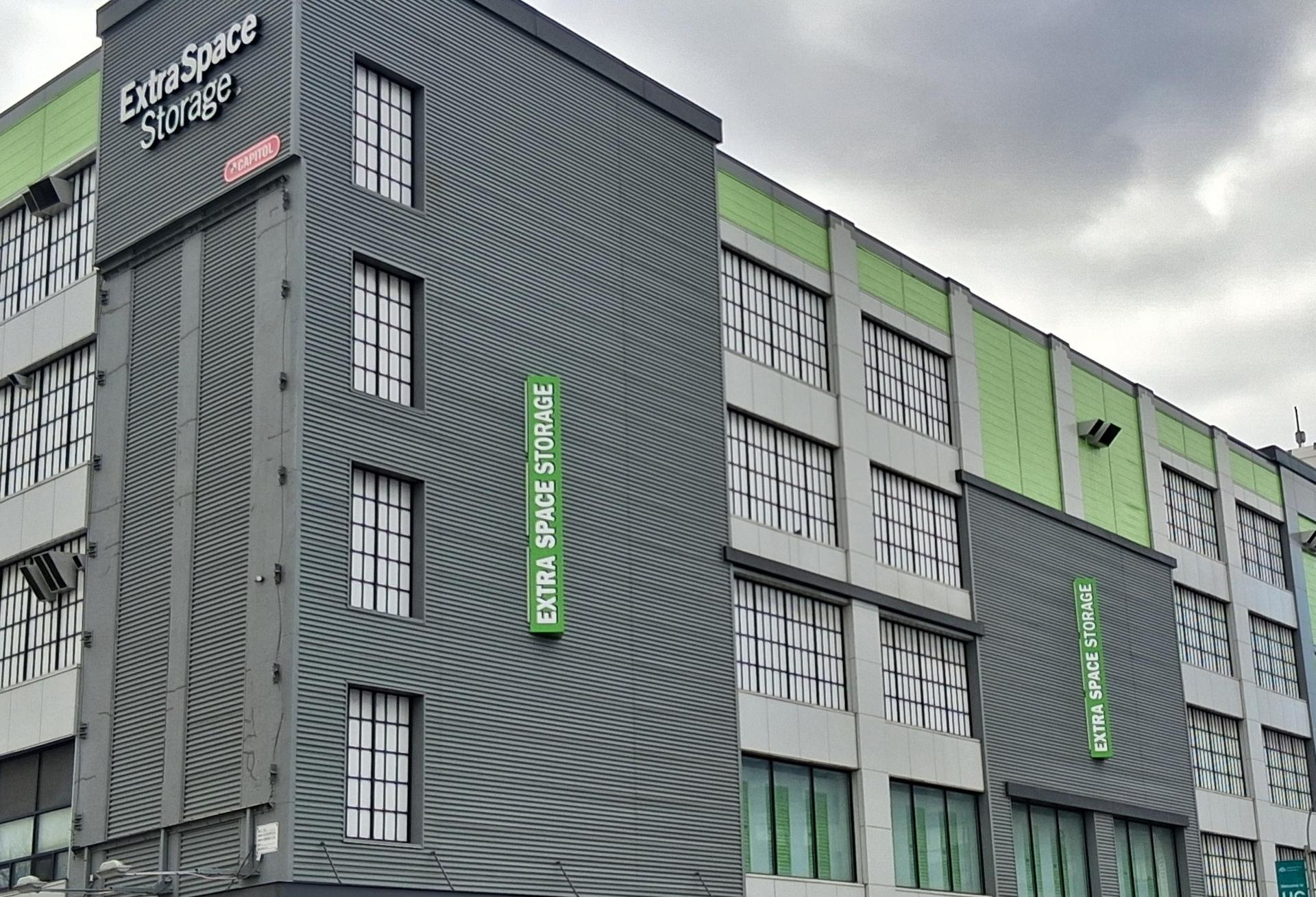
Extra Space Storage, the industry's largest REIT, recorded average annual rent growth of around 15% in 2021 and 2022, according to DXD Capital’s data.
The company's rent growth has fallen significantly in the years since but remained positive. Extra Space recorded 3.1% rent growth in 2023, 1.2% in 2024 and just 0.1% last year.
Despite rent growth being effectively flat in 2025, Dolan said the data shows it will likely bounce back to the 1%-to-2% range for this year.
Across the sector, the industry's achieved rates of around $1.80 per SF moved above in-store prices over the last two quarters of 2025, just as it had the year prior. The DXD Capital report said the pattern signaled a renewed focus on increasing occupancy over rate growth going forward.
However, the decline in rent growth since 2023 coincided with the falling sales of existing U.S. homes, as Dolan said more than a third of homebuyers and sellers utilize the sector when they move.
Existing home sales have dropped every year since 2022, the National Association of Realtors reported in January. Last year’s total of just over 4 million previously occupied homes that changed hands was the nation’s lowest total since 1995.
Millennials and Gen Z customers have emerged as a key driver of demand for the industry, as the percentage of each generation’s population that uses self-storage is on the rise. Gen Z self-storage renters went from 15.8% of the population in 2023 to 16.4% in 2025, while millennial renters jumped from less than 16% to nearly 20% last year, according to the Self Storage Association's 2025 demand study.
"It's really a reflection of incomes not keeping up with the price of housing,” Dolan said. “Renters and buyers are sacrificing size for a location and using self-storage as really an extension of their home."
The ideal market for developing self-storage is in urban or suburban infill locations where the availability of land is scarce. That’s because areas where land is cheap and plentiful are more likely to be oversupplied, Dolan said.
StorageCafe’s analysis found that Florida, California and Georgia led the country for total transaction value last year, with Florida reaching nearly $770M in sales on its own.
Despite that level of activity, Dolan said it’s a tough time to raise capital since the most common feedback the company receives is there’s very little liquidity in the market right now.
“The reality is now is probably the best time to be developing self-storage because of how much the supply has dropped, and how really good the next five years look,” Dolan said. ”But if the dollars are tight, it really doesn't matter how good the outlook looks, they're just not in a position to do it."
)
)
)
)
)
)
)
)
)
)
)
)