
Los Angeles’ once‑booming studio real estate machine is grinding through its harshest reset in years as sluggish production levels, rising costs and a glut of newly built stages collide to squeeze owners from every direction.
Yet many of the city’s biggest players insist the downturn is survivable, not existential — if they can adapt faster than the turbulence reshaping the industry.
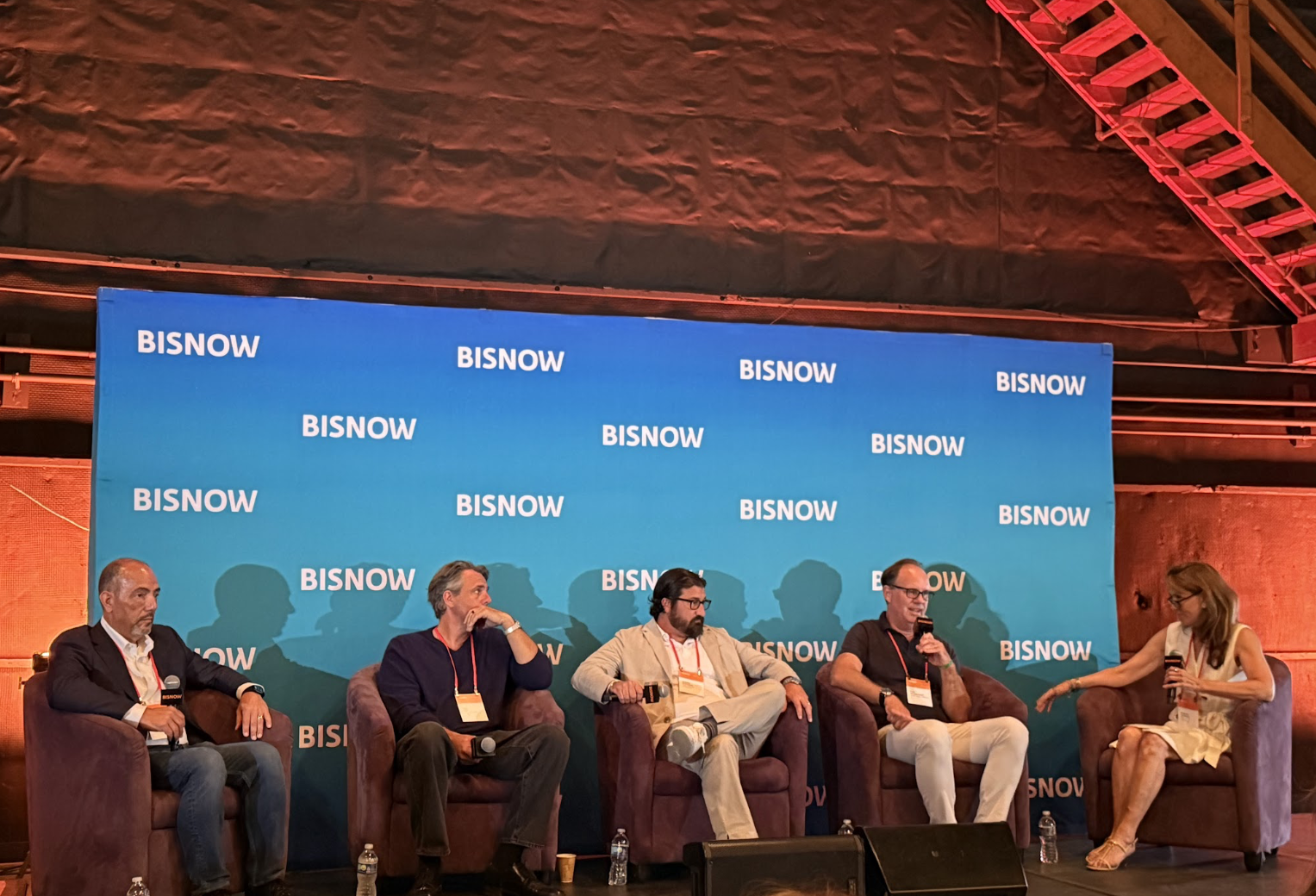
"It's a highly challenged environment right now," East End Capital Managing Partner Shep Wainwright told the audience at Bisnow's Studio Real Estate Conference on June 16.
East End completed East End Studios Mission, a 300K SF soundstage facility along the Los Angeles River in Boyle Heights, earlier this year.
"There's just a massive reset basis that's happening right now, so there's just a ton of pain," Wainwright added.
Despite a state-level tax incentive passed to help boost productions in California, filming has been slow to pick up. For some, the tax credit simply wasn’t enough, speakers said at the event at The Lot in West Hollywood.
"What we're challenged by right now is LA is operating in a noncompetitive basis because the legislature and the government hasn't really supported the industry like other places have," Hackman Capital CEO Michael Hackman said.
It is more cost-effective for American game shows to fly productions, including audience members, to his studios in Ireland than it is to film those same shows in LA, Hackman said.
"We just live in a more expensive place to do business," Hackman said.
Other studio owners and developers weren't so sure that the biggest issue facing studio demand was something that could be worked out legislatively, pointing the finger instead to an excess of soundstages.
"I think part of the problem is we overbuilt the market, which is why we have this issue," Worthe Real Estate Group CEO Jeff Worthe said, referring to the supply-demand imbalance that has led to trouble for owners of soundstages.
Shoot days peaked in 2018, and soundstage occupancy peaked in 2016, according to FilmLA. Annual shoot days in 2025 were lower than they were during the pandemic, when productions were halted. This year has followed the trend, with shoot days in LA County down 3.3% in the first quarter compared to the same period in 2025.
While at least three studio owners agreed that soundstage real estate had more supply than it needed, at least one owner saw the effects of that playing out differently throughout their portfolio.
Location still matters, Hudson Pacific Properties Executive Vice President of Studios Stefanie Bourne said, adding that Hudson Pacific's centrally located Hollywood soundstages are fully leased.
"That experience of lower demand within what is certainly an oversupplied market has been realized somewhat kind of unevenly," Bourne said.
One bright spot that developers of these spaces highlighted was that the climate for soundstage real estate has largely pumped the brakes on new construction, which they felt would address the oversupply issue and ultimately work in the favor of those who were left standing.
"I think the singular operative word right now is adapt, pivot and be prepared for change," Occidental Entertainment Group Holdings CEO Craig Darian said.
To that point, some owners shared creative ways they rented their spaces, including hosting live concerts and locking in smaller, independent productions like microdramas, or vertical-video dramas with episodes that last just a couple of minutes.
The growing presence of AI in the market stirred cautious optimism in industry figures. Although initially thought to be a harbinger of doom for the traditional entertainment industry, soundstage owners and operators saw the technology as yet another way they could win if they could roll with the punches.
AI's ability to lower costs and speed up timelines could mean more productions and make tax incentive dollars go even further, Worthe said. Worthe also said even director Jon Erwin, whose work is entirely done with AI, used soundstages to film.
"I think we've got to look at this as an opportunity, we've got to adjust to it, change for it," he said. "But I think it's a good opportunity for us in Los Angeles to capture this new technology going forward."
)
)
)
)
)
)
)
)
)
)
)
)