
Ian Stapleton hit it big on YouTube, gaining 25 million subscribers who watch him play Minecraft and Roblox and turning it into his career, something that nearly one-third of today's children say they aspire to.
But Hurricane Helene forced him to think about how quickly his audience and his income could disappear. He dove headfirst into real estate investing. Last year, he struck a deal with Trey Stone, a seasoned Houston multifamily investor, and the two established Track Record Assets.
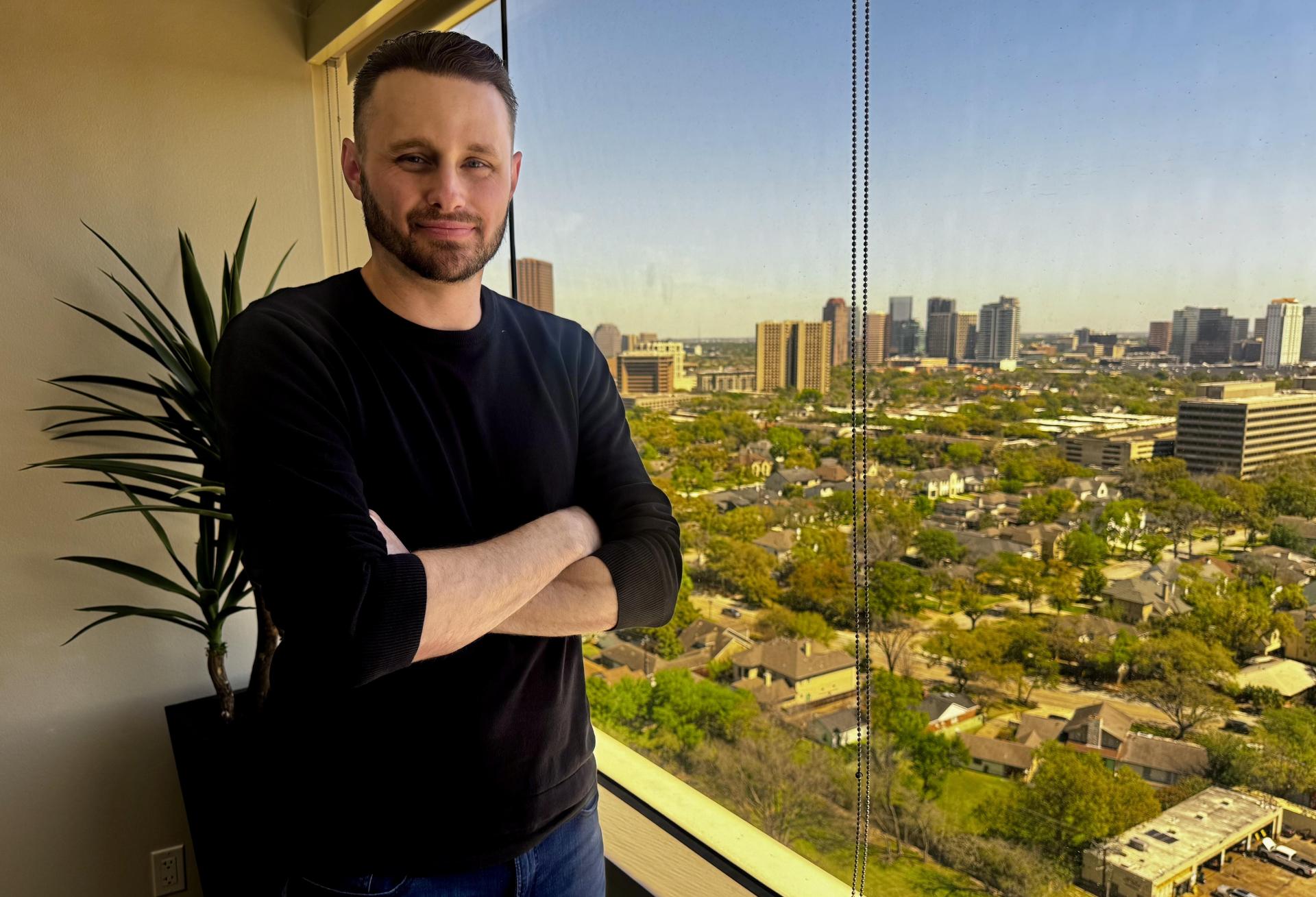
Stapleton and Stone have a goal of building up Track Record's portfolio to 10,000 Class-B and C apartment units in Houston, taking advantage of discounts created by financial distress and improving living conditions for residents.
Stapleton, also known by his screen name SSundee, lived with his wife and kids in a doublewide trailer on their land in Cottageville, South Carolina. The town, an hour away from Charleston, has a population of barely 1,000.
It was a great place for Stapleton to avoid getting recognized in public, though he said he rarely left home anyway. But hurricanes seemed to blow through all the time, and Helene was the second Category 4 storm to hit their town in as many years.
“We were going to build a house on this plot of land, which kind of sparked something,” Stapleton said in an interview with Bisnow. “‘If we're going to build this nice house and all this, what happens if my YouTube career just falls off?’”
If YouTube changed its algorithm, or kids lost interest in watching his content as he aged, his income stream could disappear. He decided it was time for a second career, and by June 2025, he left his home base in South Carolina to go all in on being a Houston apartment landlord.
The Career Switch
Stapleton, 38, began making gameplay videos on YouTube as a hobby in 2009 while serving in the U.S. Air Force, which is when SSundee was born.
He quickly found a niche playing games like Minecraft and gained a solid following. Shortly after he started, companies like Machinima began approaching creators to partner and drive revenue. Being in his early 20s, older than the other popular gaming YouTubers at the time, Stapleton took the initiative to talk to the companies.
“I tried to figure out ways that we could mutually benefit each other,” he said. “And then I was able to start making money off of it.”
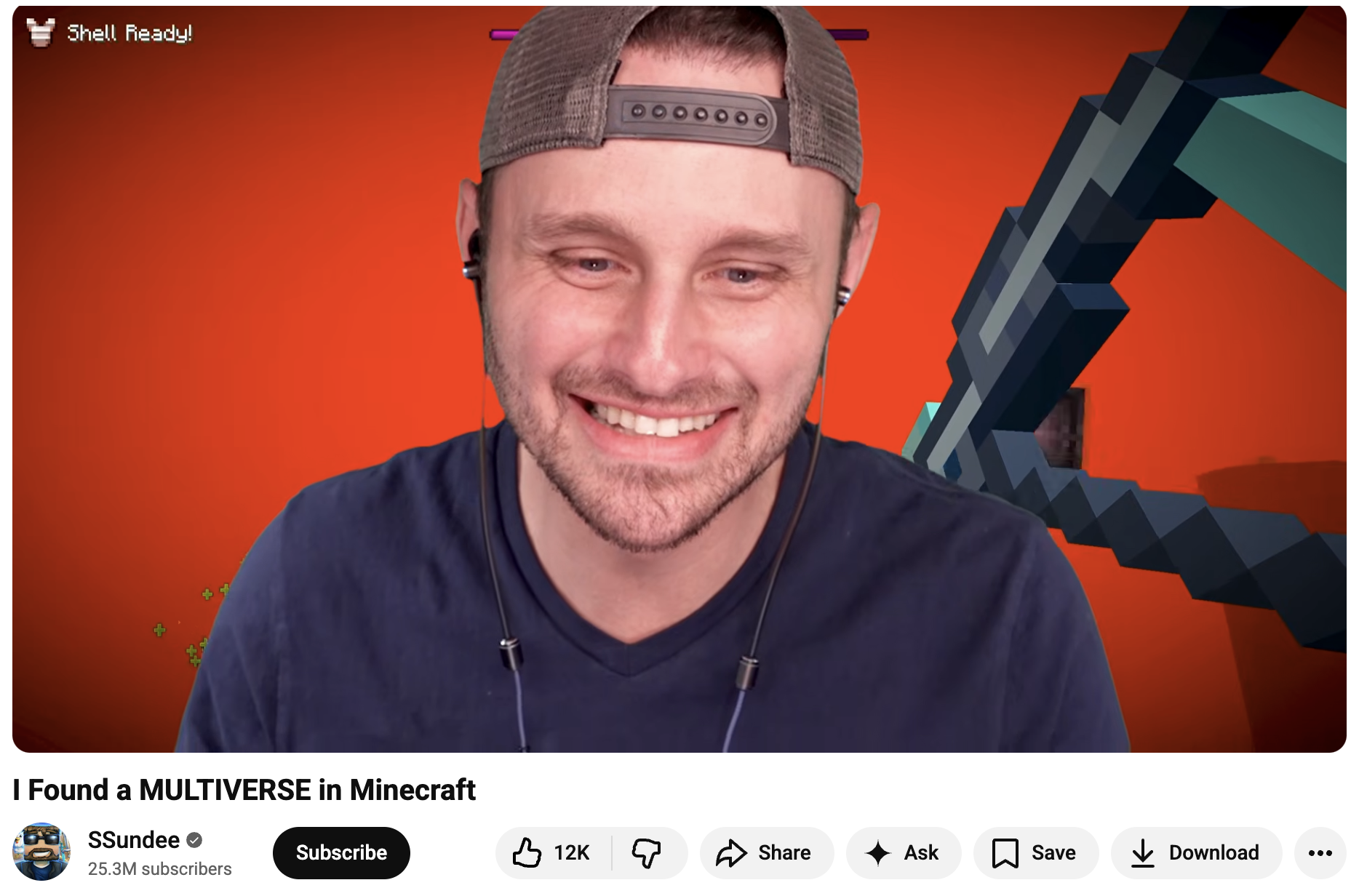
His following grew exponentially with games like Among Us, which was released in 2018 but “took the world by storm” shortly after the start of the pandemic. He hired 75 employees and contractors to help him create Among Us content for the SSundee channel.
“We were the only content creator on the platform creating the content that we were creating,” he said. “We went from 100 million views a month to our peak, which was 370 million views a month ... We exploded in growth.”
Besides serving for six years of active duty and two years in the reserves, YouTube has been his only full-time job, and it’s been a lucrative one.
Stapleton has never had a dream career, so he hadn’t given a post-SSundee career much thought until the hurricane and the reality of aging hit him.
He said he and his family have always lived frugally and below their means, so he never blew through the significant money he earned from his YouTube career. Passively investing and living comfortably for the rest of his life was an option.
But Stapleton wanted to set an example for his three sons by finding a low-risk and fulfilling way to invest his nest egg.
He wasn’t new to investments in general. He looked into options, including cryptocurrency and the stock market.
“You can be a [venture capitalist], invest into different companies, startups,” Stapleton said. “That has a very low success rate. I've done that countless times over my career. Most of them fail.”
The tangible nature of real estate appealed to him.
“Not only do I own the asset, I can drive to the asset,” he said. “As you're paying down your note, the value goes up. That increases your equity just over time because of those two factors. For me, it was a no-brainer, buying real estate.”
After escaping the hurricane without much damage, Stapleton quickly started two real estate investment companies. With his mother-in-law, he bought a couple of duplexes in South Carolina and became a limited partner on a few other properties. With another business partner, he invested in mobile home parks.
But Stapleton wanted to go bigger, aiming to eventually own hundreds of single-family rental properties. He pursued online real estate investment classes and mentorship programs.
“I'm kind of an internet nerd, so I do a bunch of research on people,” Stapleton said. “I'm looking around, trying to figure out, ‘How do I do real estate correctly?’”
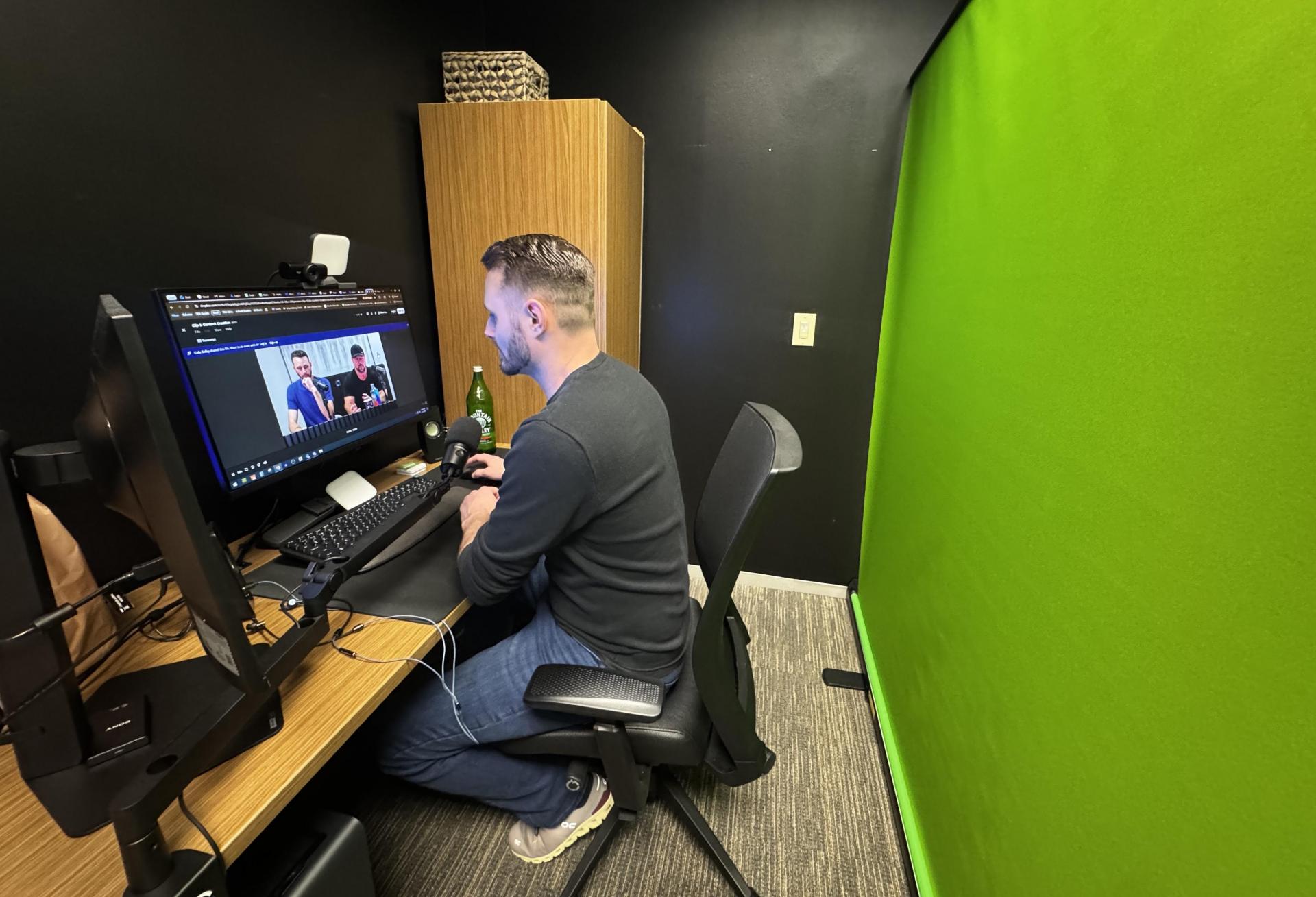
Those mentorship programs led him to connect with Trey Stone, who built up a portfolio of 6,000 units and had 21 successful exits before semi-retiring about 10 years ago. Stone had stepped away from multifamily investment to focus on fatherhood, he told real estate podcaster Brandon Turner, and was “summoned back” by the fundamentals of today’s market, reemerging around the same time he connected with Stapleton.
During their first conversation, Stone told Stapleton his goal of growing a single-family rental home portfolio would come with the workload of four full-time jobs. Multifamily properties put 200 to 300 doors in one location, simplifying operations.
“You can go there multiple times a month and check on all your doors,” Stapleton said. “That was my light-bulb moment.”
He and his family packed their bags and moved to Houston to go all in on Track Record Assets.
Overcoming Distress
The partners established the company last spring with plans to recruit investors to capitalize on the prolific distress in Houston’s Class-B and Class-C market, where a surge of inexperienced syndicators rushed in to buy overvalued properties using almost-free financing from 2021 to 2023.
When interest rates surged, so did payments on floating-rate loans, leading to a significant number of delinquent loans and foreclosures, as operating revenues no longer covered payments.
Track Record plans to buy properties at a discount then upgrade them to add value and improve residents’ living conditions. Stapleton is now creating a relatively new-to-him kind of content for social media to explain to potential investors that multifamily isn’t dead.
“With the past four to five years of multifamily going up in flames and a lot of people losing a lot of money, if we’re going to be doing a similar thing … the only way we’re going to be able to break through that is through transparency,” Stapleton said.
He can be confident in his message because of Stone’s 27 years of experience, Stapleton said. Stone, a former Houston Apartment Association president, is a frequent guest on multifamily syndication podcasts and has spoken at events such as the Limitless Expo and the REI Summit by Brandon Turner.
“He's the operator's operator,” Stapleton said. “If it wasn't for him and the things that I learned from him, I would say, ‘Yes, 100% I don't want to touch this."
But Stone believes in being a contrarian to the system, which is why he held back during the multifamily investment heyday and is buying now that values have fallen significantly. It’s important to lean on experience and mentors as a multifamily syndicator, even if your mentor might tell you something you don’t want to hear, Stone said in his recent YouTube video.
He told the story of an investor who admitted not listening to him when advised against investing in two deals, saying, “Nope, you’re chasing and buying into an up market. You’re overpaying. I don’t agree with the way that’s being financed. Don’t do it.”
Both of those deals are now upside down, Stone said.
“I don’t say this to say I’m some sort of genius, I’ve just been around for a long time,” Stone said in the video. “The longer that you’re around, the more you see those market cycles. You can anticipate that.”
Track Record Assets is working to close its third acquisition. Stapleton said he funded the firm’s first two acquisitions, rather than investors, including a 123-unit complex in East Houston. The firm is not doing any syndication fundraising for that complex, which it bought for about $6M, or $47K per unit.
“I’m actually putting my money where my mouth is,” Stapleton said.
Track Record is renovating the properties and holding them for now, while also raising money for the second property it acquired, a 268-unit complex in North Houston, for $17.8M.
It's also looking to raise money for its next property targeted for acquisition.
Stapleton, the firm’s chief marketing officer, sees social media as a tool to potentially attract investors. But the market may have become weary of social media influencer syndicators. In September, TikToker Teddy Miller, “the Wolf of West Virginia,” was sentenced to seven years in federal prison for real estate scams.
WindMass Capital, whose founder said on a 2019 podcast he “shouldn’t really be able to do what I’m doing with the limited track record that I have,” is facing potential foreclosure on a 1,400-unit multifamily portfolio in Dallas.
Stapleton has a different approach, he said. He’s using social media to promote transparency, showing potential and active investors exactly how their money will be used to upgrade and maintain properties, he said.
“I understand how to talk to a camera. I understand what to show,” Stapleton said. “And I just want to be transparent.”
It’s not just about money for the business partners. Stone grew up in a self-described “rough neighborhood” of Pasadena, a Houston suburb, which inspired him to improve apartment complexes for the families living there in a way that also adds value, Stapleton said.
Most people told him that was a pipe dream, but then he met Stone, and that’s exactly what the two are doing together. Anyone could do the renovations that Stone does to his properties, but in the workforce housing space, most people choose not to, Stapleton said.
“Trey's been dumbfounded for the longest time as to why people don't do it, because doing the right thing is also the most profitable in the long term,” he said. “It baffles us as to why it's not done.”
Stapleton hasn’t abandoned SSundee. He still records on Wednesdays and releases six new videos a week. But he is rapidly learning about the world of workforce multifamily investment while using his content production skills to inform and attract investors.
“I want to do real estate differently,” he said. “I don't just want to do real estate to make money. I want to make an impact and make a change. I don't just want to scalp people and take as much rent as possible while not really doing much for the asset.”
)
)
)
)
)
)
)
)
)
)
)
)