
Walking through a newly built senior housing campus in Newton, Amy Schectman is met as if she were a local celebrity.
Schectman, the CEO of senior housing developer 2Life Communities, makes friends in the halls, chats in the main dining area and receives several hugs and kisses along the way.
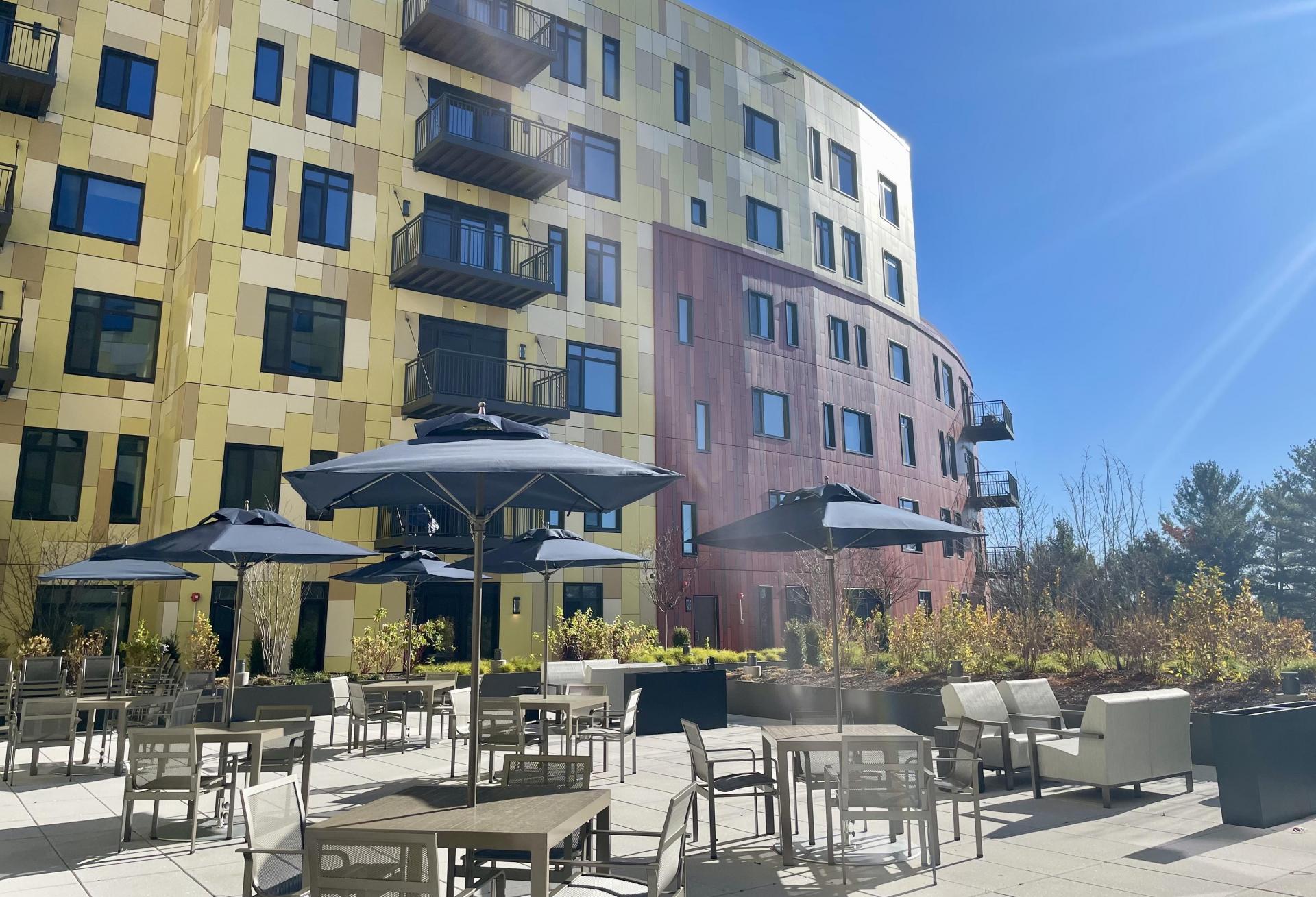
The excitement was palpable across Opus Newton, a 174-unit, middle-income senior housing complex that opened Sept. 15, as residents from Brookline to Seattle began moving into their new living accommodations. Moving trucks lined the parking lot around the main entrance as families helped their loved ones feel at home.
For Schectman, the move-in was the culmination of years of work to bring affordable housing to middle-income seniors.
"We just became obsessed that we have to go where the market fails, and the market is failing in the middle," Schectman said.
2Life began construction on the project in March 2023, with almost all of its units pre-sold by Opus’ groundbreaking event, Boston Business Journal reported. As of Nov. 18, roughly 50% of residents have moved in, with full occupancy expected to happen early next year.
As older generations live longer, the need for senior housing has grown drastically, and development can't keep pace.
Nationally, senior independent living and assisted living occupancy increased to 90.2% and 87.2% at the end of the third quarter, according to NIC Map data. However, construction fell to 17,000 units in that same time period, on par with levels last seen in early 2012.
This imbalance is being felt hardest by those seeking middle-income senior housing, which is often forgotten because of its low investment return model. By 2033, middle-income seniors will make up roughly 44% of all older adult U.S. households, but there aren't many housing options to fit this demographic's needs, according to ULI and PwC's 2026 Emerging Trends report.
Opus Newton came together through a mix of creative solutions to address the needs of middle-income elders who can't afford market-rate units but who also don't fit the criteria for low-income housing.
"Our subsidized housing — there's not enough of it, there's more waiting — but it covers the people who fall in the bottom 20%, and the market is covering the people who fall in the top 5%,” Schectman said. “Nobody's covered in the middle.
Opus is located at 777 Winchester St. in Newton, on the grounds of the Jewish Community Center's Greater Boston Campus and adjacent to 2Life's low-income Coleman House campus.
Since the campus doesn't have any affordable housing, the developer couldn't receive government financing. Instead, it relies on $130M in MassDevelopment tax-exempt bonds purchased by Tampa-based Hamlin Capital Advisors.
Coupled with the bonds, 2Life also took out a Brookline Bank loan and its own equity to fund the rest of the project.
"This could be replicated all over the country, and this is a way to make middle-income people have long-term economic security," Schectman said.
On Jan. 1, roughly 90% of the construction loan will be paid off due to the full capacity at the campus, she said.
For the residents' portion, they pay an upfront fee of roughly $400K to $900K, depending on the size of the apartment. Most of the costs represent less than half the sales price of a median single-family home in surrounding towns, Schectman said.
They also pay a monthly fee that covers 20 meals a month, utilities, WiFi and other living expenses.
2Life also has devised creative cost-cutting measures meant to keep the units affordable.
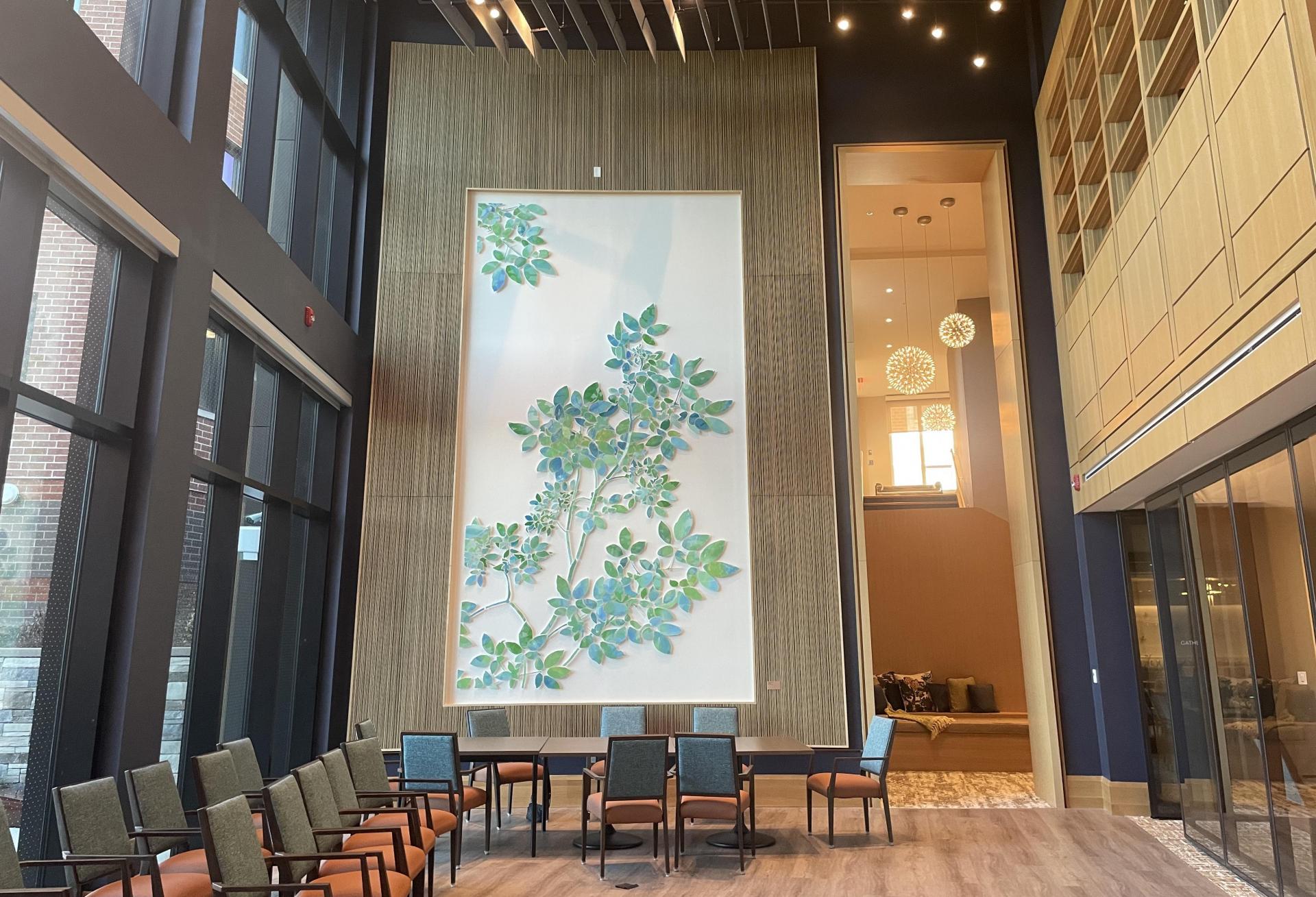
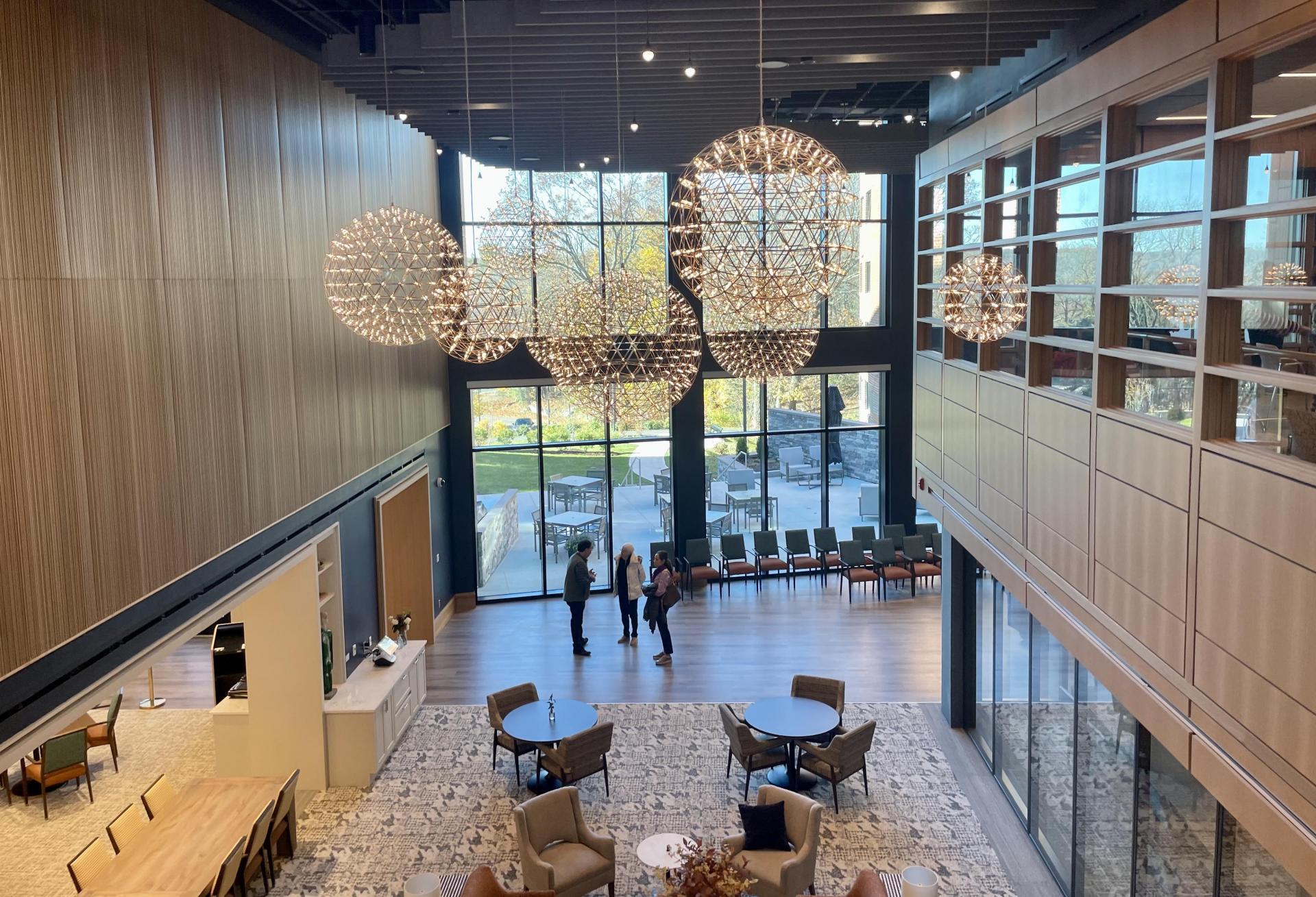
For example, Opus residents, instead of having their own designated community center, share amenities with the connecting Coleman Center affordable housing complex. Shared amenities include a restaurant, café, art studio, classroom, fitness spaces, and holistic wellness programming.
Residents are also required to volunteer for roughly 10 hours a month. This can include anything from working the front desk to starting up a choir group.
"Everyone can come into the community at a price point they can afford and still be a part of the community," Schectman said.
The volunteer program has garnered a lot of attention from the elderly residents, many of whom have put in more hours than needed. Sometimes, it has been hard to find enough jobs for volunteers to do around the complex, Schectman said.
"It was honestly a way to save money on operating costs, and it morphed within a second to this defining feature of why people wanted to be here," Schectman said.
The campus also has two onsite healthcare navigators — a registered nurse and a social worker — meant to assist residents who might need more help or want to come in for a regular checkups.
"We don't move you to where it's convenient for us to take care of you," Schectman said. "We bring care where it's convenient for you to get it."
Click through the slideshow below to see more photos of Opus Newton:
)
)
)
)
)
)
)
)
)
)
)
)