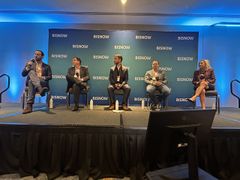
A boom isn't always just an increase in activity, sometimes it's a complete paradigm shift for business—such as multifamily in Phoenix, according to our speakers on Wednesday at Bisnow's Phoenix Multifamily Boom event.
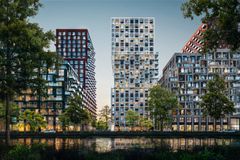
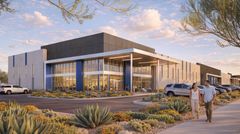
For both developers and investors, the focus of the business used to be low-density greenfield properties. In the last few years, that's changed dramatically, the speakers noted. Now it's about high-density, infill projects. Why the change? People want to live in the urban core, in Phoenix and a lot of markets. A roomful of real estate pros came to the Hyatt Regency Scottsdale for our event.
The change couldn't have happened in a sluggish market, but currently Phoenix is enjoying one of the hottest rental apartment markets in the country. The speakers all agreed that occupancies are as high as anyone can remember—maybe the highest in 40 years, now over 95%. Because of the onslaught of development, there might be softer occupancies in some submarkets, but only relatively speaking and for a short while, since most new product will be absorbed quickly. Snapped: Berkadia senior managing director Mark Forrester, who moderated, and MG Properties CIO Christian Garner.
The heat is being generated by a strong influx of people, especially Millennials looking to take advantage of the expanding job opportunities in the Phoenix area, the speakers explained. Both companies and workers are coming en masse from California, for example, mainly to take advantage of the lower costs of doing business and living, respectively. But there are positive reasons for coming to Arizona, too, such as a pro-business climate and mild winters. Walker & Dunlop SVP Brandon Harrington and Crescent Communities regional development director Scott Makee.
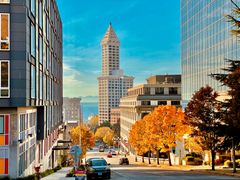
Millennials in higher-paying professions don't just want plain apartments in far-flung suburban locations, they prefer to be in amenity-rich properties in more walkable, core urban areas, and that includes Scottsdale. That's driving infill developments, and higher rents in existing core properties. "People want to be there, and they'll pay more for that experience," as one speaker put it. The demand is there for infill locations. Whitneybell Perry Architecture & Planning president Douglas Whitneybell, who also moderated, and Mark-Taylor EVP Chris Brozina.
The drive to be in the urban core is leading to denser neighborhoods in Phoenix—a genuinely new thing in the market, the speakers also noted. One metric illustrates the trend very well: Of the 30,000 units built or in the pipeline since 2011, the average density is 49 units per acre. That compares with the pre-2011 existing stock, whose density is 16 units per acre. It's part of the maturing of the market, because people want density. P.B. Bell president Chapin Bell and Lennar Multifamily Communities-Mountain States/Southwest division president Scott Johnson.