Macroeconomic factors are stacking up to create hurdles for developers trying to work in Los Angeles. Some of them are looking to 2029 and beyond for groundbreakings, a time when they’re hoping to have better conditions.
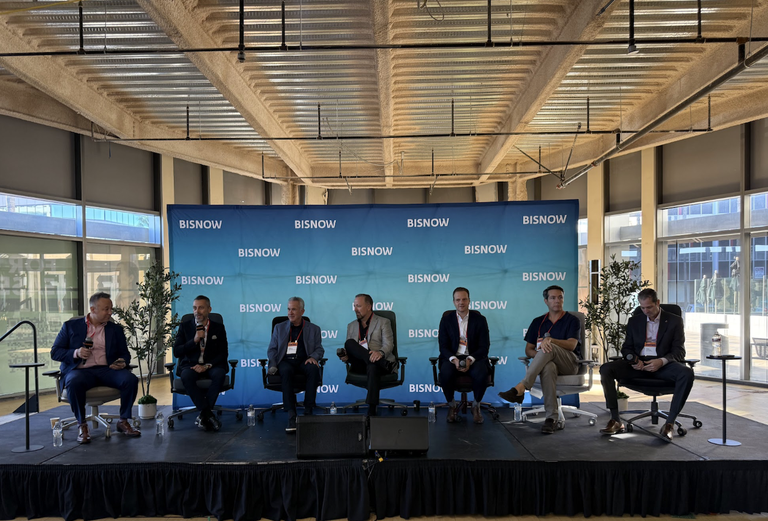
“We're trying to break ground on deals because we do have a view that, you know, it does take you two to three years to build these projects, so '29, '30 may look very different than today,” Cityview Chief Operating Officer and Chief Financial Officer Damian Gancman told attendees at Bisnow’s Los Angeles State of the Market event on Oct. 14. “But it has to be in a prime location. It has to be at a basis that just on a nominal dollar makes sense.”
Gancman is looking ahead because current conditions are not inspiring.
The numbers just don’t work in favor of new market-rate development right now, Gancman told the audience at the Sherman Oaks Galleria. Material costs have shot up, and the cost of land in Los Angeles is already very high. Add to that a 10-year Treasury yield at a 24-year high of more than 5%, and getting a new development off the ground becomes a daunting task.
The rising cost of construction materials has derailed projects across the country. Prices for construction-related materials shot up 13.3% year-over-year in the U.S., nearly five times the rate last year, according to a Cushman & Wakefield Construction Insights report published in September.
High borrowing costs and overall economic volatility are having a ripple effect throughout all asset classes, as even industrial powerhouse Prologis warned this month that these factors would lead to a decline in transactions and new developments.
“We do believe that supply is part of the answer,” Gancman said. “You just have a big macroeconomic overlay that is difficult to overcome right now.”
If you have a submarket you like and believe in, “delivering new product in '29 and '30 may be the best bet,” Gancman said.
Adding to the challenge of developing new market-rate housing is that there are opportunities to buy existing product below replacement cost, and more such opportunities are expected.
Across the CRE spectrum, conditions have been so volatile for so long, real estate professionals anticipated that some owners are near the end of their patience, which could result in more people willing to sell, or sell for less.
“We'll have a generational buying opportunity to buy existing multifamily assets with sellers capitulating for sellers, and I think it's the time to be buying and not selling,” LaTerra Development Managing Director Chris Tourtellotte said.
Some sellers are doing so because they are fed up with the layers of regulations that the city of Los Angeles has stacked up for multifamily owners, panelists said.
“I'm seeing investors that are giving up,” AlphaGen Real Estate Partners Joseph Soleiman said. In many cases, these are owners who are elderly, who have benefited from their investments for decades and are just looking to exit.
MJW Investments President Mark Weinstein echoed the sentiment.
“LA with a regulatory environment, you have to kind of hold your nose if you're going to buy,” Weinstein said. “There could be great buying opportunities, but the regulations, the politics in LA have gotten to all-time low, and I think that that creates opportunities because the sellers are so fed up with LA.”