Technology will undoubtedly have a huge impact on the way real estate professionals go about their day jobs over the next decade.
Combined with societal change, it will mean that real estate as an industry will have to get its head around some totally new disciplines and change its existing working practices. Here are three new areas to think about.
Ethics
Technological and societal change will open up new areas which will require entirely new modes of thought from the real estate industry. Take the Internet of Things, the world of connected sensors which will allow buildings to create terabytes of data.
“Buildings will create more and more data and know where people are in a building,” Alpha Property Insight founder Dan Hughes said. “That creates an ethical question. Who owns that data and how can it be used? Facebook has opened up the question of collecting data, and what it should and shouldn't be used for. At the moment it is open to legal interpretation and that creates problems. It is hard for regulation to keep up with technology, so real estate professionals will have to make their own decisions.”
Carbon accounting
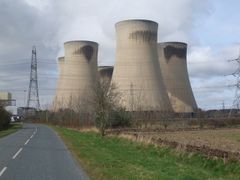
At the moment, in spite of buildings accounting for around 40% of all carbon emissions, the real estate industry has escaped any particularly detailed scrutiny about its practices. But that could change very quickly, and real estate does not necessarily have the skill set needed to react quickly.
“Young people today know it is important and attitudes are changing,” British Land Head of Campus Juliette Morgan said. “Just look at the change in the way people are looking at plastics now. Real estate has to choose to invest in these things, but doesn’t necessarily have the right skills or mindset when it comes to carbon accounting and future-proofing buildings.”
There are two types of carbon accounting: physical carbon accounting, which looks at quantifying physical amounts of CO2 released into the atmosphere, and financial carbon accounting, which looks at giving carbon a financial market value.
Reports like that published recently by the International Panel on Climate Change highlight how reducing global temperatures will involve linking both elements — cutting emissions by sharply increasing carbon taxes globally. In that scenario, real estate needs to properly understand the cost of its contribution to global emissions.
Morgan undertook an online course to better understand the topic. “I felt I needed to be better informed in order to make better decisions,” she said. “If we are going to make decisions on buildings that impact the next 50 or 60 years then we need to be better informed.”
Social impact and health outcomes
Just as there could be growing scrutiny of real estate’s impact on climate change, there could also be a closer examination of the social impact buildings and developments have.
Developers already produce social and economic impact reports highlighting the benefits of large developments and overall companies. But society as a whole is likely to start paying close attention and undertaking a more rigorous analysis. And this might change the metrics by which real estate is valued.
“The industry is financed based on income and capital uplift. But we have to start evolving the business model to look at metrics beyond £/SF,” Centric Lab Director of Consultancy Josh Artus said.
“Many developers receive significant tax incentives, and people will start asking, what are they doing with them? Societies and governments will look at what the benefits of developments are in terms of job creation, or reduction of obesity or mental health issues. If developments have a certain cost, but can save the [National Health Service] significant sums over a 20-year period, then we need to start calculating their value in a different way.”