Europe’s data centre sector has punched below its weight for the past few years, held back by cautious regulators, outdated power grids and capital markets less dynamic than their feverish American cousin.
But that could be about to change, with a fresh wave of global capital now targeting European data centres, drawn by a strong leasing market and growth in the number of investment opportunities.
And after the U.S. midterm elections created intense uncertainty among data centre developers and occupiers about what and where they can build, Europe’s slow and steady attitude to regulation suddenly looks more appealing.
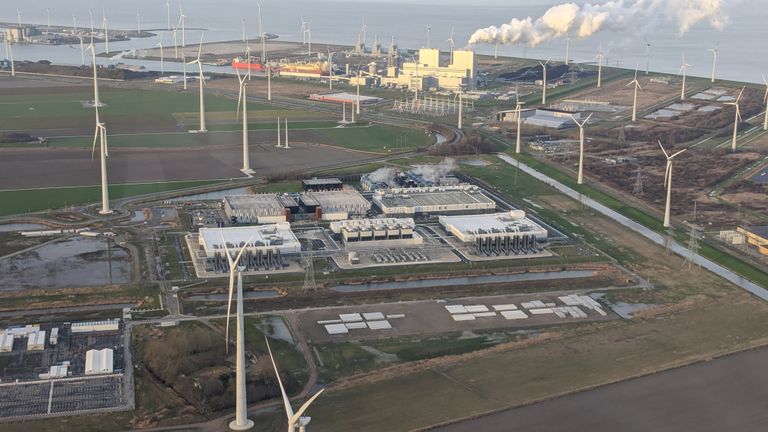
“Europe will play an increasingly important role in the global data centre landscape, and we're already starting to see that shift take shape,” Eastdil Secured Savills Director David Mackasey told Bisnow.
“It is attracting significant new customer demand, partly driven by an increasing focus on geographic diversification.”
Europe's data centre market is a fraction of the U.S.’ — there are 47.3 gigawatts of existing supply in the U.S. versus 12.1 GW across all of Europe, the Middle East and Africa, according to a Cushman & Wakefield first-half report. The pipeline gap is even starker, with 37.7 GW underway across the Americas versus 3.8 GW under construction in EMEA.
But Europe is working to chip away at that gap. Global investors are backing large development platforms, and developers are coming up with increasingly innovative solutions to access power. The value of investment in digital infrastructure nearly doubled year-over-year across EMEA in the first half of 2026, according to Datasite. Large stabilised assets are starting to trade to core investors in Europe, and bond investors are buying debt secured against data centre income.
European data centre leasing will be 15% higher in 2026 than 2025, CBRE predicted, driven primarily by growth in colocation leasing. Hyperscale self-build-out will grow by a more modest 2% as Big Tech firms ramp up spending on the continent but struggle to find adequate sites.
Supply is rising, but not as fast as takeup, CBRE said, with vacancy set to fall to just above 10%, a 200-basis-point decline compared with the end of 2025. North American vacancy is a scant 1%, according to JLL.
That dynamic of shrinking availability, combined with a growing appetite from hyperscalers and neocloud compute providers, creates a sweet spot that is attracting the attention of global capital — previously, many of the big beasts that had been active in the U.S. struggled to find opportunities in Europe into which they could deploy funds.
Artificial intelligence-led hyperscale occupiers are expanding in Europe, following where power and permits are most readily available.
Microsoft signed in September to take data centres totalling an initial 300 megawatts of capacity in Greece, with an eye toward growing to as much as 1 GW.
The Nordic countries have been a growing hot spot, with neocloud startup NScale committing to building data centres totalling up to 290 MW in Norway — albeit future schemes in the country are affected by a temporary moratorium on new grid connection approvals.

Among private equity-backed platforms, Brookfield said earlier this month that a data centre joint venture it has formed with the Qatar Investment Authority will spend an initial £2.5B building 100 MW of data centre capacity at the Drax power station site in North Yorkshire.
The facility could grow to as much as 1 GW of computing power, and the investment could rise to £20B along with investment in chips and other digital infrastructure.
The project is part of a growing trend of investors and developers partnering with power companies to try and leapfrog long waits for power that are common across Europe. Echelon, the European data centre developer backed by Starwood Capital, has a similar joint venture with Spanish power company Iberdrola.
Europe’s slow and fragmented regulatory environment has typically been a hindrance to hyperscale occupiers, with permitting and environmental processes more stringent than in the U.S.
But those rules have thus far at least been consistent, whereas the U.S. is now entering a period where local municipalities and state governments are introducing ad hoc regulation prohibiting data centres.
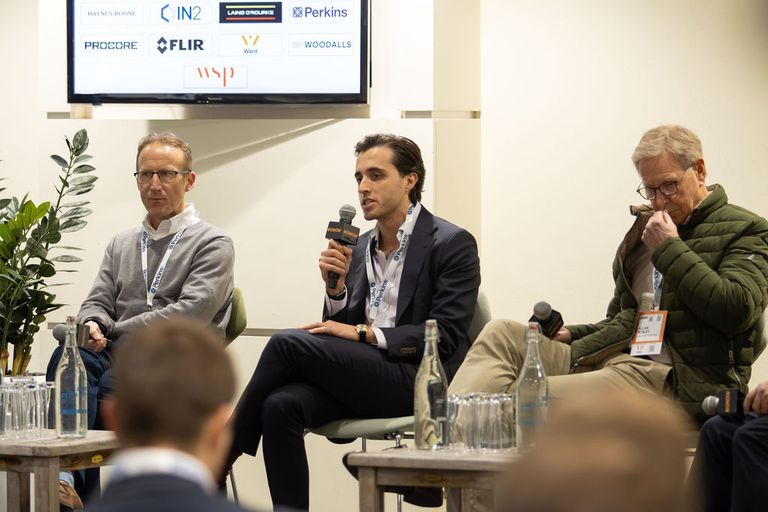
“In EMEA, at least what I've seen so far, those rules are established. You have somewhat of a better set framework for how you're going to get from Point A to Point B,” Amazon Web Services Head of EMEA Data Center Supply Solutions Amy Vetal told an audience of more than 350 people at Bisnow’s European Data Centre Investment Conference and Expo this month.
“Now, we may look at that and say that's a really long time, and I think that's one of the challenges,” Vetal added. “But you know a bit more about what you're getting into from the onset and the rules that you have to play by.”
The difficulty in getting data centres built has an inherent benefit to owners and developers — even if there is an AI bubble, there is little chance of European data centres becoming overbuilt.
“Importantly, Europe is not facing an oversupply of data centres,” Eastdil’s Mackasey said. “Quite the opposite. We have a structural shortage of capacity. We expect this imbalance to become more pronounced as demand continues to grow while access to power, planning restrictions and regulatory challenges constrain new supply.”
Where occupier demand goes, investment demand inevitably follows, and both domestic and global capital is increasingly putting significant amounts of money to work in Europe.
There is increasing appetite for all parts of the data centre capital stack and development cycle, from powered land, which every company wants in on, through to stabilised assets.
In December last year, Canadian superannuation fund CPPIB struck a joint venture with Australian developer Goodman to build out €8B (£6.6B) of the latter’s European data centre development pipeline. An initial €2.2B will be spent building four projects in Paris, Amsterdam and Frankfurt with an information technology load of 282 MW.
On the corporate level, infrastructure investor Wren House, which is backed by the Kuwait Investment Authority, is in talks to buy an 80% equity stake in European data centre platform xScale from GIC for about €700M, a deal that values the company as a whole at close to €2B, including debt. Equinix owns the other 20% stake and is retaining its ownership.
The platform owns 19 facilities in eight countries across Europe, including two in London and three in Dublin.
Fixed-income investors are showing appetite for the debt side of the ledger, as evidenced by xScale’s portfolio. The firm issued a £280M commercial mortgage securitisation in July backed by income from two fully leased data centres in Slough totalling 29 MW and valued at £500M. That deal followed two securitisations earlier this year totalling £1.1B secured against assets in the UK and the Netherlands.
On top of this, a market is emerging in Europe for stabilised data centre assets. That is a key element of the investment ecosystem — if developers know there is a buyer for stabilised assets at acceptable yields, that gives them the confidence to build.
Given the size of the equity cheque required to buy a completed, fully leased data centre, there is a limited pool of buyers for these assets. But it is growing, the DICE Europe panellists said.
“We do believe that these assets are long-term investment strategies for a lot of these funds and that liquidity pool is widening,” DigitalBridge Vice President James Colvin said, referring in particular to infrastructure funds, which are comfortable with the element of capital expenditure risk and operational risk that comes with buying data centres.
In the U.S., data centres are being sold using triple-net lease structures with which real estate investors are familiar. Blackstone has just undertaken a $5B sale-and-leaseback deal with Amazon using such a mechanism. If these kinds of deals were to become more popular in Europe, that would entice more traditional real estate investors, Colvin said.
A deal that has provided much encouragement to the market was the purchase by GLIL of a pair of data centres totalling 60 MW in Slough developed by Yondr. GLIL is an investor backed by four local and one national UK government pension funds.
Financial terms of the deal were not revealed, but the two centres were part of a securitisation in late 2025, giving some public details about the asset. In November last year, they were valued at £894M and provided net operating income of £48M from £67M gross revenue, with a 15-year lease in place to an unnamed hyperscale occupier with 2% fixed uplifts. That implies a net yield of about 5.36%.
“Investor appetite for European data centres remains exceptionally strong,” Mackasey said. “We've recently seen significant capital formation targeting stabilised assets, alongside deep pools of capital seeking exposure to preleased developments backed by strong-credit customers and established operating platforms.”