Chicago hotels are having a banner year, but investors haven’t quite bought the boom.
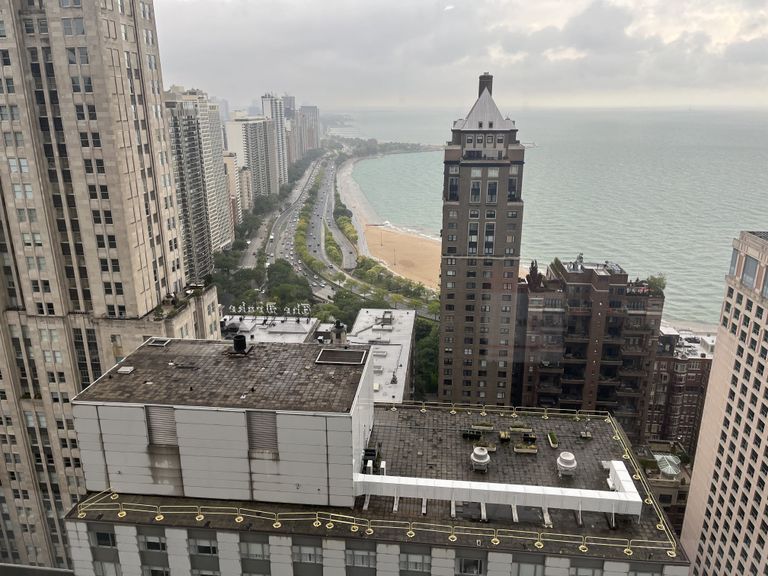
Even as the only major U.S. city not to host a World Cup game, Chicago has seen a surprising boost to its hospitality performance in 2026 on the back of a strong event calendar, limited new hotel supply and resilient traveler demand.
It is among the strongest of the top 25 markets CoStar tracks, with 12.7% year-over-year growth in revenue per available room through the first three quarters. Operators’ ability to push room rates is buoyed by a scarce hotel pipeline, with fewer than 1,000 rooms slated for delivery, or about a 1.6% supply increase — well below the nationwide rate.
But ever-present property tax uncertainty, ongoing labor disputes and volatile interest rates have restrained would-be dealmakers from pouncing on acquisitions.
“In general, the investors are saying, ‘Man, Chicago's not a market we feel really good about at the moment because too much is unknown,’” Maverick Hotels and Restaurants CEO Bob Habeeb said. “The business is great, right? That's the irony.”
Over the trailing 12 months, there has been $423M in hotel sales volume in Chicago, well below its 10-year average of $677M. So far this year, there have been 44 hotel transactions, compared to 73 across the entirety of 2025, 52 in 2024, and 67 in 2023.
Chicago’s Biggest Hotel Sales Over The Past 12 Months
18 significant sales, ranked by price. Hover or tap a marker for details.
 3The Westin O'Hare
6100 N. River Road, Rosemont
$50M · $95,238/room · 525 rooms
Upper Upscale · Built 1984
Sold March 13, 20268Fairfield by Marriott Inn & Suites Chicago O'Hare
2350 Mannheim Road, Des Plaines
$21.6M · $157,752/room · 137 rooms
Upper Midscale · Built 2022
Sold Dec. 9, 202516SpringHill Suites Chicago Naperville/Warrenville
4305 Weaver Parkway, Warrenville
$8.8M · $68,359/room · 128 rooms
Upscale · Built 1997
Sold March 2, 202617Courtyard by Marriott Chicago Schaumburg/Woodfield Mall
1311 American Lane, Schaumburg
$8.4M · $51,605/room · 162 rooms
Upscale · Built 2005
Sold Sept. 16, 202618Holiday Inn Express Chicago NW - Arlington Heights
2111 S. Arlington Heights Road, Arlington Heights
$7.9M · $71,171/room · 111 rooms
Upper Midscale · Built 1987
Sold Feb. 5, 2026
 1The Westin Michigan Avenue Chicago
909 N. Michigan Ave., Chicago
$72M · $95,745/room · 752 rooms
Upper Upscale · Built 1963
Sold Dec. 3, 20252Ruby Chicago
162 E. Ohio St., Chicago
$51.5M · $143,454/room · 359 rooms
Upscale · Built 1928
Sold Sept. 21, 20264The Blackstone, Autograph Collection
636 S. Michigan Ave., Chicago
$43.2M · $128,955/room · 335 rooms
Upper Upscale · Built 1910
Sold May 5, 20265La Quinta Inn & Suites by Wyndham Chicago Downtown
1 S. Franklin St., Chicago
$30.5M · $127,615/room · 239 rooms
Upper Midscale · Built 1958
Sold June 4, 20266Homewood Suites by Hilton Chicago Downtown
40 E. Grand Ave., Chicago
$29M · $124,464/room · 233 rooms
Upscale · Built 1980
Sold April 29, 20269Hotel 505 River North
505 N. State St., Chicago
$21M · $80,460/room · 261 rooms
Upper Upscale · Built 2010
Sold Sept. 25, 202615Selina Chicago
100 E. Chestnut St., Chicago
$8.8M · $72,256/room · 122 rooms
Upper Midscale · Built 1933
Sold Jan. 16, 2026
 7Chicago Marriott Midway
6520 S. Cicero Ave., Bedford Park
$24M · $120,000/room · 200 rooms
Upper Upscale · Built 2002
Sold Oct. 8, 2026
Part of a portfolio sale10Courtyard by Marriott Chicago Midway Airport
6610 S. Cicero Ave., Bedford Park
$20.5M · $117,816/room · 174 rooms
Upscale · Built 1997
Sold Oct. 8, 2026
Part of a portfolio sale11Hilton Garden Inn Chicago/Midway Airport
6530 S. Cicero Ave., Bedford Park
$19M · $109,195/room · 174 rooms
Upscale · Built 2005
Sold Oct. 8, 2026
Part of a portfolio sale12Hampton Inn Chicago-Midway Airport
6540 S. Cicero Ave., Bedford Park
$16.5M · $97,059/room · 170 rooms
Upper Midscale · Built 1990
Sold Oct. 8, 2026
Part of a portfolio sale13Holiday Inn Express & Suites Chicago Midway Airport
6500 S. Cicero Ave., Bedford Park
$10M · $96,154/room · 104 rooms
Upper Midscale · Built 1998
Sold Oct. 8, 2026
Part of a portfolio sale14Fairfield by Marriott Inn & Suites Chicago Midway Airport
6630 S. Cicero Ave., Bedford Park
$10M · $87,719/room · 114 rooms
Upper Midscale · Built 1996
Sold Oct. 8, 2026
Part of a portfolio sale
The six Cicero Avenue hotels all sold Oct. 8, 2026, as part of a portfolio sale. Per-hotel prices are CoStar’s.
See all 18 sales
| # | Property | Sold | Price | Per room |
|---|---|---|---|---|
| 1 | The Westin Michigan Avenue Chicago Chicago | Dec. 3, 2025 | $72M | $95,745 |
| 2 | Ruby Chicago Chicago | Sept. 21, 2026 | $51.5M | $143,454 |
| 3 | The Westin O'Hare Rosemont | March 13, 2026 | $50M | $95,238 |
| 4 | The Blackstone, Autograph Collection Chicago | May 5, 2026 | $43.2M | $128,955 |
| 5 | La Quinta Inn & Suites by Wyndham Chicago Downtown Chicago | June 4, 2026 | $30.5M | $127,615 |
| 6 | Homewood Suites by Hilton Chicago Downtown Chicago | April 29, 2026 | $29M | $124,464 |
| 7 | Chicago Marriott Midway Bedford Park | Oct. 8, 2026 | $24M | $120,000 |
| 8 | Fairfield by Marriott Inn & Suites Chicago O'Hare Des Plaines | Dec. 9, 2025 | $21.6M | $157,752 |
| 9 | Hotel 505 River North Chicago | Sept. 25, 2026 | $21M | $80,460 |
| 10 | Courtyard by Marriott Chicago Midway Airport Bedford Park | Oct. 8, 2026 | $20.5M | $117,816 |
| 11 | Hilton Garden Inn Chicago/Midway Airport Bedford Park | Oct. 8, 2026 | $19M | $109,195 |
| 12 | Hampton Inn Chicago-Midway Airport Bedford Park | Oct. 8, 2026 | $16.5M | $97,059 |
| 13 | Holiday Inn Express & Suites Chicago Midway Airport Bedford Park | Oct. 8, 2026 | $10M | $96,154 |
| 14 | Fairfield by Marriott Inn & Suites Chicago Midway Airport Bedford Park | Oct. 8, 2026 | $10M | $87,719 |
| 15 | Selina Chicago Chicago | Jan. 16, 2026 | $8.8M | $72,256 |
| 16 | SpringHill Suites Chicago Naperville/Warrenville Warrenville | March 2, 2026 | $8.8M | $68,359 |
| 17 | Courtyard by Marriott Chicago Schaumburg/Woodfield Mall Schaumburg | Sept. 16, 2026 | $8.4M | $51,605 |
| 18 | Holiday Inn Express Chicago NW - Arlington Heights Arlington Heights | Feb. 5, 2026 | $7.9M | $71,171 |
Data courtesy of CoStar. Sales through Nov. 3, 2026. Map © OpenStreetMap contributors.
Some of the slowdown has come from elevated interest rates.
“Markets like Chicago that have performed very well might push sellers to test the market, test their asset values, and we'll see if buyers are willing to come up a little bit,” Costar Director of Hospitality Market Analytics Didio Pequeno said. “But it's really all about that high cost to borrow and the wide spread on the bid-ask spread.”
But Chicago has unique challenges as well. Increased labor costs and ongoing worker strikes have injected new unpredictability into hoteliers’ bottom lines. Hundreds of unionized workers at nearly a dozen hotels across the city are on strike as they look to negotiate new contracts with improved wages, benefits and safer workloads.
Cook County property taxes, often maligned by the commercial real estate community for their unpredictability, are another reason investors are steering clear of Chicago, although a new assessor could bring long-awaited stability to the process.
“I used to have some rules of thumb that were pretty accurate in predicting real estate taxes for hotels,” Habeeb said. “Now, nobody's more exposed to it than me, and I'm telling you, it's a turkey shoot. You just don't know.”
Chicago’s slow pace of hotel investment mirrors comparable cities across the U.S. New York City has seen $2B in trades over a trailing 12-month period, down from its 10-year average of $2.4B. Los Angeles has $624M in investment over the last year, a decline from a 10-year average of $896M.
But Chicago’s strong RevPAR performance has been even better than its peers who saw a boost from the 2026 World Cup. CoStar forecasts Chicago to grow RevPAR by 8.1% through December and expects that growth to outpace the nation. Pequeno said Chicago hotels “definitely overperformed” compared to expectations heading into the year.
Traveler demand has held steady even in the face of a tough macroeconomic climate, which has been a pleasant surprise for the hospitality industry, Pequeno said. People are treating travel like a necessity, and hotels are benefiting, he said.
Habeeb said it was an encouraging sign that the market continues to perform well with organic growth, even though these years follow ones with popular events that drove RevPAR like the Democratic National Convention in 2024.
“The market has gotten so solid because there is so much going on in Chicago,” Habeeb said. “New music venues opening every day, expansion in sporting, so on and so forth. That's manna from heaven for hotels.”
The city’s RevPAR growth numbers are catching people by surprise, said Adam McGaughy, senior managing director in JLL’s hotels and hospitality group, and he is starting to see more private equity groups and institutional investors poking around Chicago hotel assets. High net worth family office owner-operators are also buying significantly larger real estate deals than they did in the past, he said.
“We're fully a seven-year cycle away from Covid,” McGaughy said. “That should start pushing out some additional properties that I would say are more cash flow-focused. So I think by definition, better quality, better cash flow, higher transaction volume.”
Pequeno said profit margins are going to continue to be squeezed, and the only way for hotels to really offset that is to continue to drive rates. CoStar’s 2027 forecast for Chicago is that RevPAR will decline 0.4% against a backdrop of tough comps, he said. After a period of strong performance, it is only natural that that will eventually start to flatten, Pequeno said.
But McGaughy isn’t predicting a slowdown in 2027. Instead, he expects there could be a moderation in growth against tough RevPAR comps from 2026, but he still anticipates normalized single-digit RevPAR growth next year.
With a new assessor in place hopefully providing tax stability and labor negotiations eventually in the rearview mirror, McGaughy said he sees a path for the transaction environment to improve.
“It's just about removing any and all unknowns and getting to basically a place of equilibrium where we have transactions going off more frequently,” McGaughy said. “The operating fundamentals are the first step in getting us there.”