While a glut of life sciences space sits empty in the Boston area, companies are looking to use the tenant-friendly market to shift toward the highest-quality buildings, creating some leasing activity amid the sector's slowdown.
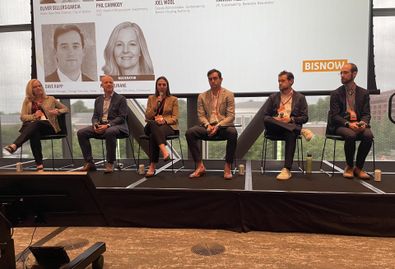
Landlords and tenants said at Bisnow's Boston Life Sciences Summit event on Wednesday that companies are vacating older lab buildings or lab buildings that were hastily converted from offices during the pandemic-era lab boom to instead lease new, purpose-built lab space that they couldn't previously afford.
:no_upscale():quality(75))
The vacancy rate in the Greater Boston lab market has climbed from nearly zero in 2022 to 25% last quarter, according to CBRE. But developers say the overall rate doesn't tell the whole story.
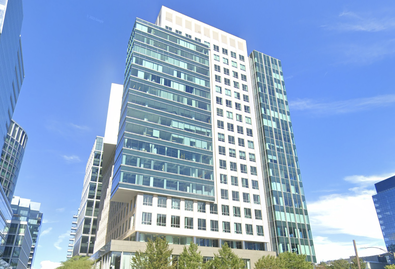
"I think our oversupply numbers are artificially inflated, because you have some of these brick-and-beam buildings, for instance, that are not going to fit the bill of sophisticated tenants who may be coming in now," Boston Global Investors Vice President John Hynes IV said at the event, held at the Forum life sciences building at 60 Guest St.
"They're out there now. We are seeing them," he added.
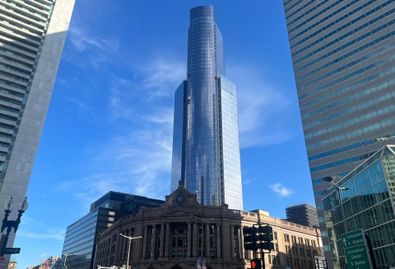
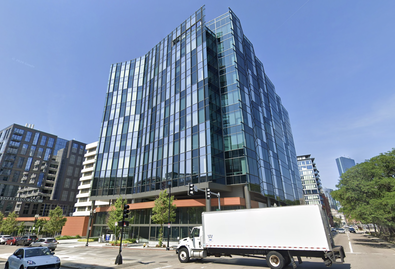
BGI developed a 300K SF lab building at 10 World Trade Center in the Seaport. The developer hasn't announced any leases yet, but Hynes IV said it has begun to see a flurry of activity from prospective tenants.
"In the last six months, we've seen more tenant activity than we did in the three years prior," Hynes IV said. "We're seeing them come back. They are not early-stage companies, they are larger, established firms ... these big companies know that this may be the last call to go out and get a great deal on space if they see the need for it in the next two years."
Hynes IV said these companies are gravitating toward purpose-built lab space rather than lab space that was converted from a vacant office building.
:no_upscale():quality(75))
Unlike purpose-built space, conversions can lack some of the specialized infrastructure life sciences companies need to work on their science. During the height of the life sciences boom, developers raced to convert office buildings to labs to capture the seemingly unending need for new life sciences space — but then that demand dried up.
Empty space in conversion projects accounted for roughly 90% of the overall vacancy in Boston's life sciences market as of mid-2024, according to Lincoln Property Co.
Oxford Properties Vice President Abby Mondani said the firm looked at investing in "hundreds" of conversion projects during the lab boom and passed on most of them.
"Demand was so hot that you could get away with subpar products for a long period of time, and that's just not the case anymore," she said at the event.
:no_upscale():quality(75))
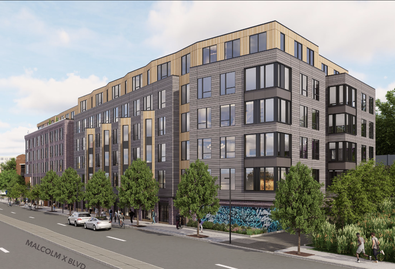
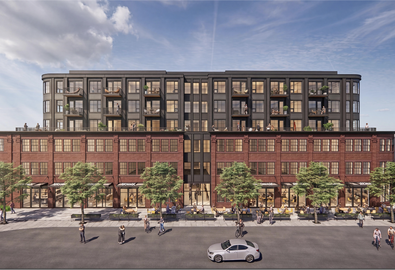
King Street Properties partner Michael DiMinico said the company's Allston Labworks development on Western Avenue in Allston has also seen growing activity from tenants.
"We've seen a big uptick in activity in a lot of our properties," he said. "Tenants are coming out, they're touring, they're interested. We're making a short list, getting our RFPs"
DiMinico said tenants in the market want to grow their business and sign deals for new space, so his firm is looking to take advantage of that.
:no_upscale():quality(75))
"We're looking at it as an opportunity to make sure that our projects are the Class-A products that are going to attract people that are coming out of Class-B buildings," DiMinico said. "They have an opportunity where they can move and be in the space that they really want to be in."
DiMinico said the 585K SF mixed-use development has been able to attract several restaurant tenants on its ground floor, something he said doesn't happen often but will act as a selling point for lab tenants who tour the building.
"Typically, you see the retailers come in after when they know there's occupancy in the building," DiMinico said. "There's a lot of space, and you're competing against a lot of projects, and you have to check every box."
Lab tenant Prime Medicine signed a 149K SF lease at Northwood Investors' 450K SF 60 First St. lab building in Cambridge in 2022. The project was a conversion of a former Sears at the CambridgeSide mall in East Cambridge.
Prime Medicine Director of Laboratory Operations John Maynes said the space has the quality of a new development, and he thinks there is a real difference between the older and newer lab product on the market.
:no_upscale():quality(75))
"The first labs I worked in were factories that have now become labs and they were condos that have become labs," Maynes said. "There is a huge difference in a purpose-built, corn shell for a lab space like the new building we're in."
Before moving into the space, Prime Medicine's team was spread across three buildings in Cambridge at 21 Erie St., 64 Sidney St. and 38 Sidney St. The old space was only a fraction of what they have now.
"There's so much room," Maynes said. "It's amazing. You can do whatever you need."
DiMinico said that as the overall real estate market continues to improve, other emerging uses could come in and take converted space or other lower-quality life sciences buildings off the table and reduce the market's oversupply.
Companies have already begun to pivot lab projects to other uses such as greentech, advanced manufacturing and tech to fill up underutilized space. With the bump in investment in clean technology and artificial intelligence from the state, DiMinico said that they could play a greater role in the future.
"That helps take some supply off the table and makes it so that there's less choices for tenants, and hopefully helps other deals go," DiMinico said. "AI … is going to help the life science industry and the acceleration of those companies, but then tech companies as well."