The Boston life sciences industry is enjoying a boom, and while that is a positive for the overall health of the local economy, a robust market poses challenges for life sciences development and design.
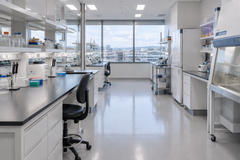
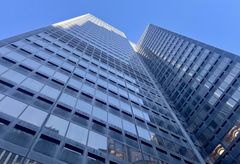
That is especially true in submarkets where building sites are at a premium, according to the speakers on Bisnow's Boston Life Sciences Update webinar last week. As developable land gets scarce, or more expensive, life sciences (especially lab space) needs to go, and is going, vertical, said Nancy J Kelly + Associates President and CEO Nancy Kelly.
Overall, the coronavirus pandemic has been an accelerator for the life sciences market in greater Boston, which was already the strongest sector of the local real estate market. And now, the region is a nexus for COVID-19 research.
More than 100 local companies are working on treatments and vaccines for the coronavirus, with 17.3% of COVID-19-related National Institutes of Health funding going to Massachusetts-based institutions, according to a new report on local life sciences by Newmark Knight Frank.
Thus Boston life sciences fundamentals remain positive, with low vacancies and high rents characterizing the Cambridge market in particular, the report noted. New capital is also interested in the life sciences sector.
"Life goes on, and certainly death and disease do as well," Longfellow Real Estate Partners Managing Partner Jamie Peschel said. "There are many more diseases that are being researched and addressed, and those companies need to expand their research capabilities as well."
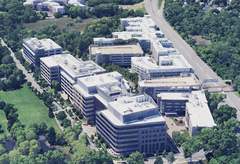
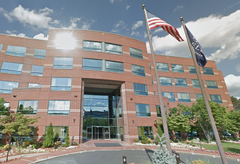
Earlier this month, Longfellow inked a lease with its first tenant — oncology company Vor Biopharma — at 100 Cambridge Park Drive, one of the three buildings within the 609K SF CambridgePark Drive campus the firm acquired in 2017.

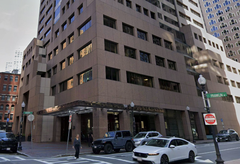
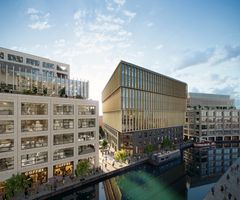
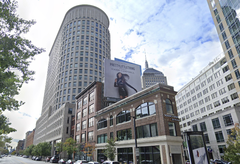
The places now ripe for development of vertical lab buildings include air-rights parcels in the Back Bay, which are expensive and have small footprints, Peschel said. Other areas suitable for vertical buildings include Somerville, the Seaport, South Boston and Downtown.
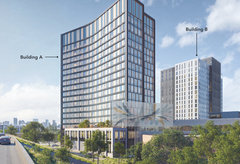
Though there isn't a precise definition of vertical lab space, besides height, they tend to include 25K SF to 30K SF floor plates, as opposed to 35K SF to 40K SF in more conventional lab space, Ennead Architects partner Peter Schubert said.
"Probably the most interesting thing about the vertical lab is the midlevel mechanical, though it takes a while to come around to it," Schubert said.
In a conventional lab space building, which is six to 12 floors, the mechanical systems are in the penthouse, BR+A Consulting Engineers principal Jon Chan said. The more stories that are added, however, the more stories the mechanical systems have to support, and so the larger the ductwork grows — taking some space from the floor plates. At some point, a building grows too tall for a penthouse location to manage.
"You take your mechanical infrastructure, and you put [it] in the midlevel mechanical, and what that does is reduces supply-air ductwork, and gives back a lot of [square] footage," Chan said.
There are limits to the growth of the local life sciences market, however, and not every site is suitable for vertical lab space.
"Not every building will become a lab building, just like not every restaurant will become a pizza parlor," Peschel said, explaining that among restaurant types, pizza has been doing better than most during the pandemic because of its delivery model.