The Boston Planning & Development Agency has unveiled new regulations to guide how the new life sciences developments popping up across the city will be designed.
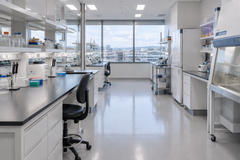
The guidelines are one part of the agency's Life Sciences Action Agenda, which will regulate new life sciences development in the city and include new zoning definitions for what constitutes a research lab. At a hearing on the guidelines Tuesday evening, some residents spoke out with concerns about the process and about potential risks of living near lab buildings.
“These guidelines are really meant to be a tool that ensures that we are really communicating clearly to development and ensuring that it really does contribute to our city’s fabric,” said Diana Fernandez Bibeau, deputy chief of urban planning for the BPDA.
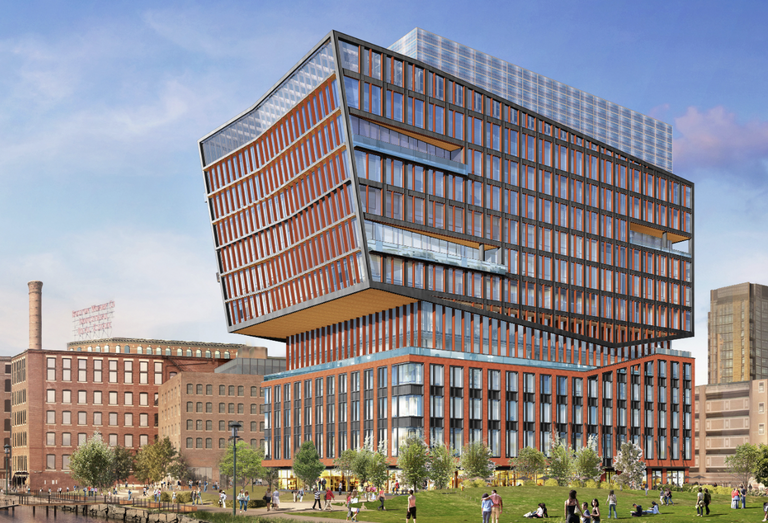
The agency focuses on five areas of design improvements: floor plate, massing and facades; mechanicals; ground-floor uses; transportation; and sustainability.
Andrew Nahmias, senior planner at the BPDA, said the guidelines were developed from public comments received on multiple life sciences projects.
“We’ve heard various things about life sciences development and growth,” Nahmias said. “These really range from concerns from health and safety, considerations about workforce, concerns about the sheer pace of life sciences growth.”
One issue the agency brought up was planning around the mechanical systems that sit on top of these life sciences developments and trying to find new ways to build them inside of projects.
The guidelines encompass most projects, but depending on where the project takes place, there might be more emphasis on certain guidelines over others.
“When it comes to looking at projects on a site-by-site basis, the priorities of these guidelines might shift,” Nahmias said.
Areas like the Seaport that have seen massive life sciences development in the past couple of years have a much different layout than areas of the city that are industrial-focused like the Newmarket neighborhood.
Along with the guidelines, the agency has also been updating its definition of what a research lab is. The definition was approved by the BPDA Board last month and needs to go through the Zoning Board to be officially written into zoning.
The guidelines and the definition are part of the BPDA's larger Life Sciences Action Agenda, meant to guide regulations on the industry's development in the city. As more life sciences development takes place in Boston, residents have become frustrated with the city's processes as projects enter their communities.
During the public comment portion of the meeting, many residents pushed back on the draft guidelines, saying there wasn't much transparency from the agency on the process of creating the guidelines.
“This doesn’t work for community residents who try and play catch-up to what you’re doing behind the scenes,” Weezy Waldstein said at the meeting. “I’m a little disconcerted to see that there are final [draft guidelines] and that we don’t get to see things until they are final.”
Many added concerns about public safety, and some residents pushed the need for screening and risk assessments on projects that come down the pipeline to ensure that new developments in highly residential neighborhoods don't pose a risk.
The agency plans to have another public hearing on the guidelines on March 14, then the agency’s board will vote on the final draft at a later date. The agency will also release its zoning guidelines draft in the next couple of months.
“This is really the first part in our efforts to really work with the life sciences and the development we see in the city,” Fernandez Bibeau said. “We really do see particularly how important it is to think about urban design of these development projects in particularly shaping the life sciences and understanding the impact they have both to the economy and to the unique character of our city.”