Massachusetts' largest-ever legislative effort to spur more housing development is in the home stretch.
The state Senate unanimously passed its $5.4B housing bond bill Thursday night, after the House approved its larger version of the bill earlier in June. It still needs to go through a conference committee to bring together the two versions into a compromise bill, which would need additional votes before Gov. Maura Healey can sign it. Healey first proposed a $4B version of the bill in October.
Her administration's top housing official, Secretary of Housing and Livable Communities Ed Augustus, said at Bisnow's Boston Multifamily Summit on Thursday that he anticipates the bill to be just over $4B once it's signed, making it the largest housing bill in the state's history.
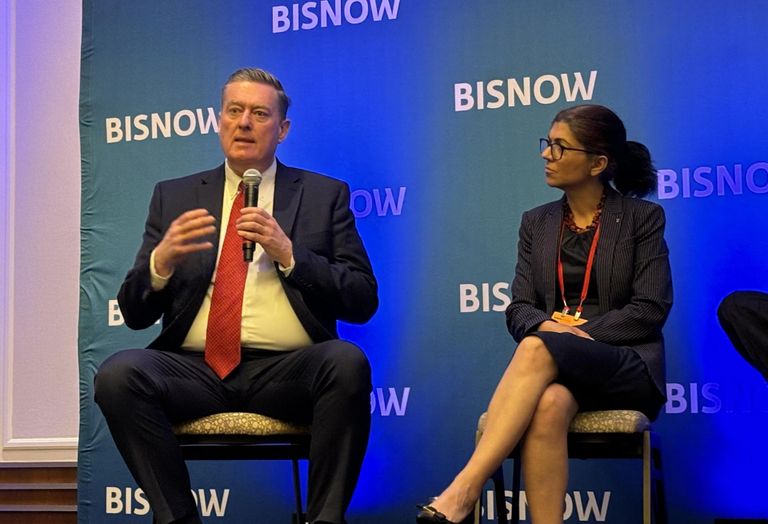
"It recapitalizes many of the critical programs that we use to support the building and construction of everything from affordable housing to capital repairs to our state's public housing inventory, to some new programs that are really designed to meet the moment in terms of high interest rates," Augustus said at the event, held at the Westin Copley Place.
The bill is expected to spur tens of thousands of units the state needs to address its housing crunch. The bill is filled with various funding opportunities, tax incentives and policies that would make it easier to produce more housing, something many developers at Bisnow's event said has been a challenge.
The bill includes by-right zoning for accessory dwelling units across the state and $50M toward "seasonal communities" to help fund housing needs.
The highly controversial amendment of a real estate transfer fee, which would allow many communities to tax expensive property sales to generate money for affordable housing, was axed from both the Senate and the House versions of the bill.
One of the focal points for private developers in the bill is the creation of a momentum fund — financed first by state dollars but also hopefully by other private investors, university endowments, foundations and pension funds — that would help provide capital at slightly lower interest rates to bring certain projects back to life.

"We can't afford to pay the cost of capital and produce the amount of housing that we need," Boston Housing Authority CEO Kenzie Bok said about the fund. "I think it brings the public sector into the sight of 'How do we have less expensive capital at the table as well?'"
"That's a slightly different thought than 'how do we pour public subsidy in to gap fill and keep all the capital costs at the same level?'" Bok added.
For many developers, the high interest rate environment has been one of the biggest challenges to building new housing across the state, and access to subsidies has been crucial to making projects pencil.
WinnCos. CEO Gilbert Winn said he is fortunate to work in Massachusetts because the state has "an incredible variety of different sources" and that the bond bill will just add more fuel to the fire.
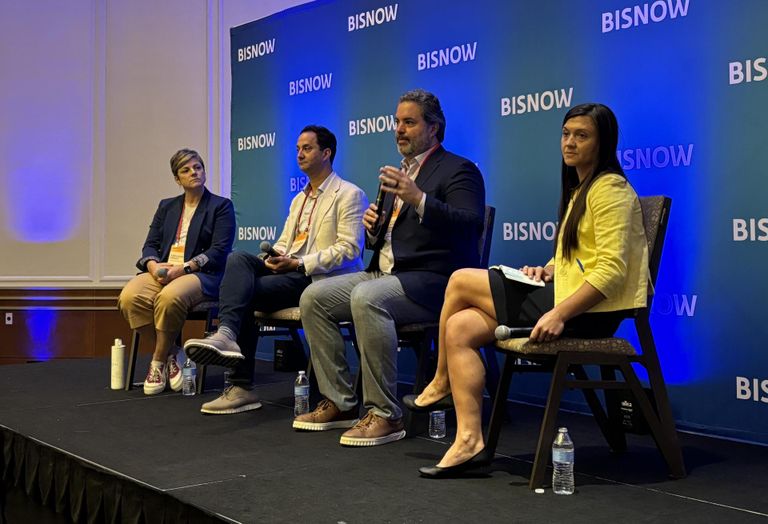
"The housing bond bill will create more housing, but Massachusetts has been blessed for decades with more per capita funding than any other state in the country," Winn said.
For other developers who spoke at the event, challenges with high interest rates, construction costs and community sentiment towards new housing production have stalled multifamily projects.
In August 2023, Massachusetts ranked near the bottom for housing built per capita remaining 40% to 50% below the national average, according to Massachusetts Housing Partnership.
"It is really tough out there," Mill Creek Residential Senior Managing Director Doug Arsham said. "Write down the list of the things that are required of a housing developer and costs are through the roof, which is why there's not a lot happening right now out there on the investment and groundbreaking side."

Leggat McCall Properties Senior Vice President Adelaide Grady said another big barrier is getting the community on board with a development proposal.
"Community opposition is the number one factor in deciding what you're going to pursue," Grady said. "It can completely derail projects."
She said that there had been some negative sentiment around the developer's $1.4B Bunker Hill Housing Redevelopment in Charlestown, a 2,699-unit mixed-income housing community with 37% of the units income-restricted. Leggat McCall broke ground on the project last year.

"We came into it with all the right policy approaches and you still get the opposition of people who just want the poor people to go away," Grady said.
Augustus said that while the bill would add an influx of new funding, Massachusetts still needs to see more local acceptance of housing.
"If we don't change the regulatory environment on the ground, then really nothing is possible," Augustus said. "That is a critical part of the Healey-Driscoll administration's strategy to really move housing production."