
A vast majority of cooling towers in New York City have been out of compliance with city health laws over the past decade, which could complicate the city's response to its second major Legionnaires’ disease outbreak in as many years.
Since 2017, 70% of inspections of the 5,000 registered cooling towers across the five boroughs have resulted in violations, according to a Bisnow analysis of data from the New York City Health Department’s Office of Building Water Systems Oversight.
Of those violations, nearly 10% were considered public health hazards specifically related to Legionella bacteria. In such cases, the building operator either didn't have a maintenance program, failed to test for Legionella or didn't take corrective action after a dangerously elevated result.
“An unchecked cooling tower with no maintenance program, no testing, or an ignored elevated result is not a paperwork violation sitting quietly on a spreadsheet,” Alex LeBeau, an exposure scientist, toxicologist and public health consultant, said in an email. “Ten percent of inspections finding that gap is ten percent too many, and the outbreaks New York keeps having are not statistically distinct from that number. They are downstream of it.”
The violations vary in severity. Of the more than 123,000 inspections of active cooling towers since 2017, approximately 28,200 were considered general citations, almost 49,000 were critical, and just under 12,000 were public health hazards. The data doesn’t specify whether the violations have been resolved.
As of Wednesday, the city reported 64 cases of Legionnaires’ disease, a form of pneumonia, in the Upper East Side neighborhoods of Carnegie Hill and Yorkville. No deaths have been reported, but 13 people are currently hospitalized, while 30 have been discharged.
The cluster has caused the city to test nearly 200 cooling towers in the area and order at least 76 building owners to drain, clean and disinfect their towers as a result.
City health officials said they will issue violations to building owners found not to have been properly maintaining their cooling towers.
Almost all of the Upper East Side buildings that tested positive for Legionella bacteria during this outbreak have previously recorded violations, with at least five failing inspections within the last 12 months.
Only 10 of the 76 buildings ordered to remediate their cooling towers have never been cited for a public health hazard violation since 2017, according to Bisnow’s analysis.
One tower atop a newly constructed residential tower was previously unregistered with the city. It didn't test positive for Legionella but was ordered to complete a full cleaning and disinfection regardless. The Health Department cited the building, at 300 E. 83rd St., with 11 violations.
Environmental health experts who spoke to Bisnow weren’t surprised by the large number of violations.
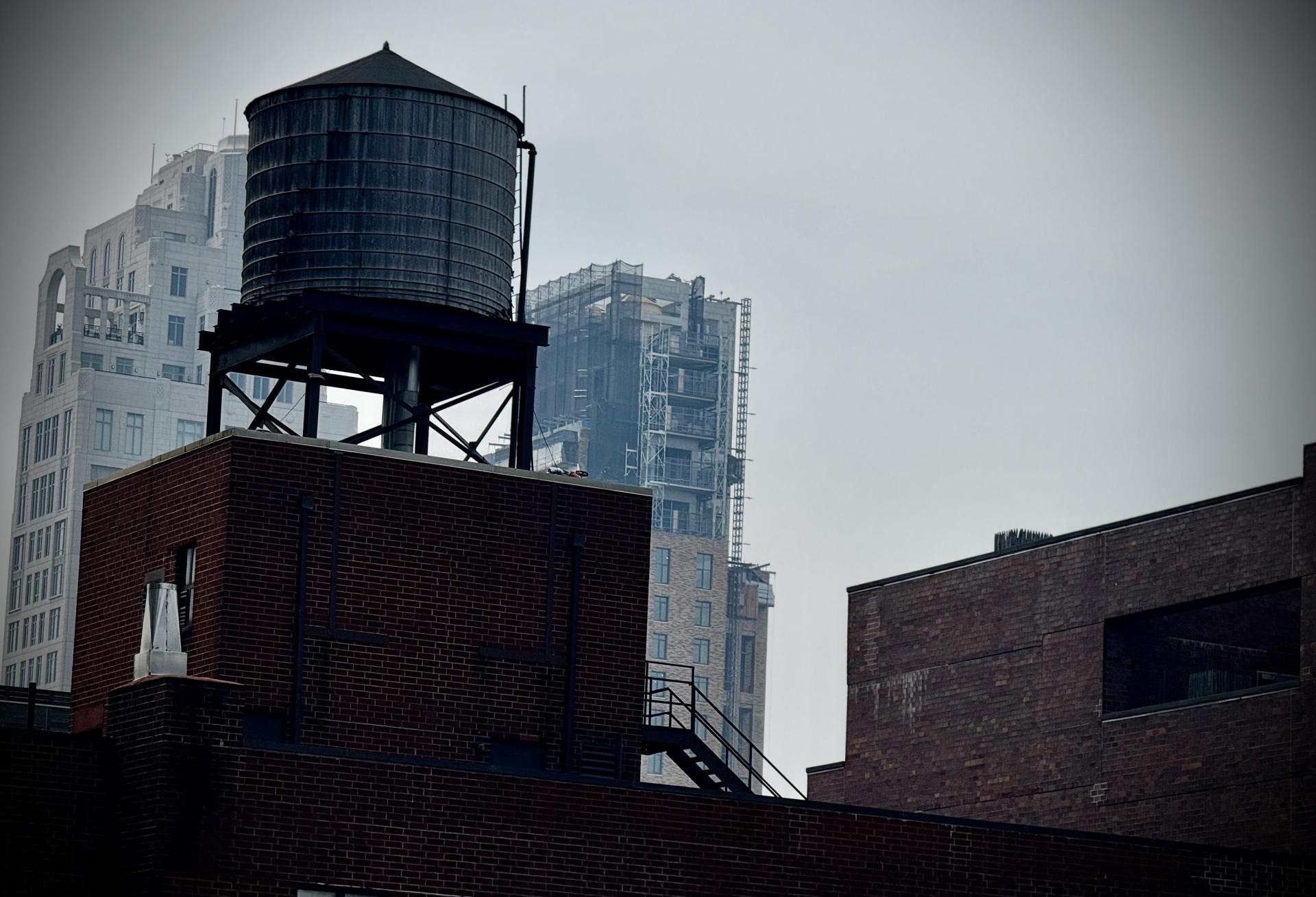
Cooling towers are an ideal environment for the bacteria to grow, then be disseminated. As they operate, the rooftop towers release a mist that can carry bacteria. The water droplets can find their way back into the building or spread through the air outside. Someone walking blocks away can inhale the bacteria and fall ill.
“We've got moisture, we've got biofilm, and we've got the perfect temperatures,” said Norris Gearhart, executive vice president of First Onsite Property Restoration’s regulatory business practice. “Now mix in poor maintenance or no maintenance, and you've got the perfect petri dish for it.”
New York City first imposed cooling tower regulations following a Legionnaires' outbreak in 2015 that infected 138 people and killed 16 in the South Bronx. Following another outbreak last year in Harlem that infected 114 and killed seven, the city increased those regulations.
Under the law passed in November, building owners must test for Legionella every 31 days, three times more frequently than before. Fines for those who fail to comply were also raised, and the Health Department increased its staffing to meet the city’s goal of inspecting every tower once per year.
Of the nearly 3,500 inspections that occurred between March 2025 and 2026, 277 resulted in violations for public health hazards. Another 834 were dinged with critical violations, such as not abiding by testing regulations or failing to clean the towers twice a year as required.
“NYC and State laws rely heavily on owner self-certification, often lacking third-party oversight,” LeBeau said. “A qualified person signs off on the maintenance program and plan; testing gets logged, and the Health Department's inspections function as a check on that system rather than a replacement for it.”
Instead, LeBeau said landlords should treat their “maintenance program and plan as an operating document instead of a filing requirement.” The city should also have more public, near-real-time disclosures that show which towers in affected areas are compliant, he added.
“Really, it's up to the building management, up to the operators,” Navac founder and CEO Lintao Lu said. “Are they doing just the bare minimum, or are they trying to take the extra steps?”
Legionnaires' is commonly underdiagnosed, according to the Centers for Disease Control and Prevention. Most who are exposed don’t get sick, but some studies estimate that the true rate of infection may be twice as high as public reporting indicates. Risk factors include previous underlying illnesses, being over 50 years old, and smoking or vaping.
Most of the buildings with severe violations were in Manhattan’s commercial districts — areas with large towers running central cooling and heating systems. However, areas with recorded outbreaks often have older residents and a lower median household income, according to a report published by the National Library of Medicine.
Although the Upper East Side has a low poverty rate, almost a quarter of the population is older than 65. In Central Harlem, the location of the last outbreak, 16% of the population is over 65, and 27% live below the poverty level.
But that doesn’t mean the other neighborhoods have less risk, Gearhart said.
Although Legionnaires' can’t be spread from person to person and most tap water is safe, the bacteria can grow in any home. Plumbing systems with “dead legs” — pipes that aren’t frequently used — can harbor that bacteria. That includes underutilized faucets, hot tubs or decorative water features.
“Maybe you're remodeling the bathroom upstairs,” Gearhart said. “Well, if it took you a week to do it, you've got dead legs in that plumbing that are at risk.”
)
)
)
)
)
)
)
)
)
)
)
)