
Bisnow’s First Draft Live is a regular series featuring live conversations about the critical stories impacting CRE right now. It is a companion to The First Draft, Bisnow’s daily, flagship CRE newsletter. Register here to get The First Draft in your inbox. Subscribe to First Draft Live on Apple and Spotify, or scroll down to view in your browser.
It hasn’t been smooth sailing for multifamily lately. National vacancy trended higher through the second half of 2025 as a record wave of new supply has hit the market over the last few years, keeping rent growth flat nationally and negative in several Sun Belt metros.
2026 was supposed to be the year multifamily finally turned around for good, but instead, the challenges are piling on, with new federal scrutiny over who owns apartments and what they charge for them.
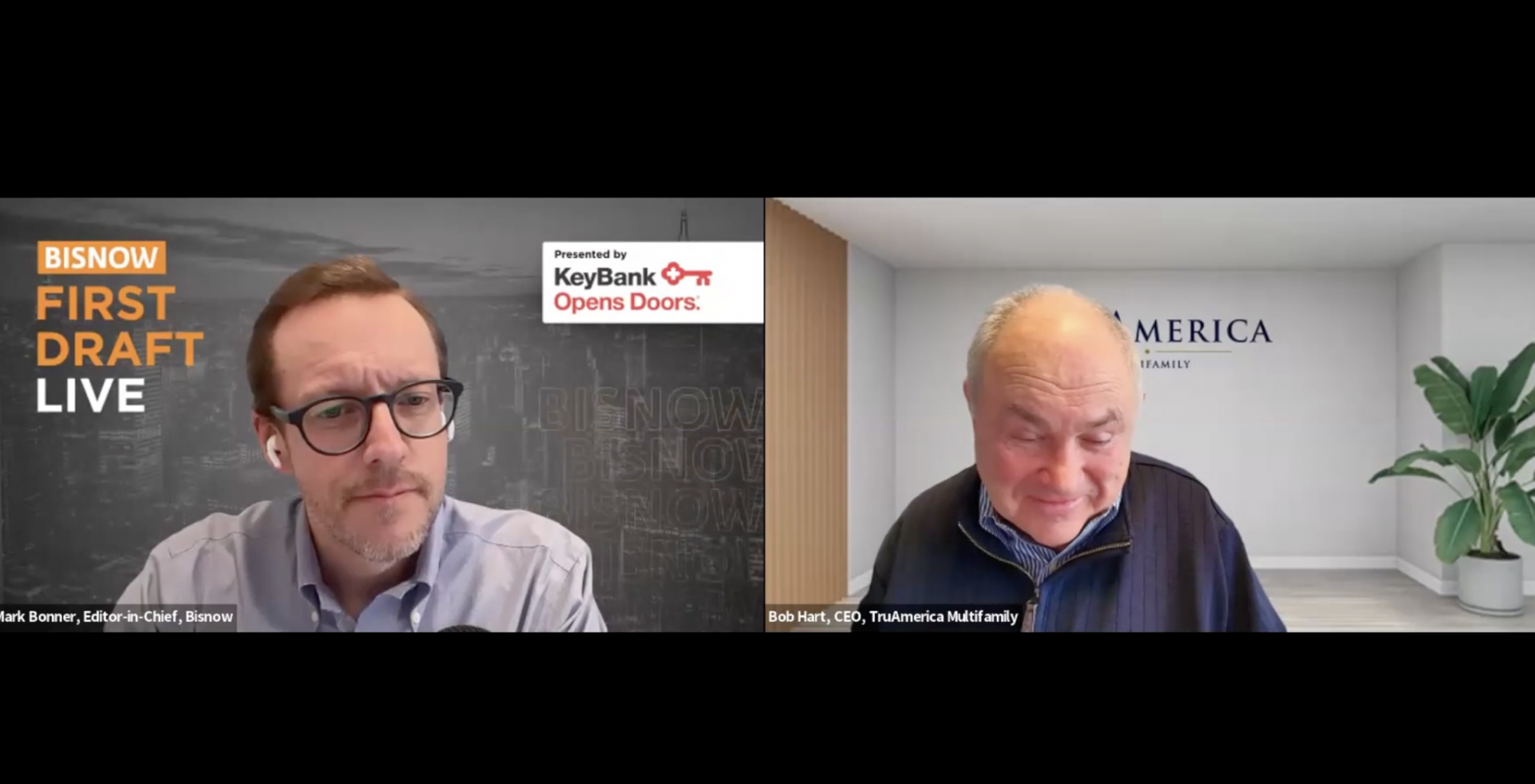
Bob Hart, president and CEO of TruAmerica Multifamily, said on Bisnow’s First Draft Live this week that multifamily is still in the reset that began in 2022 and there’s “more to fix in ‘26.”
“We’re going to still see some bumps here in the system before we start to get to a normalized market,” he said.
One of the key hurdles to multifamily renaissance is what is happening with the U.S. population, especially in the wake of reduced immigration.
“This will be the first year as long as I can remember where the United States population will not grow,” Hart said.
With the supply pipeline flattening, multifamily income can still grow even if demand shrinks. However, he said, “Eventually, we need to figure out how to legally get more people to come into the country and how to do something about the good people that are already here working and paying taxes but may not have perfect immigration status.”
Bisnow Editor-in-Chief Mark F. Bonner, the show’s host, pointed out that Vice President JD Vance said the Trump administration’s immigration policy would be a net benefit for the housing industry because it would create new supply. Hart adamantly disagreed.
“Absolutely not. I don’t know what he’s talking about. Makes no sense,” Hart said.
Hart said the institutional ownership limitations in the federal housing bill likewise make no sense. The bill requires build-to-rent owners to sell to individuals after seven years, but that simply isn’t how BTR communities are built and financed.
His message for lawmakers: Leave Freddie Mac and Fannie Mae intact, incentivize affordable housing, stop demonizing property ownership, and “slow down this train of regulation.”
View the full conversation below.
)
)
)
)
)
)
)
)
)
)
)
)