
Americans are traveling less amid sticky inflation, swirling tariffs and a weakening job market. But for the country’s elite, a little economic bumpiness is no reason to cancel a vacation.
The persistent gap in performance between top-tier hotels and the rest of the sector is becoming a chasm, driven by the growing divergence in consumer habits. The widening is expected to continue, and it could eventually drive investment dollars to the luxury space when interest rates come down.

“We're just seeing more of this bifurcation. The rich are getting richer, the poor are getting poorer and the middle class is getting squeezed out,” said Daniel Lesser, CEO of New York-based LW Hospitality Advisors. “People with means continue to travel in earnest, and those who are challenged are holding back.”
The top end of the hotel market is the only segment to post gains in 2025, while the rest of the sector has posted declining average daily rates and revenue per available room.
Luxury hotels have notched a 3% increase in both ADR and RevPAR this year through July, according to data provided by CoStar. The upscale segment just below luxury hotels saw an increase of 1.3% to ADR and 0.9% to RevPAR over the same period.
Every other lodging segment slid backward or was flat. Economy hotels have performed the worst, with ADR declining by 0.8% and RevPAR slipping 1.9% this year.
“It all comes down to cash flow at the end of the day,” said Jeanelle Johnson, managing partner at PwC. “And the assets that are currently delivering growth in RevPAR are at the luxury end of the spectrum.”
Analysts and executives expect the financial performance of hotels at the top of the market to continue climbing. Affluent consumers, like people at all income levels, are increasingly spending their discretionary income on experiences over products, analysts at McKinsey & Co. and Bain & Co. found.
While the uncertain economic climate is weighing on middle-market consumers, luxury customers remain insulated. As middle America tightens their budgets, affluent consumers are still spending, but they’re increasingly turning to travel or events instead of handbags or watches.
“The affluent customer is doing quite well,” Host Hotels & Resorts CEO Jim Risoleo said in a CNBC interview on July 31. Host Hotels is the largest lodging REIT with a portfolio of luxury properties, including a Ritz-Carlton in Naples and JW Marriott-flagged properties in Atlanta, Washington, D.C., and Houston.
“When they show up at our properties, we’re getting no rate resistance,” he said.
The typical luxury traveler is planning an average of eight vacations in 2025, with 55% of them expecting to increase their annual spending on travel, according to a May report from Preferred Hotels & Resorts created in partnership with market research firm The Harris Poll.
Nearly 30% of the 503 affluent survey respondents planned to spend more than $50K on travel this year.
On the other side of the spectrum, a LendingTree survey in June found that more than half of U.S. consumers are cutting back on the number of trips they're planning in the face of economic uncertainty.
“The bifurcation has always been there, it’s just increasing in terms of the spread,” Johnson said.
Investors’ appetite for large deals remains limited with debt costs remaining high, leaving the pool of cash-rich buyers with the budget for an upscale property relatively shallow. Still, the handful of deals that have closed have driven the market’s performance.
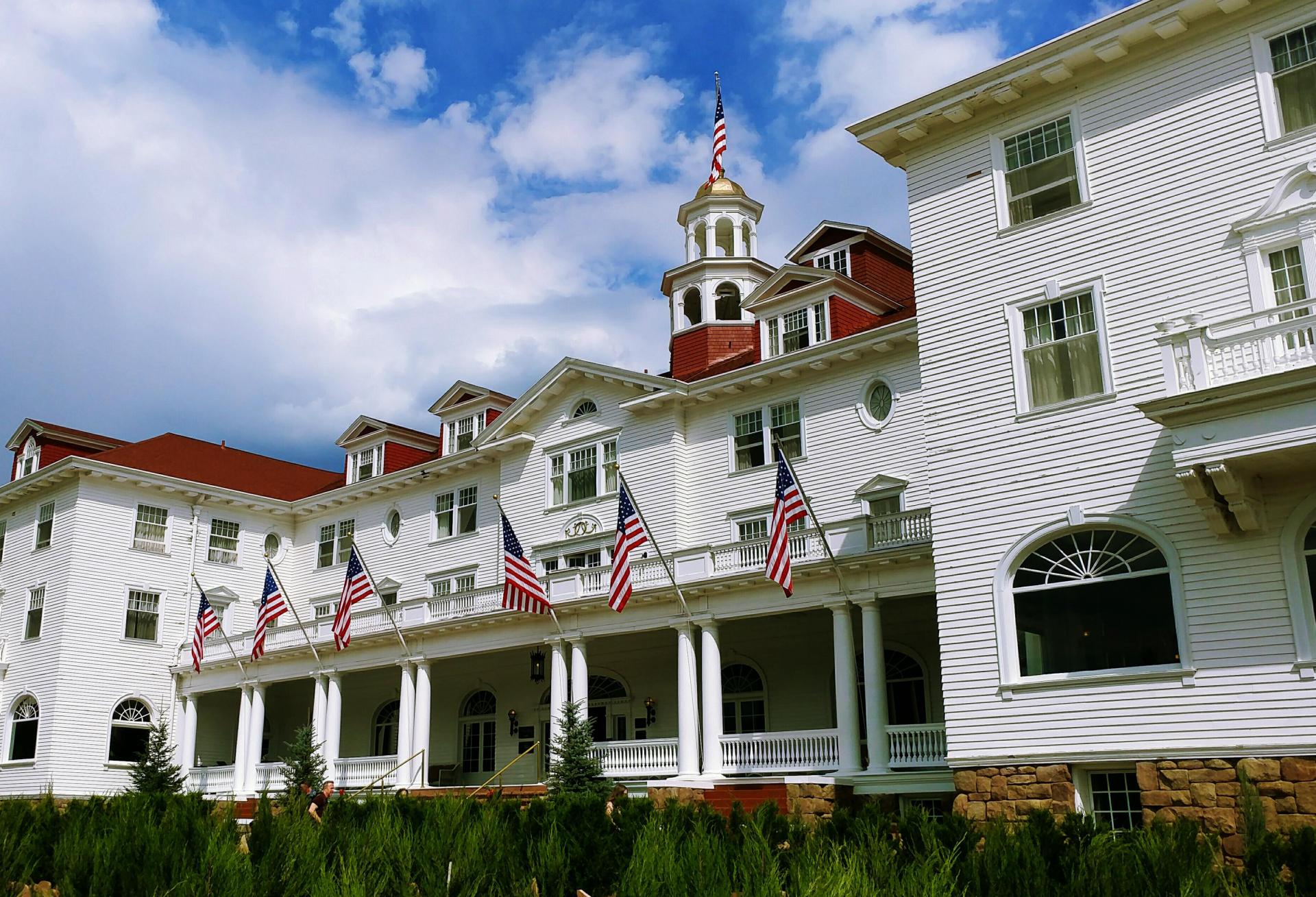
The JW Marriott Phoenix Desert Ridge Resort & Spa, the city's largest resort at 950 rooms, sold for $865M in May, or $910K per key. Colorado’s Stanley Hotel, made famous as Stephen King’s inspiration for The Shining, also sold in May to a public-private partnership for $163M, or $841K per door.
Buyers spent a combined $25B across 600 hotel transactions in the first half of 2025, according to JLL. Transaction count and total dollar volume were down roughly 17% year-over-year. But the price per key ticked up 2.5% to $241K, pushed higher by a near-record 20 hotel deals where buyers paid more than $1M per room.
“The sub-$50M assets, smaller assets, are trading in significant numbers. What's really missing is the bigger single assets, the M&A transactions and the portfolio transactions,” said Daniel Peek, the Tampa-based president of JLL’s hotels and hospitality group.
Less than a quarter of sales in the first half of the year were priced above $200M, and portfolio trades are at their second-lowest level on record, with 84% of deals through June consisting of single assets, according to JLL. Buyers exist at the low end and high end of the market, but demand for properties in the middle is especially weak, Peek said.
Transaction volume is expected to accelerate through the end of the year as the macroeconomic environment improves. The Fed is widely expected to cut interest rates this month — with room for another potential cut before the end of the year — potentially pushing down the cost of debt.
Lower debt costs could combine with the perceived dislocation between public and private valuations to boost the number of big-ticket transactions. Despite posting generally positive financial results this year, the stock performance of REITs has lagged the broader equities markets.
U.S. equity REITs are trading at a significant discount to the appraised value of their assets, a gap of more than 20% at the end of July.
“What I hear from some of the REITs, is that there's a lot of high-value assets that are being discounted in public stock prices,” Johnson said.
That mismatch has already led one luxury hotel REIT to launch a bid to go private.
Braemar Hotels & Resorts said it was looking for a buyer for its 3,400-key portfolio last month, citing pressure from activist investors and what executives called historically low earnings multiples for lodging REITs.
A clearer economic picture will also boost transaction activity across the entire lodging sector in the coming months, JLL forecasts.
The passage of President Donald Trump’s signature One Big Beautiful Bill Act has given corporate decision-makers clarity on tax and federal policy that didn’t exist at the start of the year, and hope remains that trade policy will settle into something approaching stability, even if that includes steep tariffs.
“The mid-market and the lower-end market is not going away,” Lesser said. “It's going through some pain right now. But we don't know what's going to happen tomorrow, never mind a couple of years from now. At the right basis, everything makes sense.”
)
)
)
)
)
)
)
)
)
)
)
)