
Bisnow’s First Draft Live is a regular series featuring live conversations about the critical stories impacting CRE right now. It is a companion to The First Draft, Bisnow’s daily, flagship CRE newsletter. Register here to get The First Draft in your inbox. Subscribe to First Draft Live on Apple and Spotify, or scroll down to view in your browser.
This was supposed to be commercial real estate’s year.
The industry entered 2026 expecting interest rates to fall, liquidity to rise, and for long-stalled transactions to finally put the pedal to the metal. For a while, it seemed as though CRE would finally be experiencing a true recovery from the massive hit it took during the pandemic.
But today, things are looking a little shakier.
Global instability surrounding the escalating conflict between the U.S. and Iran has escalated tariff and trade tensions. Meanwhile, $1.2T in real estate loans are expected to mature by 2027, a significant amount of which were originated when borrowing costs were much lower.
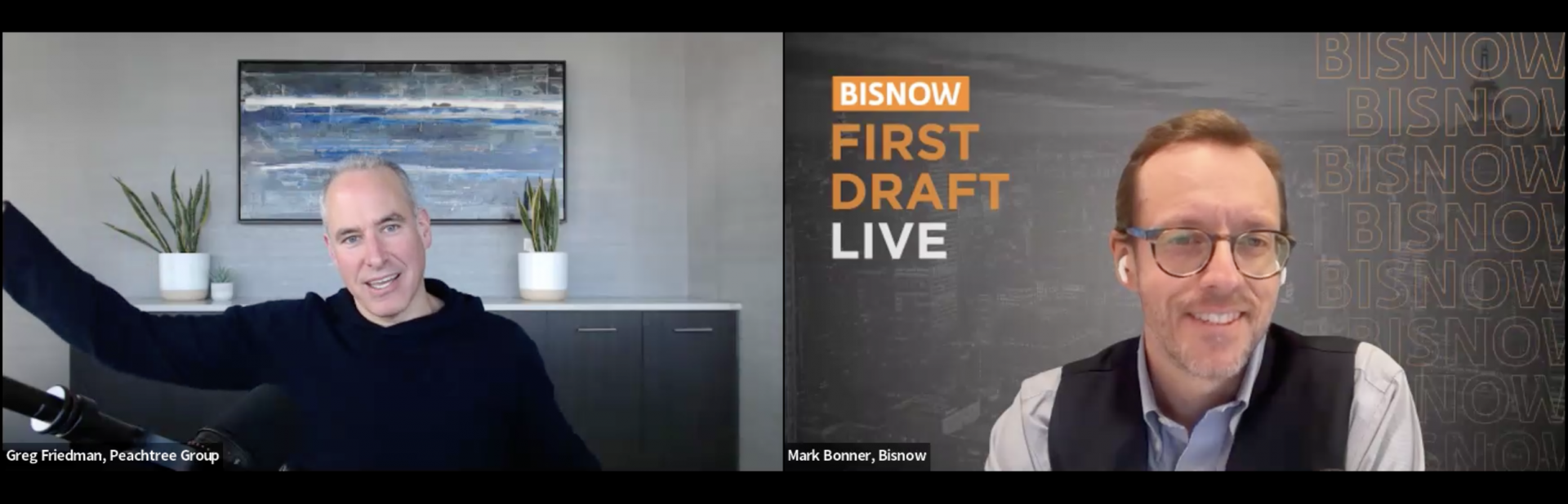
To find out what all this really means for the industry, Bisnow Editor-In-Chief Mark Bonner spoke with Greg Friedman, CEO of Peachtree Group, one of the most active private credit platforms in CRE.
Friedman said that as oil and gas prices rise, things are only going to become more challenging for the K-shaped economy. Certain lenders are already slowing down because of the noise within private credit, and the conflict in the Middle East could intensify that.
“If we're talking about this three months from now, depending on how the conflict is playing out, it could be something that creates a huge negative impact on any transaction getting done, or it could ultimately be a nonfactor, if it becomes something that we have under control,” he said.
As for the wall of maturities coming due, Friedman said he is more concerned about it today than he was six weeks ago, because while there's a lot of capital for credit, there’s less available for equity.
“Lending availability to commercial real estate could easily freeze up very quickly, and that is a risk in the face of this unprecedented amount of loan maturities,” he said.
View the full conversation below:
)
)
)
)
)
)
)
)
)
)
)
)