
Artificial intelligence cloud provider CoreWeave’s initial public offering may have underwhelmed, but whether its disappointing public launch is a harbinger of looming trouble for the AI and data center ecosystem remains to be seen.
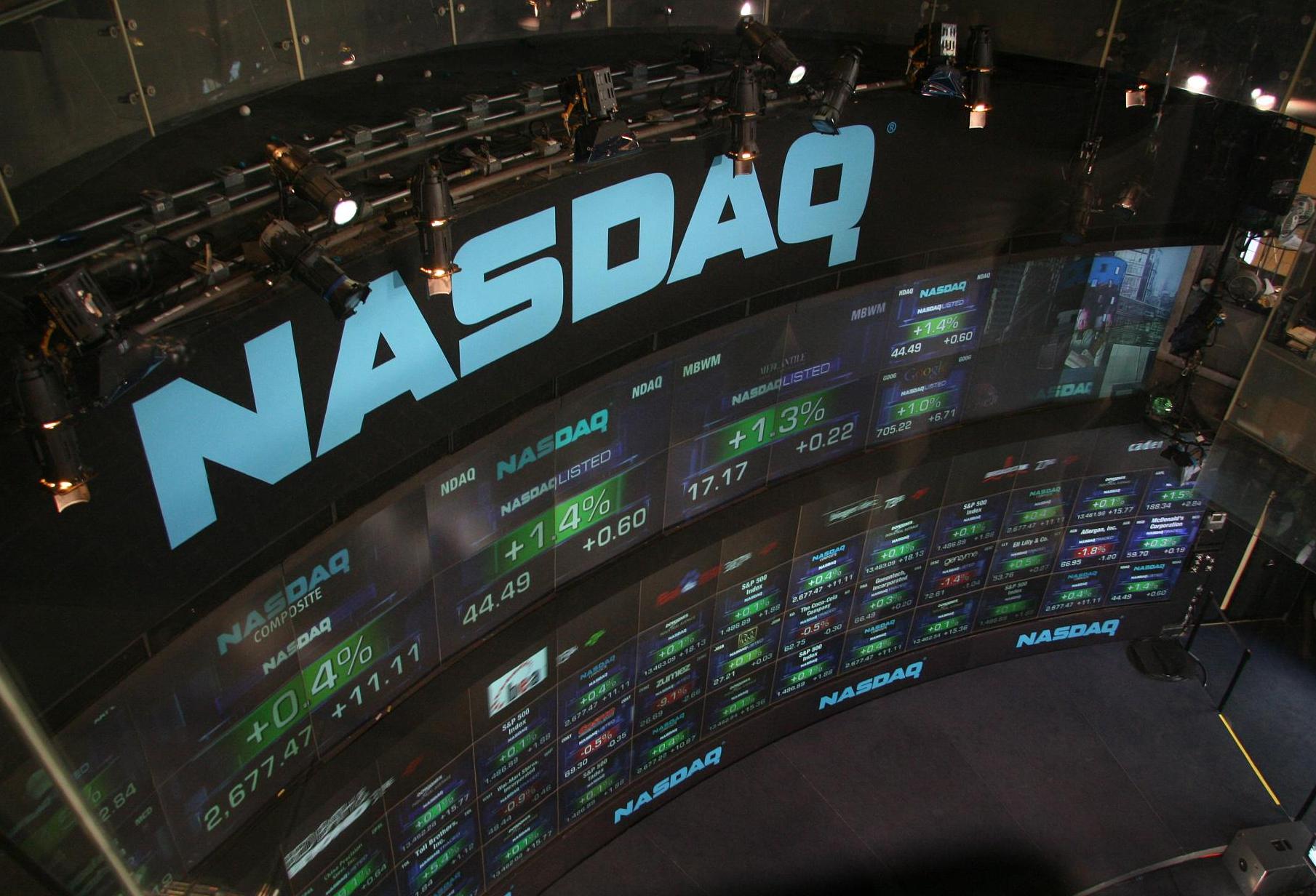
In the tech sector’s largest IPO since 2021, investors gave a lukewarm welcome Friday to CoreWeave, a Nvidia-backed provider of graphics processing unit cloud computing for companies like Microsoft and OpenAI that has been rapidly leasing data centers.
Listed on the Nasdaq under the ticker symbol CRWV, shares of the New Jersey-based firm finished the first day of trading at $40.01, just one cent above its IPO price. While the stock’s performance was hardly a disaster, CoreWeave’s initial share price and the number of shares offered were well below the lowest range of what the firm had anticipated less than a month earlier.
The lower-than-expected interest is partially the result of specific risks revealed in CoreWeave’s IPO prospectus that raised red flags for investors. But in commentary from Wall Street analysts and media reports, the company’s tepid performance in its first day of trading has been framed within a broader narrative of uncertainty about whether bullish demand projections for AI computing and data center capacity will ever come to fruition.
The IPO came the same week as reports that Microsoft is canceling planned data centers and comments from Alibaba chairman Joe Tsai warning of a data center oversupply, and less than two months after the emergence of DeepSeek rattled the markets.
Yet even as CoreWeave's IPO added another data point for those skeptical of the AI demand picture, analysts and data center executives see no signs that any actual pullback in demand is underway.
“There’s not a lot of factual points where you can say it’s a clear indication of less demand in the system, but there’s clues popping up all over to tell you it’s a little different than it was three months ago,” said David Guarino, managing director of data centers and towers at Green Street Advisors.
“The public market is clearly saying that the risk related to AI demand has increased and that the future is less clear than it was three months ago, and prices are adjusting accordingly.”
Friday’s IPO capped an unexpected rise to prominence for CoreWeave, an upstart hyperscaler whose rapid growth has paralleled the rise of generative AI and that has emerged as a data center leasing behemoth as it rapidly scaled its portfolio over the past two years. CoreWeave’s annual revenue soared 737% last year to reach $1.92B, according to its IPO filing — a stratospheric growth trajectory for a firm whose 2022 revenue totaled a mere $16M.
CoreWeave added at least 22 data centers last year, bringing its portfolio to 32 with a combined 360 megawatts of active power at the start of this year. According to its SEC filing, CoreWeave’s contracted power extends to around 1.3 gigawatts, which the firm says it plans to “roll out over the coming years.”
Despite CoreWeave’s pace of growth and the significant attention paid to its IPO by investors who have seen few in recent years, the company’s IPO Friday was — in the words of the New York Times and Bloomberg, respectively — “disappointing” and “a dud.”
Friday was a bad day for the market overall — the S&P 500 dropped 2% due to inflation concerns and tariff fears — but there had already been indicators that CoreWeave’s offering was going to fall well short of the firm’s expectations when it announced the listing less than a month earlier.
The company entered Friday looking to sell 37.5 million shares, 23.5% fewer than previously indicated. The initial share price of $40 was well below the $47-$55 range that CoreWeave had predicted in its initial announcement, even with Nvidia anchoring the launch with a $250M order. CoreWeave raised around $1.5B through the IPO, far short of the $2.7B it targeted in early March.
Today, we had the incredible honor of ringing the @Nasdaq Opening Bell, marking @CoreWeave's debut as a publicly traded company.
— CoreWeave (@CoreWeave) March 28, 2025
We’re just getting started, and we can’t wait for what’s ahead!#CRWV pic.twitter.com/KOuKVQl0Ys
Investors had flagged a number of concerns about CoreWeave’s operations and financial health that were revealed in the firm’s IPO filing.
Just two customers account for 77% of the firm’s revenue, with 62% coming from Microsoft. The disclosure that the bulk of CoreWeave’s earnings come from a single customer stoked fears about demand volatility and doubts about the sustainability of the company’s growth, particularly following comments from Microsoft CEO Satya Nadella that his company’s deal with CoreWeave was a “one-time thing.”
"CoreWeave’s S-1 tells the tale of a company that appears to be built for collapse, with over 60 percent of its revenue dependent on one customer, Microsoft," wrote tech critic Edward Zitron earlier this month.
Other concerns contributing to investor skepticism around CoreWeave included the $863.4M net loss the company recorded last year and the fact that it doesn’t own or operate its data centers.
Despite these questions around CoreWeave’s business model, much of the commentary on the company’s IPO has framed the performance of its shares as a health indicator for the fundamental thesis underpinning the sector's boom: that the world’s largest tech companies need to continue spending hundreds of billions of dollars on computing power, data center capacity and other infrastructure to achieve their AI goals.
There is growing doubt among investors about whether this demand will materialize. Chinese AI firm DeepSeek sent markets into a tailspin in January when it unveiled a model that appeared to use far less computing power to achieve similar outcomes to competitors, a development that seemed to undermine Big Tech’s spending. The tech and data center sector has pushed back heavily on the idea that more efficiency equates to less demand, but the skepticism has had traction.
“[T]he entire venture is built on the dream that generative AI will become both a massive, profitable industry, and one that depends on massive data processing centers to thrive,” tech publication Futurism wrote of CoreWeave. “That dream is looking more elusive by the day, as China's DeepSeek model squashes support for the kind of AI development CoreWeave represents, and AI profits largely remain a fantasy.”
CoreWeave’s IPO came on the heels of two headlines last week that added fuel to fears of plateauing computing demand and an oversupply of data center capacity.
On Wednesday, TD Cowen reported that Microsoft has canceled leases or paused construction on gigawatts of data center capacity in the U.S. and Europe as it slows parts of its expansion. The pullback came on the heels of earlier lease cancelations by Microsoft, developments TD Cowen said “point to data center oversupply relative to its current demand forecast.”
A day earlier, Joe Tsai, the billionaire chairman of Chinese conglomerate Alibaba Group, told the HSBC Global Investment Summit in Hong Kong that a bubble is forming in the data center sector. He said the rush to build data center infrastructure is creating a risk of oversupply in the U.S. as the pace of construction exceeds any realistic demand projections.
Following these headlines, commentators like Bloomberg columnist Dave Lee have painted CoreWeave as a pioneer for the AI infrastructure sector.
“If a bubble is forming around AI and data center buildout, as Alibaba Chairman Joe Tsai warned this week, it is on the balance sheet of CoreWeave where the clues might emerge — written, for the first time, in plain black and white for all to see,” Lee wrote last week.
But CoreWeave CEO Mike Intrator, like many leaders within the tech and data center space, has objected to the idea that any sort of pullback in demand for AI computing is underway.
He said on CNBC Friday that while there may be places where data centers end up being overbuilt, there has been a surge in demand for computing capacity from the world’s largest tech companies in the weeks since the DeepSeek news broke.
“Our clients are telling us universally to continue to build. We cannot keep up with the scaling,” Intrator said. “We have a wave of demand that we are unable to build fast enough to satiate.”
This perspective is echoed by Ali Fenn, president of AI data center developer Lancium, who told Bisnow that the focus on recent headlines around CoreWeave, Microsoft and Alibaba amounts to cherry-picking market signals to paint a misleading portrait of the market. She points to the fact that hyperscalers all increased their projected capital expenditure in the weeks since DeepSeek emerged.
Far from having a capacity surplus, she says AI firms are desperate for computing power, a reality on full display last week when the popularity of ChatGPT’s new image generator overwhelmed the company’s infrastructure and caused widespread outages. If there isn't enough capacity to support a popular toy, Fenn suggests, then there is nowhere near enough capacity to handle the powerful commercial AI applications that lie ahead.
“The market has been wanting this kind of bear signal for a while, but that’s super different than what is happening on the ground,” Fenn said. “The signals we're getting directly on the ground are build, build build, build, build, so I don't believe that there's any sort of a slowdown.”
While Green Street’s Guarino is less dismissive of the questions about the long-term future of AI-driven data center demand, he agrees that there is little evidence to suggest that the appetite for AI computing is waning any time soon.
Even if AI infrastructure demand ends up falling short of the maximalist predictions that were the consensus viewpoint until late January, Guarino equates the shift to ordering an extra-large pizza but getting a large instead, meaning the industry’s appetite for capacity will still be significant.
In the short term, Guarino said there are no indicators of data center oversupply and any narratives of an impending demand crisis hinge more on innuendo than evidence.
“Maybe the very rosy numbers people anticipated might not come to fruition, but thus far there's no evidence to suggest that there’s going to be an erosion of data center demand and everyone's going to change their behavior,” Guarino said. “There's just nothing to prove that's the case yet, and that’s certainly not what we’re hearing from private operators.”
)
)
)
)
)
)
)
)
)
)
)
)