
Federal Reserve Chair Jerome Powell used his final speech at an annual central bank summit to highlight how tariffs and changes to immigration and tax policy had added significant uncertainty to the economy.
“Changes in trade and immigration policies are affecting both demand and supply,” Powell said in the closely watched speech from Jackson Hole, Wyoming. “In this environment, distinguishing cyclical developments from trends or structural developments is difficult.”
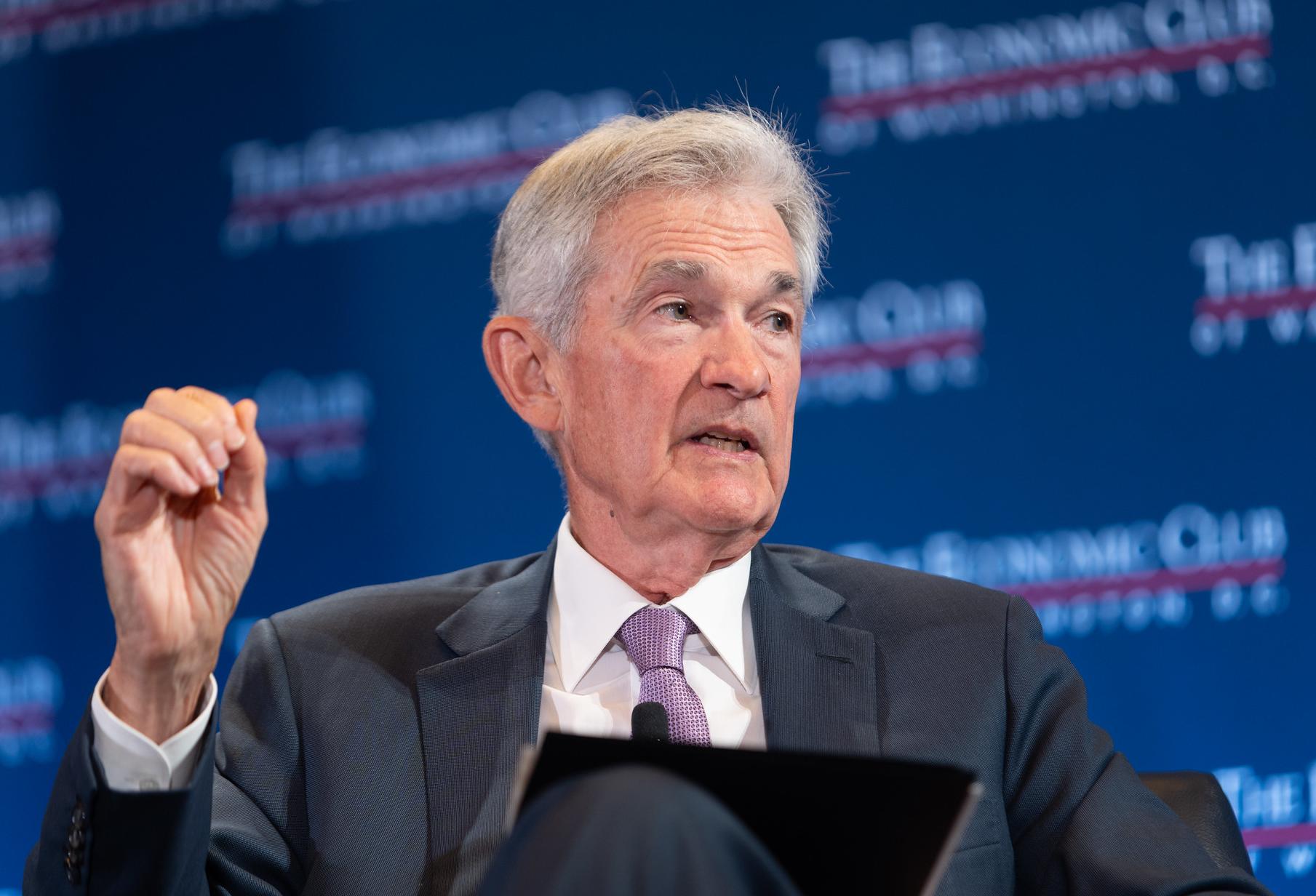
The head of the central bank left the door open for a rate cut next month, saying that “the baseline outlook and the shifting balance of risks may warrant adjusting our policy stance,” but he painted what was an overall murky outlook for the U.S. economy.
“In the near term, risks to inflation are tilted to the upside and risks to employment to the downside, a challenging situation,” he said.
Powell made the comments to a rapt crowd at the annual meeting held by the Federal Reserve Bank of Kansas City at Grand Teton National Park, while investors nationwide listened for signs of a shift in the Fed chair’s rate outlook.
They reacted exuberantly Friday to the speech’s dovish tone, with the three major indexes up more than 1.5% in early trading Friday after a dismal trading week.
Real estate stocks rose along with markets. The Dow Jones Equity All REIT Index was up roughly 2% by midday Friday, while major brokerages saw a larger boost, led by a more than 5% increase to Cushman & Wakefield’s share price.
“Powell appears to be setting the stage, assuming the economy performs as he expects and risks do not change appreciably, for a gradual approach to normalizing interest rates,” Ryan Sweet, the chief U.S. economist at Oxford Economics, said in an email. “In other words, one cut at every other remaining meeting this year.”
Most investors were already expecting the Fed to cut rates next month, as new economic data suggested that tariffs aren’t lifting prices as much as some had predicted, at least not yet. Steep revisions in jobs data also could signal that hiring has slowed down significantly.
Powell said the labor market is in “a curious kind of balance” resulting from a decline in both the supply and demand of workers.
“This unusual situation suggests that downside risks to employment are rising, and if those risks materialize, they can do so quickly in the form of sharply higher layoffs and rising unemployment,” he said.

President Donald Trump’s efforts to rebalance global trade were making their way through the economy, and tariffs have led to price increases, Powell said. Still, Fed officials continue to believe that the price hikes are likely to be transitory and not lead to persistent upward pressure on inflation.
“One-time does not mean all at once. It will continue to take time for tariff increases to work their way through supply chains and distribution networks,” Powell said. “Moreover, tariff rates continue to evolve, potentially prolonging the adjustment process.”
While inflation has been above the Fed’s 2% target rate for more than four years, the Fed believes market behavior is still well-anchored as price growth moves in the right direction. Still, Powell signaled that the days of ultralow rates are unlikely to return this cycle.
“We cannot say for certain where rates will settle out over the longer run, but their neutral rate may now be higher than during the 2010s, reflecting changes in productivity demographics, fiscal policy and other factors that affect the balance between saving and investment,” he said.
Trump and administration officials have been waging a one-sided battle against the Fed, Powell and recently another Fed governor as they push for the central bank to cut interest rates.
Bill Pulte, who heads the Federal Housing Finance Agency, sent a criminal referral to the Justice Department this week, accusing Fed Governor Lisa Cook of mortgage fraud. In posts to his 3 million followers on X on Wednesday morning, Pulte called for Cook's resignation, saying, “No one is above the law.”
I believe the President has cause to fire Lisa Cook.
— Pulte (@pulte) August 20, 2025
The wave of online posts has continued into Friday, with Pulte alleging that Cook committed mortgage fraud by declaring two homes as her primary residence. Cook told Bisnow she learned of the criminal referral through Pulte’s social media posts and said she had no intention of stepping down.
Friday morning, an FHFA spokesperson sent Bisnow a link to a video showing Trump being asked by a reporter if he was planning to push Cook out of the Fed.
“I’ll fire her if she doesn’t resign. What she did was bad,” he said in the video.
Pulte has also been waging a public campaign calling for Powell to be fired, which has had the arm's-length support of the president, who appointed Powell during his first term but has come to criticize him for the central bank’s unwillingness to cut its benchmark rate.
Powell’s term at the top of the Fed ends after May.
A $2.5B renovation of Fed buildings in Washington, D.C. — a project that is both over budget and behind schedule — has become a flashpoint for Republicans. But the line of attack was largely abandoned after Powell gave the president a tour of the renovation project in July.
“Could somebody please inform Jerome ‘Too Late’ Powell that he is hurting the Housing Industry, very badly?” Trump wrote Tuesday on Truth Social. “People can't get a Mortgage because of him. There is no Inflation, and every sign is pointing to a major Rate Cut.”
)
)
)
)
)
)
)
)
)
)
)
)