
Post Brothers spent more than three years working to finance a 532-unit office-to-residential conversion in Washington, D.C., the largest such project in the city's history. In late December, it finally landed a $465M loan.
The financing came from an unlikely source: a commercial property assessed clean energy loan. A green financing tool that provides more favorable loan terms than many other debt sources, C-PACE has exploded over the past year from a niche program to a primary vehicle for funding large-scale developments.
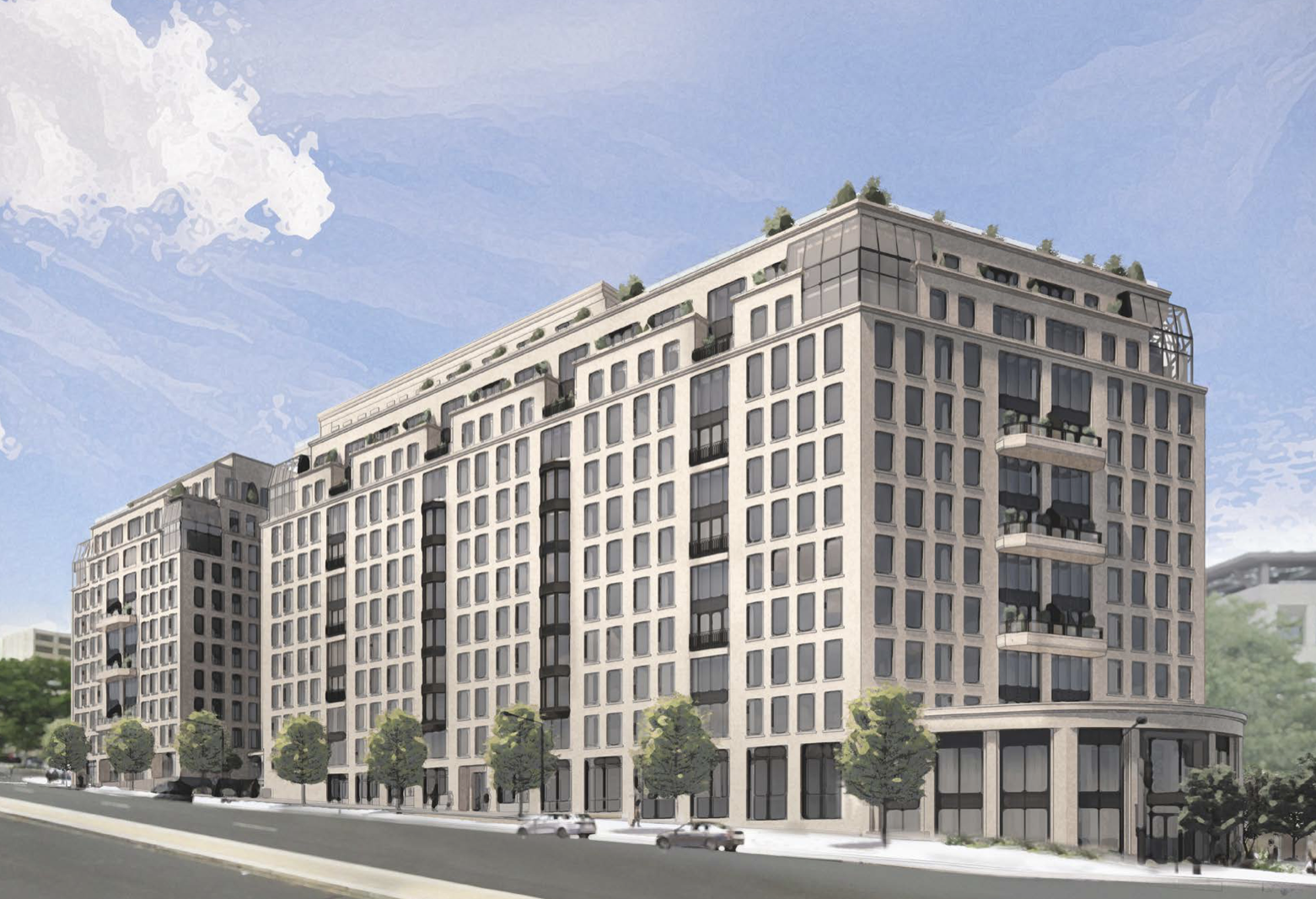
That $465M deployment is now the largest in the 18-year history of the program. And the deal came just three months after the previous C-PACE record: a $290M loan for the Pendry Hotel and Residences in Tampa, Florida, 200 condo units atop a 220-room hotel.
Both of those loans were provided by Nuveen Green Capital, a leading player in the C-PACE arena. The entity, formerly called Greenworks Lending before it was acquired by Nuveen in 2021, closed $2.1B in loan originations last year, nearly double its 2024 volume of $1.2B.
“We're seeing that growth continue, and we still feel as though we’re in the early innings of the industry,” Nuveen Green Capital CEO Ali Cooley told Bisnow in an interview.
Across all providers, total C-PACE lending in the U.S. jumped from $2.28B in 2020 to $9.72B in 2024, according to the nonprofit association PACENation.
The escalation in originations became possible because NGC has increasingly been able to raise money from large institutions that hadn’t previously backed C-PACE deals.
NGC closed on $1.4B in capital commitments in 2025. In 2017, it closed on $75M.
“So that shows the increased institutional investor demand, which also enables us to go to market with attractive financing for these institutional borrowers,” Cooley said.
C-PACE loans offer long-term, fixed-rate and fully amortizing loans to projects that meet an environmentally friendly threshold. They can be used for refinances, sustainability-focused retrofits or ground-up construction projects, like the latest record-breaking deals.
While the need for alternative capital sources for commercial real estate deals has existed for a few years given the pullback from banks and other investors, C-PACE is relatively new, so the market has taken some time to adjust to it.
“Like any new asset class, initially, it's kind of a relatively niche play, and it doesn't get the attention of institutional investors until it gets to scale and they can deploy significant amounts of capital,” Cooley said.
But she is now seeing the fruits of that adjustment process coming to a head at a time of increasing macroeconomic uncertainty, meaning C-PACE lenders like NGC are able to raise more money and lend more in an environment where there's a growing appetite for the favorable financing.
Because they use the property tax system, C-PACE deals are also dependent on the states in which they are being executed adopting enabling legislation. And increasing adoption across the country has set the table for the lending to ramp up.
Forty states now have C-PACE programs, up from six in 2015, CNBC reported last month.
The first-ever C-PACE loan in New Jersey was completed last month with Pace Loan Group’s $45.5M refinancing deal for a 120K SF water park and entertainment center in Atlantic City that opened in 2023.
D.C.’s now record-holding C-PACE program was instituted in 2013, and Nuveen Green Capital’s $465M loan in December was the latest deal in what has been a quick ramp-up of C-PACE loan activity in the city.
Earlier that month, NGC provided a $42M loan to hotel operator Another Star for a warehouse-to-hotel conversion in Georgetown. That came after PACE Equity did its first deal in D.C. in May, originating a $22.5M loan to Valor Development for a 73-unit office-to-hotel conversion called Sixty DC near Dupont Circle.
Those numbers represent a stark contrast to historical norms for C-PACE loans in the city. There were a total of $26M C-PACE deals in D.C. during 2024, and as of that year, a lifetime volume of just over $130M, according to PACENation.
For Post Brothers, the December deal came more than three years after it paid $200M for the Dupont Circle property with conversion plans. The difficulty of obtaining construction financing killed the other conversion project it had planned in the city, an M Street office building that the lender took over in August.
The $465M C-PACE deal it landed for the Dupont project was part of a $750M capital stack that also included a $97M loan from Mavik Capital Management.
The loan has an amortization and payment schedule that runs through 2058. Post Brothers partner Matt Pestronk told the Washington Business Journal the structure of the C-PACE loan made it less risky than other financing sources.
Cooley said the deal was a "great outcome for everyone."
"They needed additional financing support to push the project over the finish line, and we were able to come in and help them in a way that that made sense for us, made sense for them, made sense for the other lender on the project," she said.

NGC’s C-PACE loans are more often used by borrowers for new construction — 60% of its volume goes to new construction, while 40% goes to recapitalization deals.
But Cooley said she has seen increased interest in recent months in using the financing for recapitalizations and expects that use will rise in 2026.
“This year, I do expect we may see the balance shift slightly more towards recapitalization because you have this large debt maturity wall facing the CRE industry, and I expect we'll see a lot of demand rationalizing or rightsizing capital stacks,” she said.
Last month, NGC issued an $87.3M C-PACE refinancing loan to Brandywine Realty Trust for a 495K SF lab and office building in Philadelphia's Schuylkill Yards, which it touted as the largest such deal in Pennsylvania’s history. The 12-story building, which was completed in 2024, is just 4% leased, and $30M of the C-PACE will be reserved to attract future tenants.
And while the federal government's pullback on environmental initiatives could have, in theory, resulted in landlords also pulling back on the kinds of environmentally friendly upgrades needed to acquire C-PACE loans, Cooley said NGC hasn’t seen the appetite change on the ground.
“A lot of these measures are things that these building owners want to do anyway because they're improving the underlying property. So, it's resiliency to extreme weather events or natural disasters. It's decreasing the operating costs of the property for tenants or owners,” she said.
“And so, these are things that they want to do, whether they're green or not, or sustainable or not.”
)
)
)
)
)
)
)
)
)
)
)
)