
The escalating U.S. war with Iran is spreading through the Middle East as Iran strikes back at what it defines as Western assets around the Persian Gulf.
The explosions across the region are the latest geopolitical jolt to rattle a global marketplace already unmoored by a trade war. The timing is awkward for real estate markets, which entered 2026 with transaction volumes accelerating as debt costs moderated, helped along by loosening monetary policy.
Oil markets are the front line of the war’s economic stakes, but the energy sector’s tendrils touch every part of the global economy, leaving the corporate world in the direct line of fire of the war’s second-order impacts.
As oil markets swing on news of tankers being attacked by drones and U.S. sanctions on Russia being lifted, analysts and investors say the impacts of the war on the broader economy hinge on how long it lasts. The upheaval complicates the commercial real estate market rebound that had been picking up pace throughout last year.
“Coming into 2026, we all wanted to see that improvement continue, and so far, it has,” Marcus & Millichap CEO Hessam Nadji told Bisnow on Thursday. “But six more months of what we're seeing in the Middle East, and the effect on interest rates and inflation could start to disrupt that — to say nothing about the impact on consumers and, ultimately, companies in terms of their hiring decisions.”
Most analysts forecast that a short-lived war will pass over markets like a storm, with equity, debt and bond pricing returning to something of a prewar mean if a quick resolution is reached. But as the effects of bombs exploding around the region compound, a prolonged crisis has the potential to stall out the rising activity in real estate markets, derail the Federal Reserve’s inflation fight and sap growth from the broader economy.
“Things will definitely have repercussions if they're stretched beyond a matter of months,” Nadji said.
The White House has offered different timelines for its campaign in Iran. President Donald Trump said the war was “pretty much complete” on March 9, the same day that the Department of Defense posted to X that “We have Only Just Begun to Fight.” The initial two-week timetable floated by the administration is passing as intense fighting continues.
“As the war enters its second week, the most critical question is duration,” analysts for Alpine Macro, part of Oxford Economics, wrote Thursday. “The end is not in sight.”
Alpine analysts had initially predicted hostilities would last for up to three weeks but now expect the war to go on for roughly two months. The peak of market panic over the war’s impacts is still as many as three weeks away, they wrote.
We have Only Just Begun to Fight. pic.twitter.com/PWM84ksTkw
— DOW Rapid Response (@DOWResponse) March 9, 2026
What the conflict, dubbed Operation Epic Fury by the DOD, means for the U.S. commercial real estate sector hinges on how the energy sector reacts, analysts for Cushman & Wakefield wrote in a recent report. Higher energy prices are likely to lead to higher interest rates, an unwelcome development for property owners that have spent the last two years waiting for debt service costs to come down before refinancing a mortgage or going to market.
Cushman & Wakefield’s baseline scenario assumes shipping through the Strait of Hormuz — the key chokepoint for roughly 20% of the world’s oil, which has been effectively closed since fighting began — returns to normal within the next several weeks followed by a gradual easing of the currently elevated price of oil.
Marcus & Millichap research associate Robert Weeks offered three potential scenarios, with a brief conflict that ends through deescalation being the best outcome. In that case, central bank policy would be unaffected by the fighting and markets would likely return to prewar cycle trends.
The Fed and other central banks around the globe are also likely to stay on the current policy course even if fighting lasts for three months or more, so long as energy infrastructure in the region isn’t severely damaged, Weeks wrote.
But significant damage to Gulf and Iranian energy infrastructure could come with noteworthy economic impacts, Weeks wrote. Rising energy costs would drive inflation, leaving the Fed to decide between tightening monetary policy to beat back rising costs or taking a less hawkish stance and treating rising prices as transitory, a more likely scenario if the job market also shows weakness.
Commercial real estate assets are also more insulated from the war than other sectors, and a prolonged conflict could push capital into more real assets, potentially creating upside for the sector.
“If broader risk assets, such as stocks or private credit, come under pressure, commercial real estate may attract additional interest for its tangible income streams and diversification benefits,” Weeks wrote.
Outside of debt, the industrial sector has the greatest exposure to impacts from the war as higher fuel and shipping costs pressure margins for distributors and manufacturers. Retailers could start to feel pressure if the fighting lasts for months and consumers’ already sour view of the economy worsens, Nadji said.
Multifamily assets could similarly face headwinds if higher inflation leads to tighter consumer budgets that constrain rent growth, according to the Marcus & Millichap report. Office buildings are the most insulated from demand-side pressures, but a weakening economy could lead occupiers to delay major leasing decisions.
For now, most investors expect the conflict will be relatively short and contained, Nadji said.
“I don't see correlations with what's happening in the Middle East and real estate investment decisions today, but that could change if the problem endures,” he said.
Firms with operations or assets in the region are facing a different risk profile. Iran and its proxies have bombed luxury hotels in Gulf, and the Iranian regime has declared Western banks and technology assets legitimate targets, including regional offices for and infrastructure owned by IBM, Palantir, Amazon, Microsoft, Google, Nvidia and Oracle, according to an X post from Iran's semi-official Tasnim News Agency.
The U.S. bombing campaign, estimated to cost $11B in its first six days, is also rippling across the American economy in ways that will impact industrial demand, according to Moody’s Analytics.
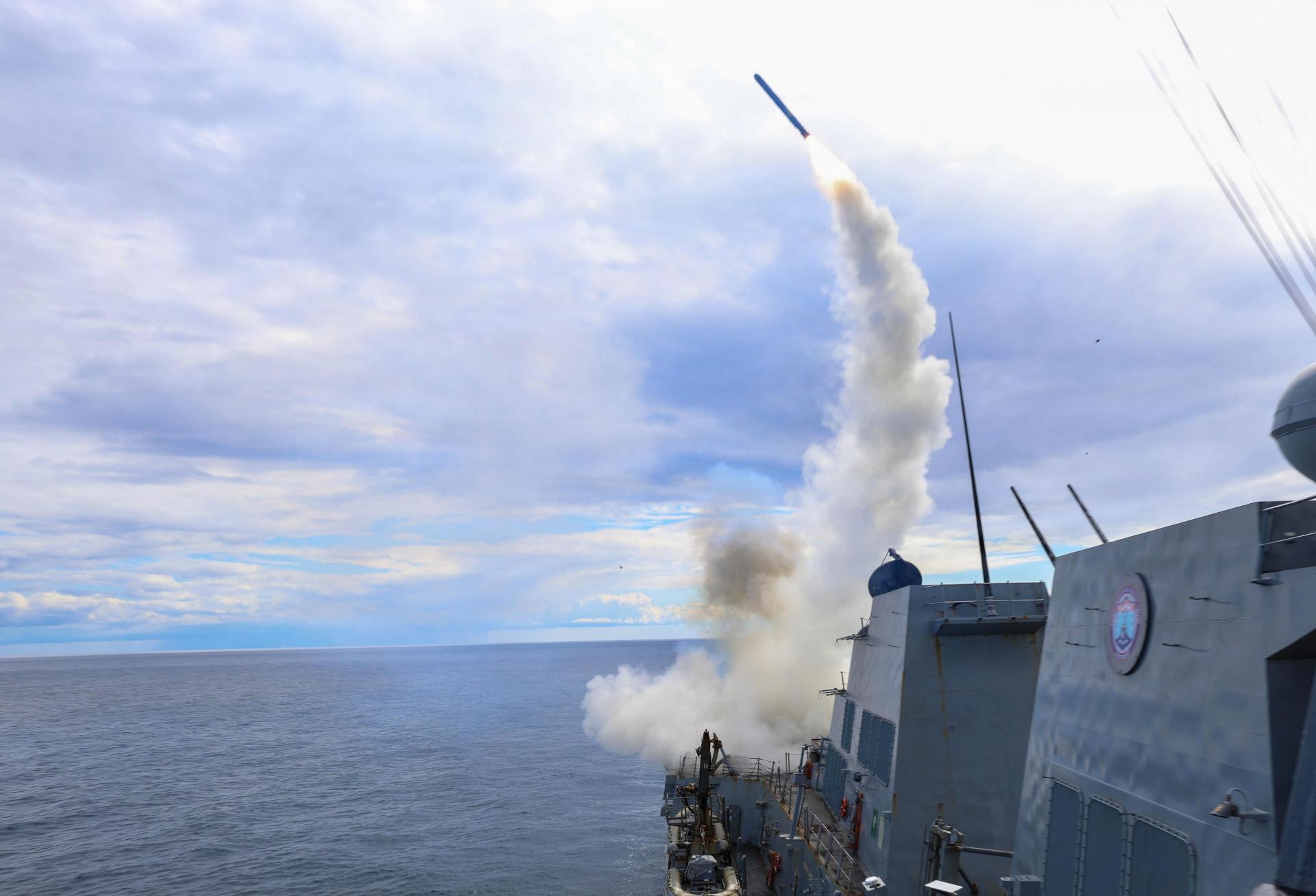
Tomahawk missiles, one of the primary weapons leveraged against Iran, are built by Raytheon, with much of the manufacturing happening in Tucson, Arizona. Northrop Grumman builds B-2 bombers in Los Angeles County, and defense manufacturers have other hubs in Alabama and Florida.
Even in a relatively short conflict, the need to replenish inventories will provide an economic boost to those regions, Adam Kamins at Moody’s Analytics wrote.
Conversely, Indiana and New Jersey host pharmaceutical production facilities that serve the Middle East, which is also a key export market for some farmers in the Midwest and California.
New York, Florida and Las Vegas are key hot spots for Middle Eastern travelers, and closures of major airports in the region would also cut off a key connection point for U.S. tourism from India, the largest source of international travelers to the U.S. after North America and Western Europe.
The conflict with Iran is just the latest in a series of geopolitical and macroeconomic hurdles investors have faced since the pandemic upended global markets, but success in real estate is rarely driven by global trends; it's local market dynamics and property-level decisions that drive returns, Nadji said.
“We're trying to remind our clients to take a long view, stay calm, don't get emotional, and if the real estate you're looking to buy is the right real estate with really good financing, there's no reason not to execute that deal because of what's happening in Iran or in Yemen or Syria or Venezuela,” Nadji said.
)
)
)
)
)
)
)
)
)
)
)
)