
William Galloway Jr.’s properties in downtown Altadena, California, tell two stories: one of good luck, one of bad.
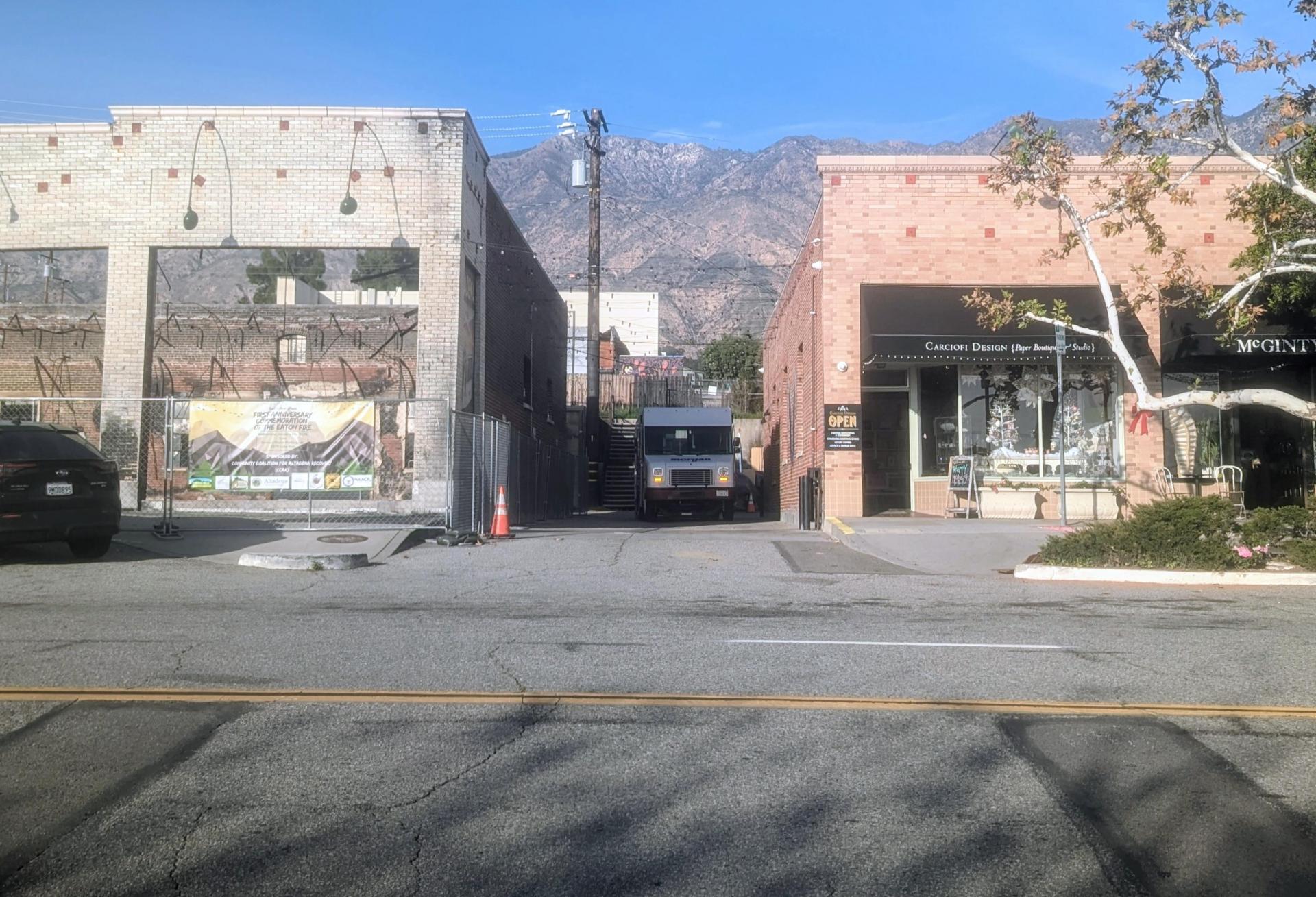
The retail buildings sit side by side on Lake Avenue, the small commercial corridor overtaken by the Eaton fire one year ago this week.
One property houses bustling businesses within its white-bricked walls, including a small but busy restaurant, an antique shop and a clothing store. It escaped the blaze without damage, and all of the pre-fire tenants reopened by November.
The other is a husk of its former self. Charred and roofless, it is adorned with the remains of overhead light fixtures, now twisted from the heat of the flames. Rebuilding the 12K SF retail building will cost Galloway between $5M and $7M. His insurance will only cover about half of the cost.
“I've been processing this,” he said. “And this year has just gone by, and now I’m frustrated because it's gone by and I'm still only halfway there.”
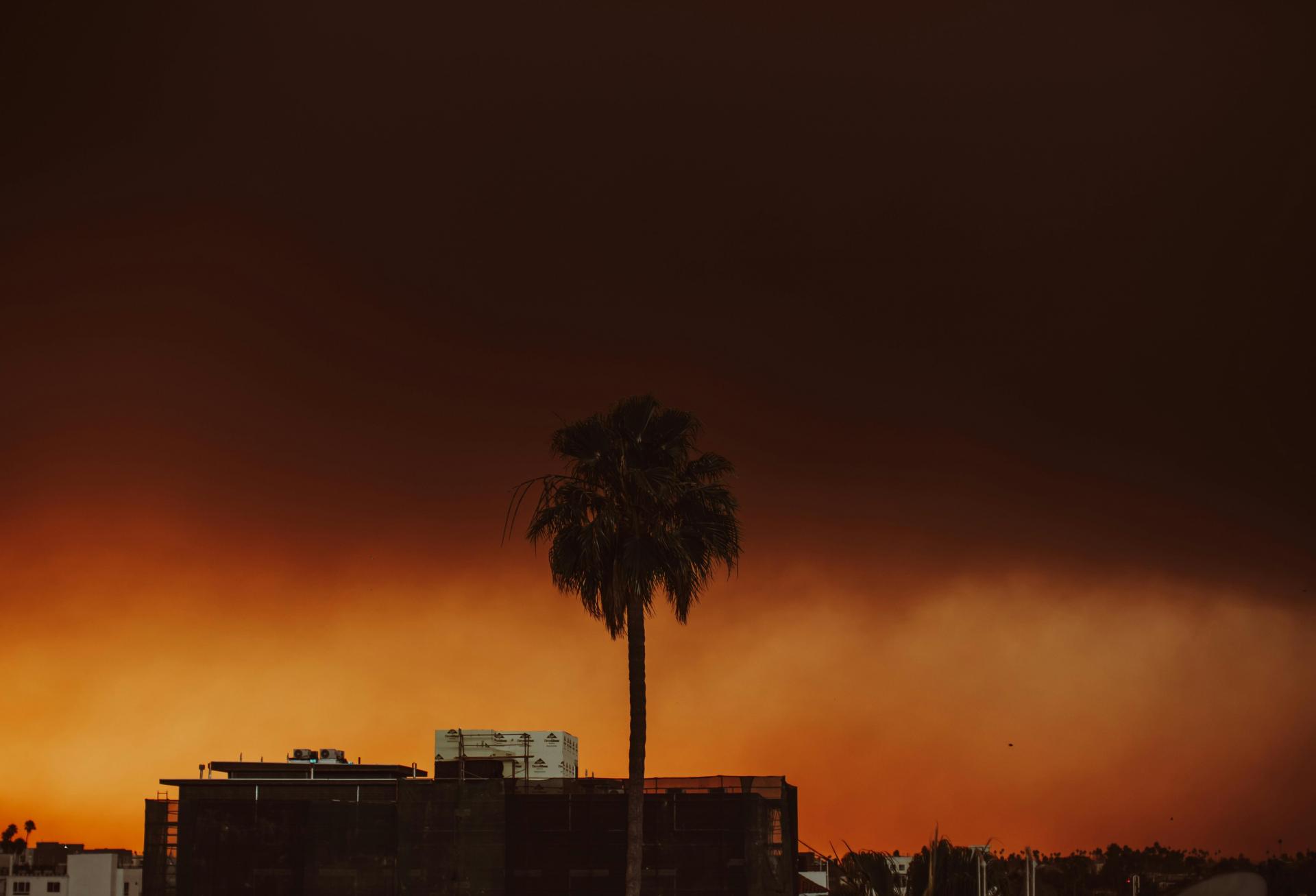
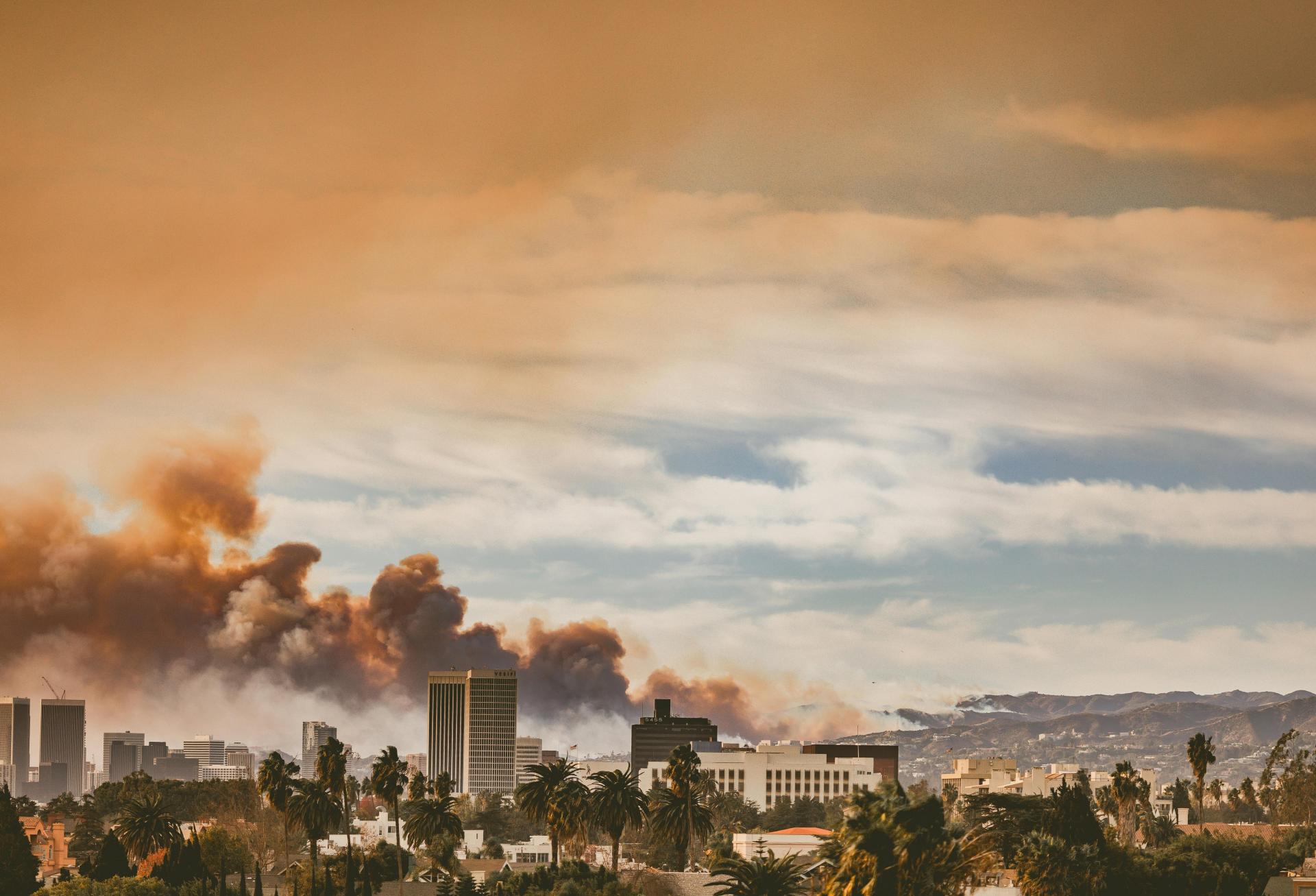
A year after devastating fires swept down both sides of Los Angeles, destroying 16,000 structures and claiming 31 lives, property and business owners impacted by the blazes are still picking up the pieces.
Roughly 200 commercial properties burned, and the Los Angeles County Economic Development Corp. estimates that more than 6,800 businesses were either directly or indirectly impacted by the fires.
The recovery effort has been slow and frustrating, locals told Bisnow, occurring against the backdrop of a city that was struggling even before the Palisades and Eaton fires struck one week into 2025.
“[2025] really was almost like a lost year,” said Shannon Sedgwick, vice president of research at the Los Angeles County EDC.
The Palisades and Eaton fires caused an estimated $76B to $131B in property losses and are projected to result in $5B to $10B in lost economic output through 2029, according to a report from the Los Angeles County Department of Economic Opportunity and the EDC. Worst-case projections for recovery extend another five years beyond that.
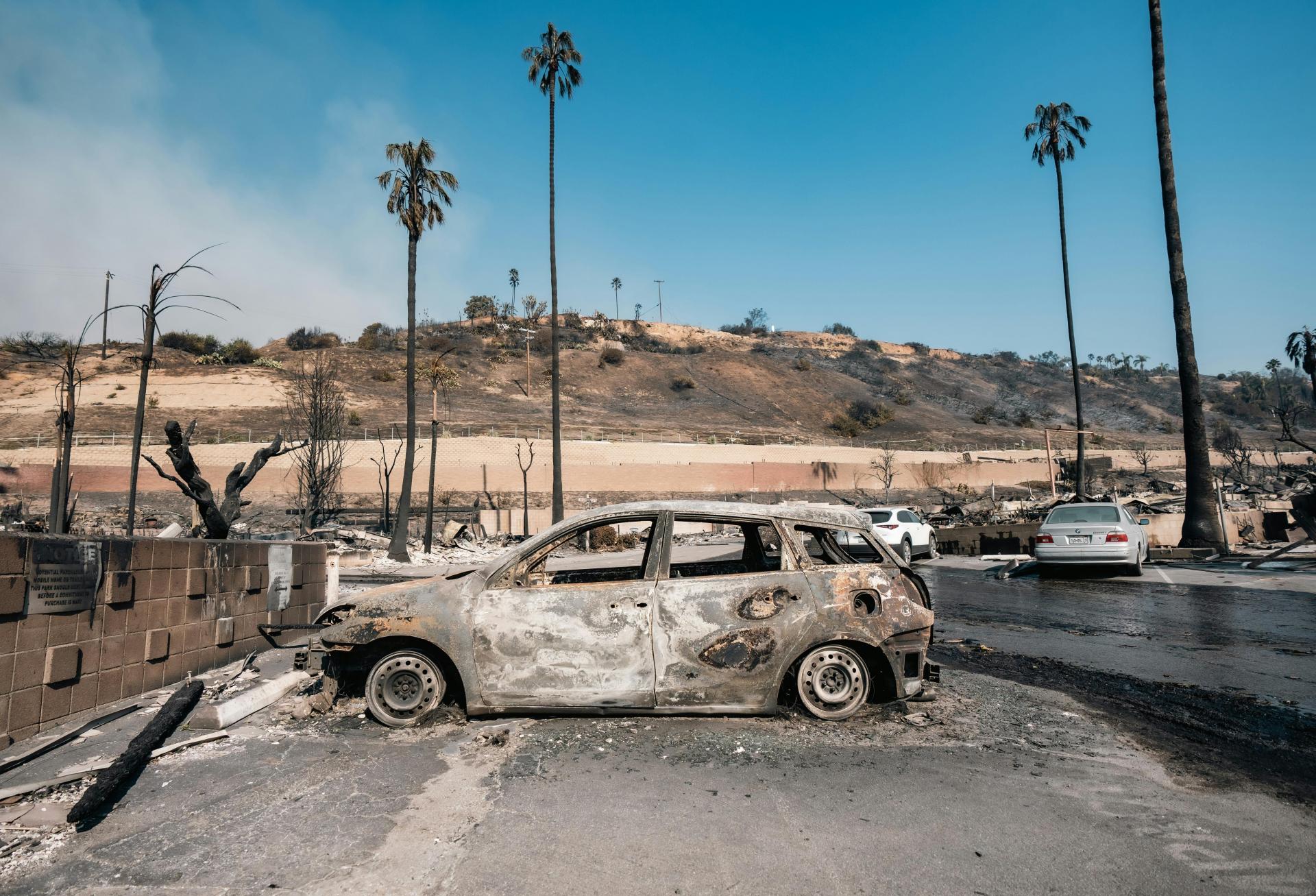
On the ground, local commercial property owners are faced with skeletons where structures once stood as they navigate cleanup and remediation, insurance claims, rebuilding costs and lost revenue. Some are also contending with damage to their homes.
The losses stack atop sluggish pandemic recovery weighed down by Hollywood strikes and local regulations that investors and business owners say are overly cumbersome. The area’s businesses also face the same uncertainty as the rest of the country, including a trade war, inflation, depressed tourism numbers and broad economic fears.
“So, it's kind of a double-whammy,” Sedgwick said.
'Blazing Inferno'
Jihad Shakoor operated a real estate business with his father out of an office building on Altadena’s Lake Avenue. His uncle and brother also kept offices there, making it a hub not just for business but for their family.
Shakoor was out buying supplies ahead of an anticipated power outage when he saw smoke from the blaze that would take his family hub. He managed to get to his property and watch as it burned, along with its neighbors.
“The whole block was a blazing inferno,” he said.
In addition to the loss of the workspace, Shakoor’s house required remediation after the fire. His parents’ home, some rentals the family owned and the mosque where they worshipped were also destroyed.
Today, the family gathers around a dining table in a rented guesthouse east of Pasadena. They have spent the past year fighting with their insurance company to pay for a temporary office space. Trying to figure out how much coverage he should get has become a full-time job, Shakoor told Bisnow.
The family plans to rebuild, but that work hasn’t started yet. Their land is now a blank slate that serves as a reminder of their plight.
“Once the lot was cleared, it’s just dirt,” he said. “It’s just a hole in the ground. It’s gone. There’s nothing that once was, you know?”
Elsewhere on Lake Avenue, landlord and residential real estate broker Teresa Fuller is working with an architect to rebuild her office and storage property. She has spent months negotiating with local banks and the Small Business Administration to determine what money will go to which bill. She will have to pay for debris cleanup where her property once stood.
“It was a three-story building, and at the end of the fire, it was a hole in the ground,” Fuller said.
Like Galloway, Fuller’s insurance agreed to cover about half of her rebuilding costs, but there’s a chance she’ll have to use those funds to pay her loan instead. That dynamic is calling rebuilding efforts into question.
“I plan to rebuild something amazing, something Altadena deserves, and that I deserve,” she said. “But I feel like I'm walking through landmines to retain that right for myself. I'm not the only one. I think many, many of us are in that situation.”
Residential rebuilding is going more quickly, although fewer than one dozen homes have been rebuilt at the one-year mark. Another 900 are under construction and could be completed this year.
The commercial process is slower for several reasons, including that residences are given priority during the cleanup phase after a disaster and that permitting homes is a simpler process than commercial buildings.
“If you drive around Altadena, you see houses that are near completion, but if you drive around and look at the commercial properties, not one of them has started construction that I know of in my area,” Galloway said. “All the business owners I know, they haven't broken ground yet.”
Mounting Challenges
Even before the fires, Los Angeles was reckoning with economic challenges that have persisted since the pandemic and are keeping investors at bay.
While cities like San Francisco and New York enjoyed a year of growth in 2025, the fires stunted LA’s commercial real estate market recovery.
Los Angeles fell 10 spots on the 2025 Emerging Trends Report issued by the Urban Land Institute and PwC. The report referred to the drop as the “most notable” movement among primary markets in the U.S.
Measure ULA is often cited as the main culprit for the drop in real estate activity in Los Angeles since it went into effect in 2023. Sometimes referred to as the “mansion tax,” ULA is a real estate transfer tax of 4% on property sales $5M and over and 5.5% on sales $10M and over.
“The ULA tax has been completely just a disaster for LA, and Santa Monica has their own version of it called Measure GS,” said Jon Farzam, owner and CEO of three hotels in Santa Monica, which narrowly avoided the worst of the flames. “So, that's created a double-whammy for all of us. It's created a huge impact on the real estate market ... It's devalued everybody's properties.”
Most of the real estate community in Los Angeles opposes Measure ULA, saying it has disincentivized investors from doing deals in the city.
Two months after the fires, LA Mayor Karen Bass made public comments about altering the rule for people whose properties were damaged. But she backtracked just days later. After a failed September effort to propose a state bill aimed at diminishing the tax, she asked the city council to pause ULA for victims of the Palisades fire in October.
Possible buyers of lots in the Palisades to which owners don’t want to return submitted lowball offers to avoid or account for Measure ULA, Bass wrote in a letter to the council at the time. Those low offers hindered fire victims’ ability to move on and allow the lots to be rebuilt, she wrote.
The council in December voted to study the feasibility of Bass’ plan, but for now, ULA remains in place.
Farzam’s hotels were amid a two-year decline in visitors when the fires hit. His properties experienced an influx of customers fleeing the Palisades fire just to the north. But once the initial surge died down, his business began to suffer.
“I felt like this year got a little worse, and then the fire just kind of kicked it down, a few months at least, where we were kind of back down to pandemic levels again,” Farzam said.
Hotels in and around Los Angeles have suffered from depressed international tourism levels since the pandemic, reaching just 75% of 2019 levels by 2024, according to the Los Angeles Tourism and Convention Board. Word of the fires and the devastation they caused kept more people away, Farzam said.
“All the travelers, whether they were international or out of state, that saw what was happening to the Palisades assumed that all of LA was destroyed,” he said.
While travelers stayed away, locals have continued to struggle with the ripple effects of turmoil in one of the area’s most important employment bases.
Simultaneous writers and actors strikes in 2022, spurred by artificial intelligence fears, brought film production to a halt. Nearly four years later, the industry still hasn’t recovered — FilmLA reported a 13.2% annual decrease in on-location shoots in the city in the third quarter of 2025.
Increased competition from other cities and a drastic shakeup brought on by streaming services and the pandemic have also contributed to the industry’s slowdown.
Hudson Pacific Properties, one of the biggest Hollywood landlords, blamed its soundstage business for its $136.5M loss in the third quarter following annual losses of $364M in 2024 and $192.1M in 2023.
Hollywood contributes roughly $115B to the Los Angeles-area economy annually, employing tens of thousands across the city and its suburbs. The industry’s stagnation in recent years keeps investors at bay, analysts told Bisnow.
All of this adds up to an economic picture that has put off many institutional-quality investors seeking stable returns in a broadly hesitant market.
“Right now, LA is sort of on the no-go list for investments,” said Alexander Goldfarb, managing director at Piper Sandler, noting that the many macro-level issues at play in the city were keeping investors at bay well before the fires.
Some investors are interested in possible opportunistic deals in the city, capitalizing on the many challenges and then riding the upturn whenever it comes, Goldfarb said.
Those most impacted by the fires believe their communities and their city can make a comeback, but until they’re able to restore the properties and livelihoods they lost, wounds remain.
“The time has gone by, sure, and you're recovering just by default, because time has passed and time is giving you some healing. But we're not done, so we’re not going to recover,” Shakoor said. “You’ve got to be able to close out the chapter to even begin.”
Bisnow reporter Lauren Herstik contributed to this report.
)
)
)
)
)
)
)
)
)
)
)
)