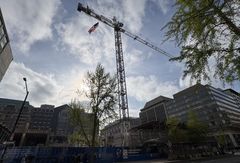
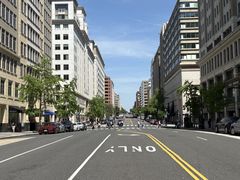
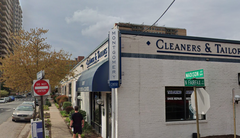
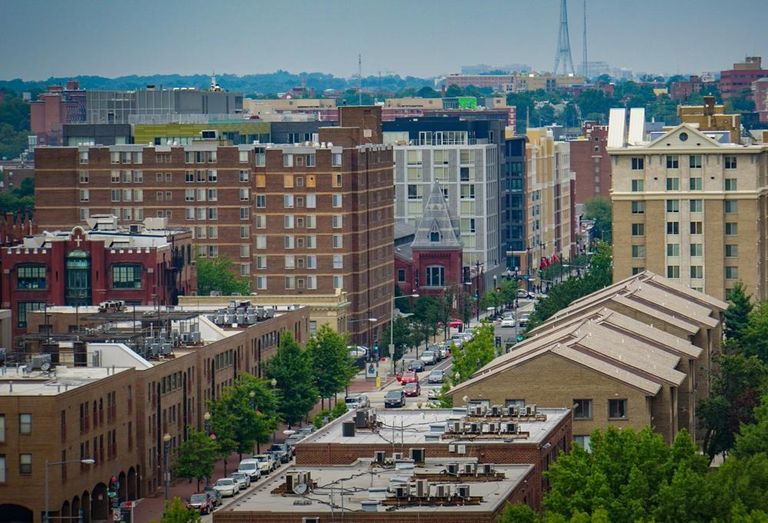
Shaw’s landscape is changing, and with it the faces and fabric of the neighborhood.
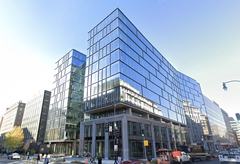
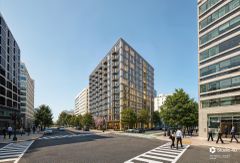
New, high-end apartments have attracted a wave of educated millennials with significant disposable income, a boon to the local economy. But some see this caliber of construction infringing upon the community.
Rising property values and taxes in Shaw have displaced people who have lived there for generations. In 1970, Shaw was 90% black, but by 2010 its black population had dwindled to 30%. This dramatic change, which accelerated at the turn of the century, is primarily due to black residents leaving, rather than dilution by other races.
In Shaw, moderate crime was glamorized, commodified and sold to young, affluent, white residents looking to move into an edgy neighborhood, according to American University professor Derek Hyra.
Developers capitalized on Shaw’s rich cultural history. The U Street corridor was known as the “Black Broadway” in the early 20th century, and counts among its notable institutions the Howard Theatre, Lincoln Theatre and Ben’s Chili Bowl. Hyra described property marketers’ efforts as “black branding,” which he wrote ironically effaces the area’s identity.
Rather than newcomers diversifying the neighborhood and commingling with longtime residents, Hyra found that the influx has built racial tension, rather than “cappuccino” communities. Micro-segregation in Shaw divides individuals by race, socioeconomic status, sexual orientation and age, Hyra asserts in his book “Race, Class and Politics and the Cappuccino City.”
But projects like City Market at Shaw — which has a stunning public art piece of neighborhood icons like Duke Ellington and Robert Gould Shaw, the Civil War soldier who led the first black regiment and after whom the neighborhood is named — for revitalizing an area that has struggled since riots and fires destroyed it in the late 1960s. In the 1980s and 1990s, drugs, prostitution, guns and gang violence blighted Shaw.
Some residents who endured Shaw’s bitter years may feel jilted at being ousted as the neighborhood evolves with artisanal coffee operations and short-lived experimental restaurants. But Shaw Main Streets Executive Director Alex Padro sees it differently.
According to Padro, many Shaw residents who stuck it out are now able to take advantage of their tremendous property appreciation and cash out, move to a bigger house in the suburbs and start college funds for their children or grandchildren. As money continues to pour into Shaw, developers must be careful not to risk razing the neighborhood’s greatest asset — its identity.