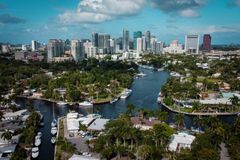
South Florida's multifamily market is getting a big pushback. And it's coming from the very lifeblood for developers—banks.
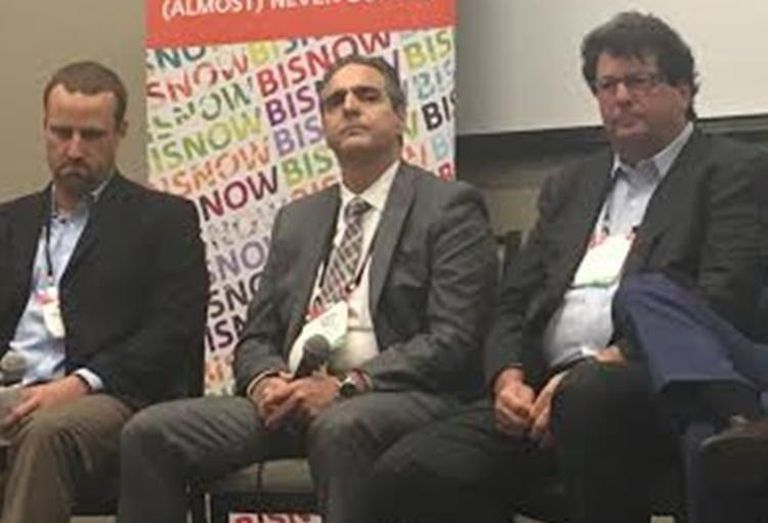
Eden Multifamily's Jay Jacobson (right) told the audience at our Miami's Residential & Multifamily Forum earlier this week there's a slowdown in new apartment construction happening in Miami, despite strong fundamental performance.
“If you have a term sheet from a construction lender right now, don't question it, don't change it, don't send back a red line," Jay said. "Sign it. Send your check and move toward closing, because if you try and change it, they're going to pull it.”
Jay added this financial pullback is affecting developers across the board.
“They really don't want to lend you money. I don't care who you are," he said. "It could be one of the top-tiered developers in the United States, and it could just be a single guy trying to do a deal out in Hialeah. The capital markets, especially on the bank side, are getting incredibly difficult to deal with.”
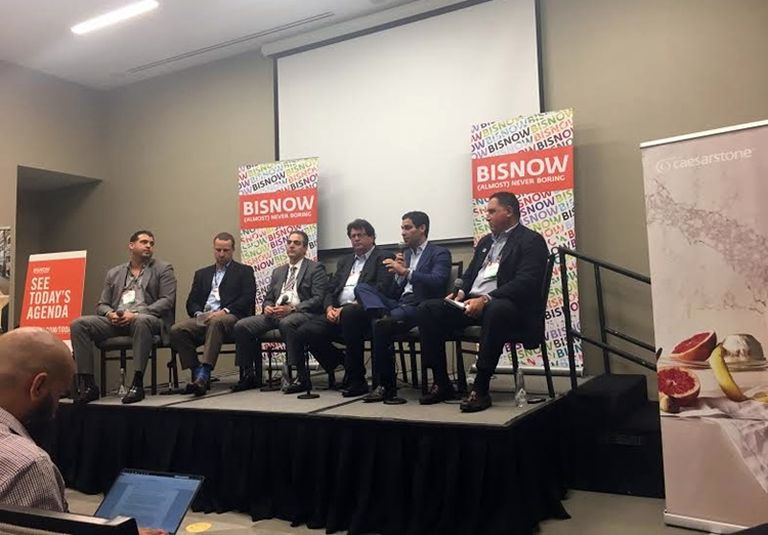
Jay's tone strikes a startling contrast to the renewed optimism expressed by our condominium panel at the same event. Jay was part of a multifamily lineup that included Kaufman Lynn Construction's Neal Carson, City of Miami commissioner Francis Suarez, The Related Group's Related Urban Development principal Albert Milo, ZOM Development's Kyle Clayton and Hunt Mortgage Group's Marc Suarez.
But Albert said the projects that are mainly underway are seeking market-rate rents—and rents that are most likely untenable to the average Miami-Dade worker.
That's creating a tension where demand for apartments moving forward will likely focus on affordable and workforce units. “That's like we're in the first inning of an opportunity to take advantage of hitting that middle market,” Milo said.
“We just don't have a housing affordability issue. We've got a crisis,” Jay echoed. “What actually moves the needle to provide those folks who are in our community that are making $35 to $60k a year, which is a decent job these days? We haven't done much to move the needle in this country.”
The average, garden-style apartment project seeking a return to the developer just over 6% is achieving $1.70/SF in rents, or between $1,700 and $1,900/month, Jay said. “That's not affordable to the workforce we're talking about. That's affordable to somebody making north of $70k to $75k a year. We're going to start losing all those Millennials. You can't make a living. You can't pay your rent. You can't stay.”
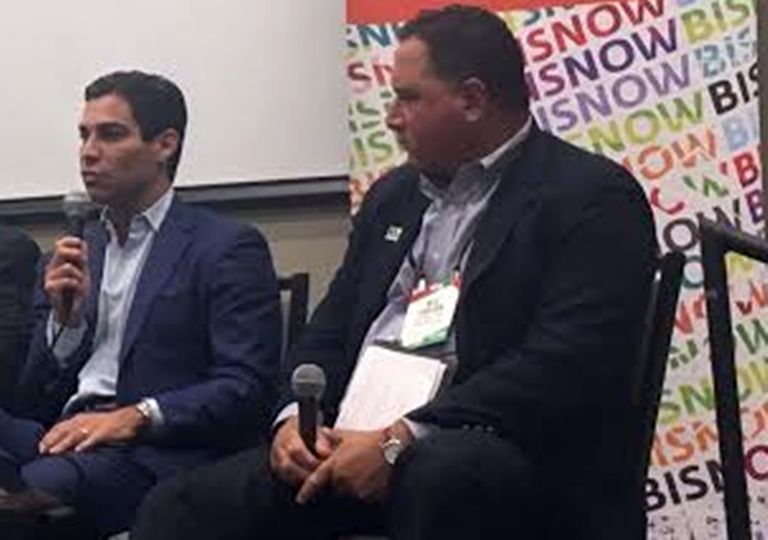
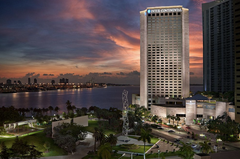
Francis Suarez called for “incremental” solutions to the affordability issue, and said Miami has made strides already from the early days, when affordable housing policy was likened to an “insane asylum.” Francis cited land costs as a big culprit of expensive housing. He said an investor recently paid $125M for a single acre of land in Downtown Miami across from the Epic Hotel.
“So when your land costs are $125M an acre, imagine...what you need to be selling your units at at the end of the day,” he said.
There have been incentives to lure more workforce housing projects, aside from HUD financing, bond financing, and other federal and capital incentives. Milo said the city has reduced impact fees, relaxed parking ratios and decreased architectural standards for workforce housing. And it's pushing a density increase for apartment projects that will mix units for people making 30% of AMI on up to workforce housing at 140% AMI, Francis Suarez said.
“I don't think government can solve all the problems, unfortunately,” he said. "But we can make incremental changes, particularly non-financial, incremental changes to our entitlement that certainly help us move the ball forward in a meaningful way."