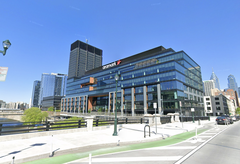
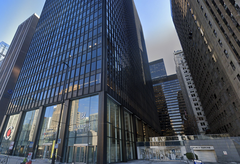
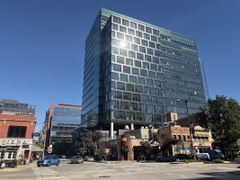
After decades of operating a Manhattan and San Francisco office business as Paramount Group, the same team is overseeing the same buildings at Elecor Properties. But under new ownership, it has leverage in negotiations that would have been unthinkable just a year ago.
Armed with the financial firepower of Rithm Capital, a publicly traded investment manager with a $100B portfolio, the once struggling office landlord is striking back. Elecor is restructuring its debt, pouring $250M into portfolio upgrades and landing new tenants.
“Rithm has come in, looked at the plans and bolstered them,” Elecor Senior Vice President of Acquisitions and Capital Markets Richard Reczka told Bisnow. “We're in execution mode."

Last year, the firm grappled with shareholder concerns over the performance and management of its nearly 10M SF portfolio. The company revealed that longtime CEO Albert Behler had pocketed $4M in previously undisclosed payments, raising concerns of conflicts of interest and executive compensation.
The troubles sparked a Securities and Exchange Commission investigation, a shakeup in leadership and, ultimately, the company’s sale.
Shareholders greenlit Rithm's $1.6B acquisition in December, giving the investor, led by CEO Michael Nierenberg, a springboard to transform it from a traditional mortgage REIT into an alternative investment manager, now with $61B in assets under management and about $50B on its balance sheet.
Rithm beat out several CRE heavy-hitters, including Blackstone, SL Green Realty and Vornado Realty Trust. But because this was a relatively new foray for Rithm, it decided to keep most of Elecor’s operations the same.
“We don't need anything else when we think about how this company is going to run,” Nierenberg told investors during the company’s fourth-quarter earnings call.
In exchange, Elecor received a Rolodex of new relationships and a safeguard that allowed the firm to get creative with its financing.

The difference was noticeable even before the merger closed, Reczka said. With its future not yet solidified, Elecor found itself needing to refinance 1325 Sixth Ave.
With Rithm’s assistance, the landlord was able to secure a bridge financing deal that got it to the acquisition point. In April, the property was refinanced with a $283M securitized loan from JPMorgan Chase.
“I don't know if we would have been able — prior to Rithm leveraging their relationships at that lender — to be able to do that bridge and then be able to convert it to CMBS,” Reczka said.
The transactions have kept coming since, benefiting from Wall Street's growing appetite for Manhattan real estate. In July, Elecor secured a $415M CMBS loan, plus $85M of mezzanine debt, for 31 W. 52nd St. In October, it sold DRA Advisors a 49% stake in 1301 Sixth Ave., valuing the 1.7M SF office building at $1.3B.
In the first half of the year, Elecor had already leased 681K SF, 62% of which was in San Francisco, according to Rithm’s second-quarter earnings presentation. Rents in its New York City portfolio were up 32% from the previous year.
Shortly after the merger, Elecor signed a nearly 203K SF lease with Natixis at 1633 Broadway, one of the largest office leases in the fourth quarter.
Also at 1633 Broadway, the company has unveiled plans to add more than 40K SF of amenities, including a bar, lounge, atrium and event spaces.
Similar efforts are taking place at 712 Fifth Ave. in New York and One Market Plaza and One Front Street in San Francisco. Paramount had previously planned to pursue some of the renovations but, without Rithm’s capital, was slow to execute.
Elecor is also on the lookout for new acquisitions, though Reczka didn't share any specifics as to what those deals could be.
“It's been really refreshing for me to be able to sit in this seat and have, for lack of a better term, real estate nerds on the other side,” Reczka said. “There's a lot of work being done to really assess every opportunity and see if it makes sense to both capture our experience here in the Elecor seat and help them with their plans [to become] an asset manager that investors want to go to.”

Rithm’s backing is especially useful as the commercial real estate recovery is being tested by 10-year Treasury yields still north of 5%, reheating inflation and higher interest rates.
REIT executives have been saying for years that their stocks are undervalued, causing fundraising levels to fall and mergers to spike. But as bond yields have risen, REITs have entered a valuation no-man’s-land, where they don’t want to sell and can’t necessarily buy.
Higher-for-longer bond yields mean that debt and equity are more expensive and acquisitions are harder to justify. For conservative lenders, that can include something like putting money aside for tenant improvements.
To refinance 31 W. 52nd St., Rithm contributed $73M of fresh equity, with a $43M leasing reserve, to secure the CMBS debt and retire a $500M mortgage.
“When you do close a loan, you have to factor in a lot more upfront reserves because most lenders these days insist on you collateralizing any obligations,” Reczka said.
Reczka is no stranger to times of distress, having spent more than 18 years at Vornado Realty Trust overseeing capital markets and acquisitions before joining Elecor in 2021.
Describing himself as a “half-full kind of person,” Reczka said that while strict requirements can be painful, they lower risk following years when “underwriting standards somewhat deteriorated.”
Of course, it also helps that he’s operating from a place of newfound liquidity.
“It highlights again why you want to be owned by a company like Rithm,” Reczka said. “Because that's not easy to do if you're not a well-capitalized company.”