The head of one of the Netherlands' biggest developers has called for local municipalities to show more flexibility when putting large development projects out to tender.
Edge CEO Boudewijn Ruitenburg said that, given the constant macroeconomic uncertainty developers face, municipalities need to provide the opportunity for development frameworks to change and adapt to market conditions.
Renowned for its smart office buildings, Edge regularly engaged with public tenders for new developments in the past.
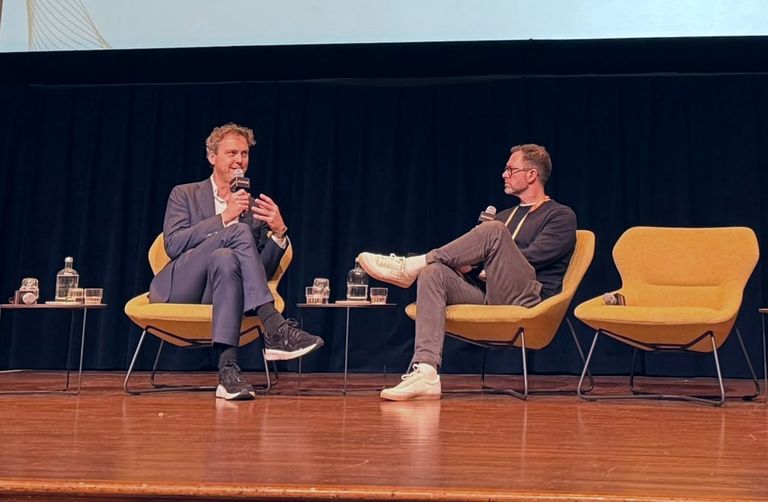
But in today’s environment, the recently appointed CEO told an audience of 150 people at Bisnow's Netherlands State of the Market event that he does not believe “the tender method is the way forward.” Developers who win tenders from municipalities are committed to adhering to a strict framework with a final financial obligation.
With the average large development taking anywhere from seven to 10 years to complete, a broad array of external circumstances can occur during that time frame and change the course of development, Ruitenburg argued.
“We’ve seen firsthand what can happen over 10 years," he said. "We’ve seen two wars, Covid-19, trade wars, interest rate spikes, all moments when you’re forced to reset your business plan.”
With so many external forces at play potentially impacting the framework, without room to renegotiate financial or technical terms after being awarded the tender, that framework could become problematic. Which is why Ruitenburg thinks the tender process should be more fluid and adaptable where needed.
Going forward, Edge will be selective with the public tenders it bids for while asking for more wiggle room.
“It’s nice to have competition, but it’s in both parties' interests that these projects get off the ground, and for that, you need a bit more flexibility,” Ruitenburg stressed.
With the current minority coalition remaining in place for now, Ruitenburg is looking forward to market conditions stabilizing in the Netherlands, which is key for commercial real estate.
Together with other panel speakers at the event, Ruitenburg mentioned grid congestion, public policy and ongoing instability in the government as some of the main aspects negatively impacting the Dutch market, particularly transfer tax.
“For commercial real estate, it’s 10.4%," he said. "Imagine you're a developer, and you want to acquire a brown building, an end-of-life-cycle building. You want to invest in it and then sell it. You pay transfer tax twice, then, two times 10.4%. It’s just ridiculous. Business cases do not work.”
To have real growth in the Dutch CRE market, there needs to be more capacity, stability and innovative solutions, which should be coming from the government, Ruitenburg said. Government entities ranging from municipalities to provinces and ministries that are in charge of public tenders for new developments also need to become more flexible to help bring more projects to life, he added.