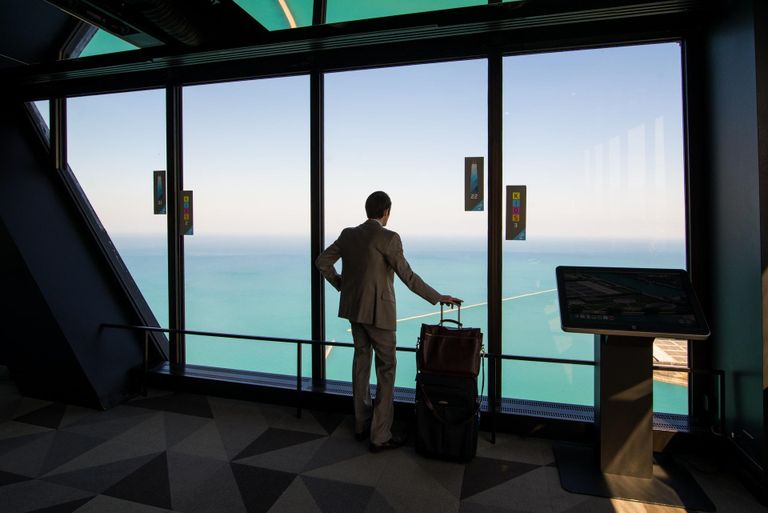
A full recovery for U.S. business travel isn't in the cards for 2022, but that isn't stopping investors from turning their attention to hospitality assets.
Business travel revenue for American hotels is projected to end this year down 23% compared with pre-pandemic levels, or down more than $20B compared to 2019, according to a report from the American Hotel & Lodging Association and Kalibri Labs.
"This report underscores how tough it will be for many hotels and hotel employees to recover from years of lost revenue,” AHLA CEO Chip Rogers said in a statement, though he also said that there is a "sense of optimism for reigniting travel."
Despite the industry's shortfalls, investors are taking a renewed interest in the sector, with more than $12.5B worth of hospitality properties sold in the first quarter of 2022, The Wall Street Journal reports, citing CoStar data. That is the highest total for hotel sales since Q1 2016, and prices have started rising.
But until business travelers make their way to central business districts, the pain of lost revenue will impact more than just the hotel industry. Some downtowns will continue to experience localized depressions, not only as office workers are slow to return but as business travelers are as well. Downtown San Francisco hotels took in $2.44B in revenue in 2019. This year, their revenue is expected to be about $762M, a drop of more than 68% compared with 2019, the AHLA-Kalibri Labs report says.
Other downtowns suffering extreme shortfalls in hotel revenue this year compared with 2019 include New York City, Washington, D.C., San Jose, California, Chicago and Boston — all down over 40%.
Worldwide, the Global Business Travel Association is predicting that the hospitality industry and business travel won't make a full recovery from the pandemic until 2024, though there will be growth this year and next.
The amount spent on business travel worldwide in 2019 was about $1.4T. The organization predicts that the total will be $1.48T in 2024 and $1.5T in 2025, provided such risks as renewed pandemic-related threats or economic disruptions don't get in the way.