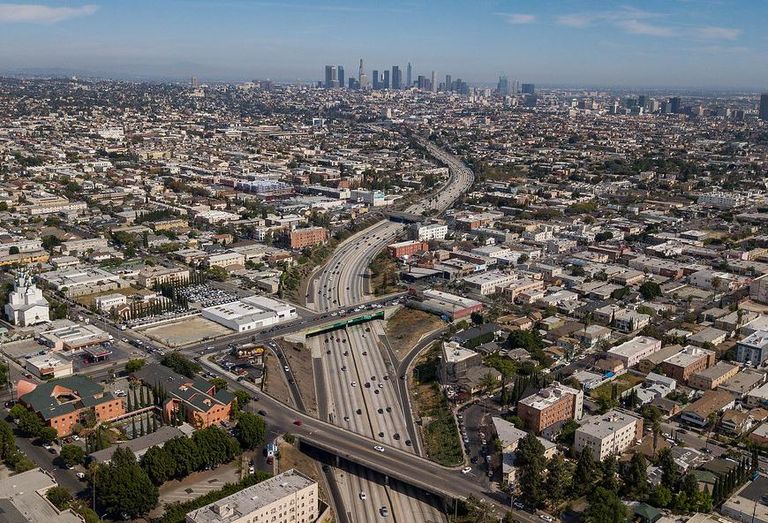
A sweeping directive aimed at streamlining affordable housing production in Los Angeles is now permanent, cementing a policy that developers have used to gain approval for about 40,000 housing units since Mayor Karen Bass introduced it three years ago.
The city council on Tuesday unanimously approved legislation that enshrines Bass' Executive Directive 1.
Called the Affordable Housing Streamlining Ordinance, the new legislation allows developers of compliant 100% affordable projects to expedite approvals by sidestepping the discretionary parts of the process.
Making the process ministerial gets it complete in a fraction of the time it would ordinarily take, the Los Angeles Times reported.
The scope of where these projects can go has changed in key ways from Bass’ original plan, announced at the beginning of her term in December 2022.
In June 2023, Bass amended the directive to exclude single-family zones from the areas where these projects can be proposed. The change came after homeowners sued the city for approving ED 1 projects in their neighborhoods. Single-family-only zones account for nearly three-quarters of the land in the city.
In 2024, Bass carved out historic districts and high-risk fire hazard zones, including parts of Silver Lake and the Hollywood Hills, the LA Times reported.
While 490 projects containing more than 40,000 units have been approved under the original ED 1, only 44 projects have made it to construction. There is no data tracking how many units have been completed, the LA Times reported.
Questions were raised early on about whether all these proposed projects would actually make it across the finish line. Enthusiasm for the streamlining in a city where it is famously hard to build led to many units being proposed and entitled without actually having the pro forma needed to get financing, industry players told Bisnow last year.
Nonprofits and tenant advocates have also drawn attention to the fact that the streamlining applies to covenanted projects in which the affordability level for low-income units reaches 80% of the area median income, which for a one-person household is more than $84K per year.
These income levels are higher than the average in the areas where the majority of these projects are concentrated and serve counter to their purpose by bringing in housing that doesn't help those already living in these neighborhoods, advocates say.