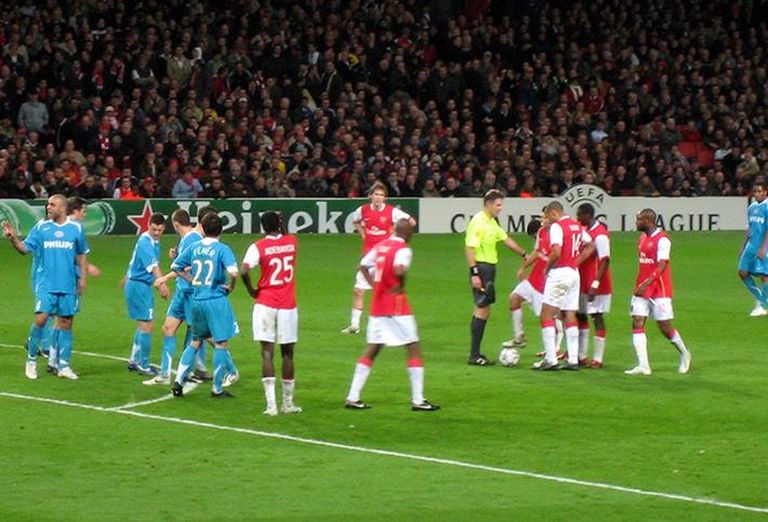
Data from rating adviser Altus Group shows many of England and Wales’ football clubs have been penalised for their recent success with substantial increases to their business rates.
The largest rises are felt by Swansea City (300%), Southampton (296%) and Stoke City (293%), and eight of the 10 largest rises go to Premiership clubs. Portsmouth faced the biggest fall in rateable value (-75%) among the top four English leagues. The grounds with the highest rateable values belong to Arsenal (£6.1M) and Manchester United (£6M).
“In many respects the system rewards failure,” Altus Group executive vice president Robert Hayton said. “Win promotion to the next league and your rateable value goes up. Do it in such a way that your position looks secure and your rateable value is set even higher.”
The worst thing a club can do is get promoted just before the date used for the revaluation and then crash out again soon after. There is no adjustment allowed mid-list and clubs are stuck with the inflated rateable value for the next five years.
“This is a quirky area for valuation,” Hayton said. “There’s no real market for a football stadium when there’s only one occupier — one club — likely to take it. It’s very rare to have two teams bidding for a ground, as happened in Stratford, or a team lured 60 miles to a new hometown, as happened in Milton Keynes. The result is that the Premiership’s superpowers — Chelsea, Arsenal, Manchester United, Liverpool — enjoy falls in their rateable values, while the Premiership’s second-rank clubs face the biggest rises. They also face the greatest threat of relegation.”
Rateable values for football stadia and grounds are calculated using gate receipts — the maximum possible and the actual average — rather than local property values. This is weighted with an assessment of the club's ability to pay, based on whether it might go up, go down or maintain its league position. The assessment is made using a fixed date before revaluation (1 April 2015 in the case of the 1 April 2017 revaluation). Value is also added for a ground’s facilities, but hotels and bars are usually assessed separately.
Adjustments to rateable value between the periodic national revaluations can be made for physical improvements, such as new development and new facilities. Matters of relegation and promotion, which feed into a question of ability to pay and fairness, can only be assessed using the one fixed date before revaluation. As a result, a relegated club can be left for years with a bill relating to a higher league.