Recent news of significant groundbreakings made some optimistic about the future of Houston's multifamily sector. While the market has come a long way in the last year, CBRE Houston multifamily leaders Clint Duncan and Matt Phillips said the market is just finding an equilibrium.
Houston multifamily had a roaring few years, but there are signs its new supply surge is burning off. Occupancy rose by 60 basis points to 88.9% in Q2, and deliveries have dropped by 1,182 units. Further balancing the scale, net absorption increased 38% since Q1 2017. Houston soaked up 6,773 units — the most since Q2 2013.
"By and large, the pipeline has shut off. We expect 3,500 units next year and next to nothing in 2019. That’s what investors want to take advantage of," Duncan said.
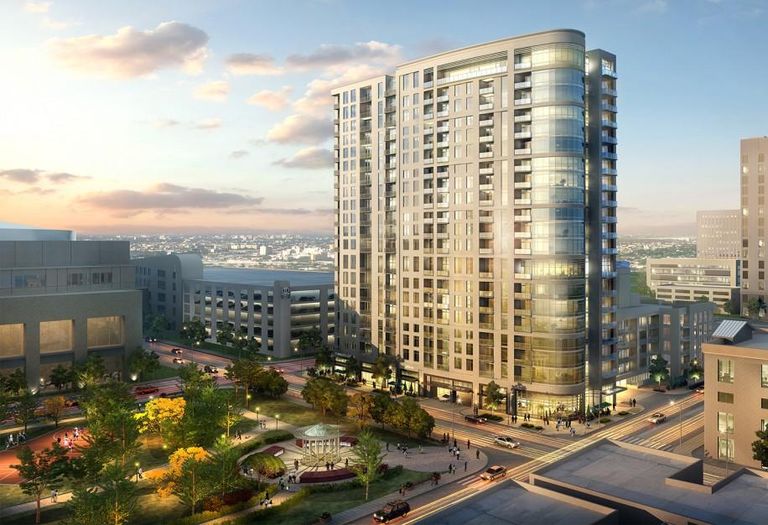
He said the recent high-profile starts like Camden Downtown are not as closely tied to market conditions as they are with other factors affecting long-term holders like Camden, such as the Downtown Living Initiative Tax Credit.
"When you're a long-term player like that, timing means less," Duncan said.
Duncan and Phillips think Houston's multifamily sector has bottomed out. Although nearly 8,000 units are projected to be delivered for the second half of 2017, the market is forecast to absorb more than 22,000 units during 2018 and 2019.
"Honestly, there's less desperation today than there was a year ago. I thought we'd see more desperate leasing measures, but there's not. No one's giving away iPads or TVs. It's just not that bad," Phillips said.
Houston's population growth has not shown signs of the slowing that many expected. Moody's Ratings has modified its population growth projection for Houston twice this year already. Phillips said based on Moody's projections, the Houston MSA will reach a population of 7.1 million by the end of 2019. That is another 300,000 people. Considering roughly 2% of population growth needs multifamily units, that is nearly 6,000 units needed in the next two years.
With basic economics like that, both Duncan and Phillips expect rents to grow over the next three years. Both have seen increased interest from investors.
"There's plenty of capital starting to jump back in because there's a broad feeling we've bottomed out," Duncan said.
But neither exec thinks the market is ready for new product yet. Wanting to start construction and being able to are two very different things. One major factor is that Houston is not just competing against itself, but other major metros.
"Houston is still brushing off our supply situation. Nationally, construction finance has pulled back. Houston is not at the top of anyone's list for capital placement," Duncan said.
Still, some areas of Houston have maintained their momentum. Along with having the highest net absorption, the Northwest cluster holds the three top demand submarkets: Woodlands/Conroe South, Tomball/Spring, and Katy/Cinco Ranch/Waterside, which had a combined absorption of 1,861 units in Q2 2017.