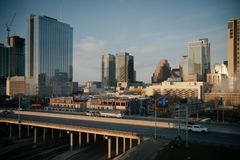
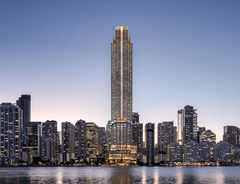
While leaders in the Boston area have pushed to build more housing, the data shows construction starts have continued to slow this year.
The Boston metro had around 11,000 units in the construction pipeline at the end of the first quarter, according to Colliers' Q1 multifamily report, down 36% from the pandemic-era peak in Q2 2022. The number of units under construction fell to a 10-year low of 4.4% of the market's overall inventory, almost half of what was underway in 2020.
Development starts for Boston apartments were down in 2023 and 2024, even as the city approved thousands of planned units, and that freeze has continued this year as high interest rates and economic uncertainty have persisted. And the longer the region goes without a pickup in groundbreakings, the more projects are completing construction and the fewer cranes are in the sky.
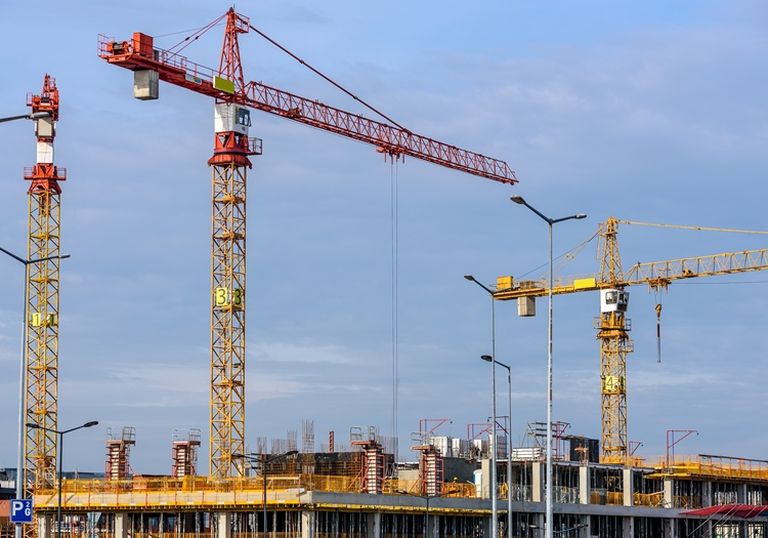
"It's harder to finance projects than it was five years ago, and as a result, fewer projects are breaking ground," Colliers Research Director Jeff Myers said. "As we continue to empty the pipeline of projects that started a couple of years ago, they're not being replaced at the same rate with new construction."
Earlier this month, Boston capital markets experts said at a Bisnow event that lenders are starting to become more aggressive on providing construction financing for multifamily projects.
"We're seeing the banks come back," CrossHarbor Capital Partners principal Robin Ibbetson said at the event. “They're looking for additional yield. We've got a lot of private lenders that are sitting on a lot of capital that, again, are looking for yield, and construction is a way to get that for a lot of these lenders."
Colliers Vice President Kendin Carr said financial institutions never fully left the market but have been more prudent.
"They were only financing their strongest sponsors," Carr said. "But now they're dipping their toe back in the water a little more, but it still feels challenging."
An increased appetite from lenders to finance multifamily projects hadn't shown up in the construction start data as of March, as high costs and financing challenges have prevented projects from breaking ground.
"I tend to think it's on the slower side," Myers said when asked about construction financing. "My impression is that it's harder to get these deals done than it was before. Even if they are being more aggressive, they're still faced with the higher cost outside of just the bank standards to get there."
The construction slowdown could be exacerbated in the affordable housing market. With potential cuts to federal affordable housing funding, it may become harder for developers to find the subsidies to finance affordable deals.
"It's not good if you cut federal funding to HUD," Carr said. "A lot of our housing that is in the pipeline is affordable housing. It's not a positive for housing in such a housing-restricted market."
Although construction is down, Carr said the lack of new supply brings benefits for owners and opportunities for investors looking to buy into the Boston-area multifamily market.
"Institutional investors are back in the market on transactions," Carr said. "I guess part of that's because of what is going on in the Sun Belt, where they overbuilt. They have negative rent growth, and now institutional investors are chasing yield."
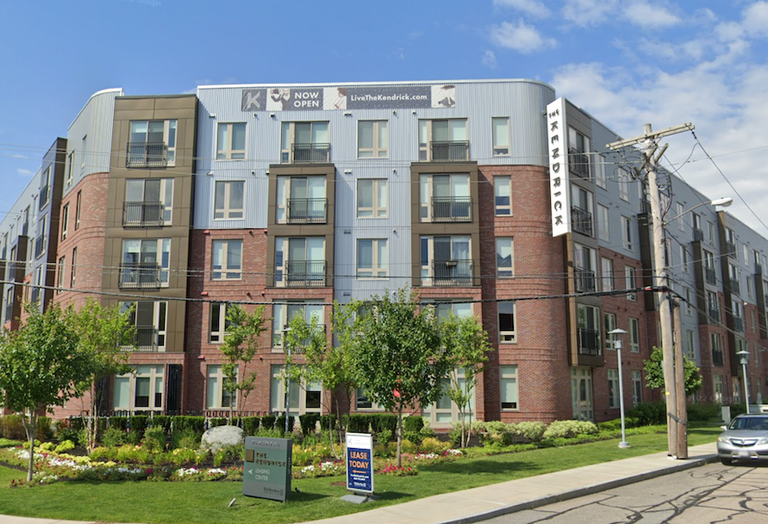
In February, BlackRock acquired a 298-unit apartment building in Weymouth for $103M, and The Praedium Group acquired a four-building, 394-unit apartment portfolio in Beverly for $162M from developer Beverly Crossing. In April, Harbor Group International acquired The Kendrick, a 390-unit apartment building in Needham, from Toll Brothers for $181M.
For multifamily owners, the lack of new construction helps them boost income, with rent up 34% over the last 10 years to roughly an average of $2,939 at the end of the first quarter, according to Colliers.
"If you're an owner of multifamily, that puts you in a position where you're looking down the road and you're going to have less competition than if there had been more new construction, which means you're going to be in a better position to sustain rent growth and healthy vacancies," Myers said.