After several quarters of softening fundamentals, the Inland Empire industrial market is experiencing division between its east and west sides that reflects different demand dynamics and sets up an uneven trajectory going forward.
The Inland Empire’s east and west regions make up one market but are displaying different levels of relative health as the broader industrial world tries to get past a small hurdle that emerged last year in the form of higher supply and lower demand.
“The west will recover a lot quicker than the east does,” Colliers Senior Research Director for greater Los Angeles Matt Nelson said.
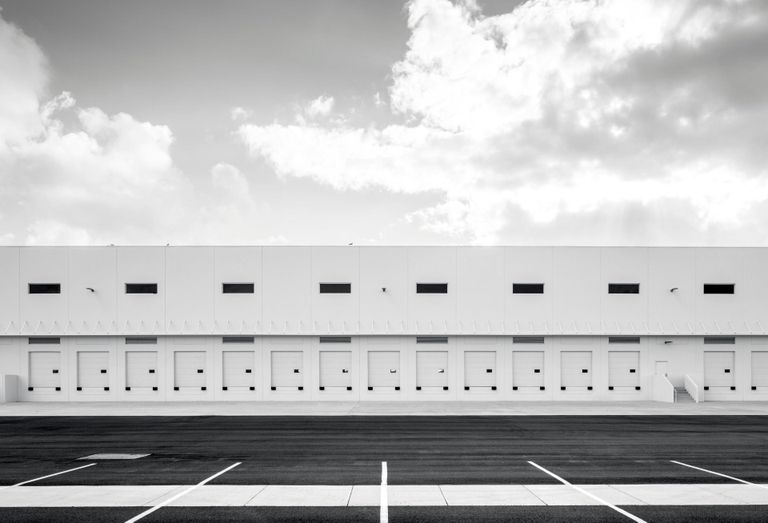
Roughly 49M SF sat empty in the IE in the third quarter, according to a Colliers report, resulting in a 7.5% vacancy rate. But the west region, closer to the ports and the city of Los Angeles, carries a vacancy rate of 6%, while the east region further inland posted a 9.9% vacancy rate.
Similarly, the west clocked 388K SF of net positive absorption in the quarter, compared with net negative 610K SF in its eastern counterpart.
“If you break down the fundamentals between the west and the east, the west is in a place that you can see the light at the end of the tunnel,” JLL Vice Chairman Mac Hewett said. “If you break down those fundamentals in the east, there is a very long runway before we have any kind of semblance of an idea of how the market is going to shake out.”
There are different hurdles based on the size box that occupiers need, Nelson said. Colliers research shows that buildings in the 250K SF to 500K SF range have a vacancy rate of 11.6%, while buildings over 500K SF are 6.6% vacant.
Approximately 4.4M SF of new construction came online throughout the market in the third quarter, which pushed the availability number up to that 14-year-high.
In the Inland Empire East, the vacancy rate for that 250K SF to 500K SF segment is 20.6%. In the west, it’s 5.9%.
Across the market, rents have trended down in the Inland Empire. Asking rents continued their tumble to $1.05 per SF, a 2% drop from the previous quarter and down 14% from $1.22 in Q3 2024, according to Colliers. In the west, average rents for the period were $1.12. In the east, they were 97 cents.
The rent dynamic is also playing out nationally. Average asking rents nationwide declined for the sixth consecutive quarter, falling 3.6% year over year, according to a CBRE report.
But nationally, vacancy seems to be staying flat: Robust leasing plus a decline in new construction kept the overall vacancy rate at 6.6% in the third quarter, reversing a trend of quarterly vacancy increases since Q2 2022, CBRE found.
Given the relatively high vacancy and availability rates, “the Inland Empire remains several quarters away from any potential rent growth,” according to the Colliers report.