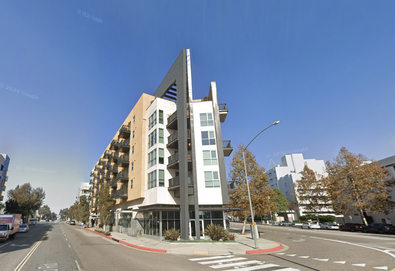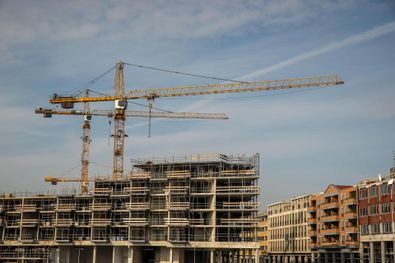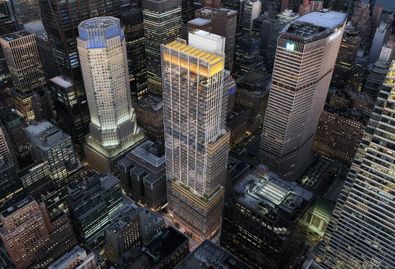
New York City hasn't seen a construction boom like the current one in many years, with multifamily driving the market as it becomes a more dense and complex urban environment. The city's one of the most expensive places in the world to develop. But it's much more than just the material and labor costs—construction in New York often involves extraordinary safety precautions, street closures and other efforts to protect the public.
:no_upscale():quality(75))
All of that also makes the city an expensive place to insure a construction project. We spoke recently with GFI Insurance Brokerage president Brian Gross and SVP Patricia Knapp about insurance in the current commercial real estate climate in New York.
The High Cost Of Insurance In NYC
New York construction projects are expensive to insure from the get-go because of the "scaffold law." The law dates back to 1885 and was originally meant to protect construction workers from the risk they faced while working on New York City’s booming skyline, then reaching unimaginable heights. The scaffold law imposes “absolute liability” on contractors and property owners engaged in construction or demolition work for any elevation-related injuries experienced by workers. Employees, for their part, are absolved.
The law has a tremendous impact on construction costs in the city. Some estimates put the cost of insuring construction projects in New York City as much as 10 times higher than other cities as a direct result of the law.
Outside of an expensive environment, there are many other reasons premiums are increasing, Patricia says, including labor law issues, the increased frequency of construction site accidents (such as the one in Midtown in March), stringent Department of Building and lender requirements, and even the types of tenants filling spaces, such as Section 8 tenants. "One analyst even found that making improvements to boost your property’s value—such as allowing pets, hiring security or cleaning up after an accident or fire—could shoot up premiums exponentially."
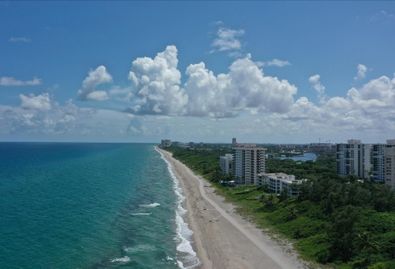
The state of flood insurance is another concern for developers. According to a recent National Academy of Sciences study, sea levels are rising faster than they have in 28 centuries, which could put more than $2.1 trillion in NYC real estate assets in danger. Also, Brian says, the Biggert-Waters Flood Insurance Reform Act of 2012 eliminated flood insurance subsidies for certain properties.
In fact, many carriers have decided to leave these neighborhoods altogether, further restricting an already limited carrier selection and forcing developers and owners in these areas to pay much higher premiums for coverage. As weather patterns continue to worsen, Brian says the insurance industry will have to continue to change and adapt, and the market’s players will have to step up to the plate and continue to offer new, more innovative services to keep these buildings valuable and worth investing in.
New technology, perhaps surprisingly, is playing a part in rising insurance costs. Cyber and privacy policies cover a business' liability for a data breach when information is stolen by criminals from the firm's electronic network. Construction company data can be quite sensitive, so these kinds of policies can be critical. They cover a variety of expenses associated with data breaches, including loss resulting from identity theft, costs to defend claims by state regulators, fines and penalties, and more.
For the most part, Patricia says, four or five insurance providers dominate the construction market. But with all the new restrictions and changes, new players and lenders have become involved, including hedge funds and private equity firms.
These lenders, Brian says, have become more involved in the purchasing of insurance than in the past, dabbling with pollution insurance or owner’s protective professional indemnity (OPPI) insurance, which provides owners protection for the damages they incur as the result of the negligence of design professionals. But these lenders, he adds, also require higher insurance limits for subcontractors in order to give owners and general contractors a “larger buffer” and protect them from liability.
:no_upscale():quality(75))
A New Breed Of Insurance
But these changes don’t mean developers will stop developing (New York properties continue to attract top-tier tenants), or that they can’t do anything to make their premiums more manageable.
“Developers are looking for a provider that not only can provide a variety of different policies and services, but fully understands what they’re looking for and even how their business works," Brian says. "They want a provider that remains cognizant of the constantly changing construction marketplace to obtain the best product for their clients.”
In order to provide better coverage and 24/7 service to desperate developers, for example, GFI uses a unique structure that combines real estate brokerage and insurance capabilities. Brian believes having this sister real estate brokerage gives GFI Insurance “valuable insight” into what the market needs with regards to insurance, especially when it comes to complicated developments.
“We’re really trying to create that combination of knowledge and service that can make developers still willing to develop, because they know that we know what they’re going through,” he says. “We’re developers, owners and managers, so we look to provide the same coverage and service we would give our own portfolio.”
With its commitment to long-term relationships and hands-on client service; extensive knowledge and expertise of insurance, real estate, development and hospitality; and its use of cutting-edge tech, Brian says GFI has been working to make the insurance market more efficient and innovative and to provide unique, cost-effective solutions even for complex insurance needs.