:no_upscale():quality(75))
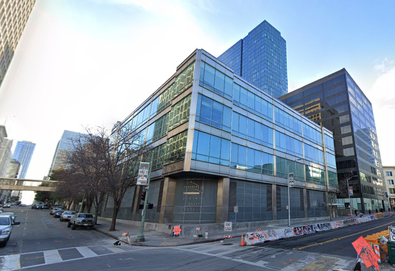
Life sciences landlords across the country are opening up their leasing efforts to tenants outside of typical lab users in an effort to fill millions of vacant square feet.
But converting lab space for use by other types of tenants isn’t always easy, sometimes slowing the leasing process or increasing costs, according to panelists at Bisnow’s Bay Area Life Sciences and Biotech Conference on June 17.
“By the time you retrofit it for a large client, it's a ton of money, a ton of time, and it’s not what these guys are looking for,” ZGF Architects partner Vlad Pajkic said during a panel discussion at the South San Francisco Conference Center. “It feels like a lot of buildings are just too tight. It’s like when you buy too small of a suit and it's just never really right.”
:no_upscale():quality(75))
Overall vacancy among life sciences properties in the Bay Area was 30.7% at the end of the first quarter, up 70 basis points from the final quarter of 2025, according to CBRE.
Much of that space may not be what a new wave of artificial intelligence-centric life sciences tenants require, either. New science is changing the requirements for research and development space.
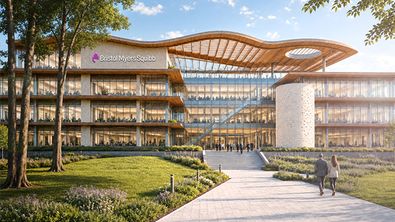
In Foster City, Suffolk Construction and Gilead Sciences built a five‑story, 182K SF cancer research center, designed with direct input from the scientists who will use it. The team built the space to handle emerging tech like autonomous robots and digital twins, and they added extra power, data and lab‑gas hookups so future tenants with different needs can plug in without major upgrades.
Instead of traditional framed walls, Suffolk used movable panels inside the building, allowing rooms and labs to be reconfigured quickly without demolition — a shift aimed at making the facility far more flexible for changing research teams and fast‑evolving science.
:no_upscale():quality(75))
“The speed of science is typically faster than that of construction,” Suffolk Superintendent Amanda Delfosse said. “When specific users come in or a new technology comes in, we can accommodate that.”
Those additional infrastructure requirements often force developers into a delicate balancing act of weighing flexibility against long-term building resilience.
Additional upfront spending is often needed to create spaces that will attract tenants, but there still has to be room in the budget to accommodate their needs in the future — especially as new science changes R&D environments.
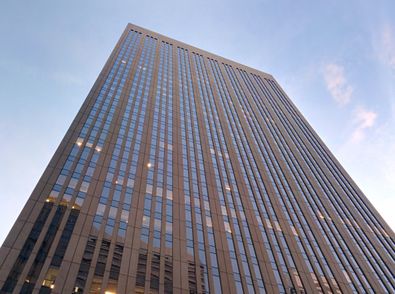
Interior heights are another factor coming into play with increased frequency, Pajkic added. Clients are seeking taller spaces with bigger floor plates and rigid floors to reduce the potential for vibrations from foot traffic and heavy robotics equipment.
:no_upscale():quality(75))
“People who pay high rents don't like to worry about stuff like that,” Pajkic said. “These days, it's way more critical, because a lot of tenants won't even look at your building if your ceilings are at 9 feet, 6 inches and you have [acoustic ceiling tiles] going everywhere.”
Life sciences clients have also started asking for shorter lease terms to de-risk their financial commitments, according to Claire Drummond, vice president of development and market executive for Wexford Science & Technology.
Rather than traditional 10-year commitments, leases are being inked for three- and five-year terms, which places greater risk on capital partners.
:no_upscale():quality(75))
“A lot of clients need more modular, short-term, de-risked options because the science is changing so quickly,” Drummond said. “Our capital partners are not prepared to build new product because we're not having our options de-risked with clients who are willing to meet the preleasing threshold.”
New life sciences facilities construction is at a near a standstill throughout the Bay Area and not likely to resume soon. While it is a difficult time to spend money to reposition assets, that is what is required to make them work for tenants, said Geoff Sears, partner at Wareham Development, which owns about 50 life sciences properties in the East Bay.
“If you don't have tenants in [buildings], they're just not worth very much,” Sears said. “What we always think about is what the next person needs to make our buildings work for them.”